Last Updated: June 5, 2026 | Read Time: 8 minutes
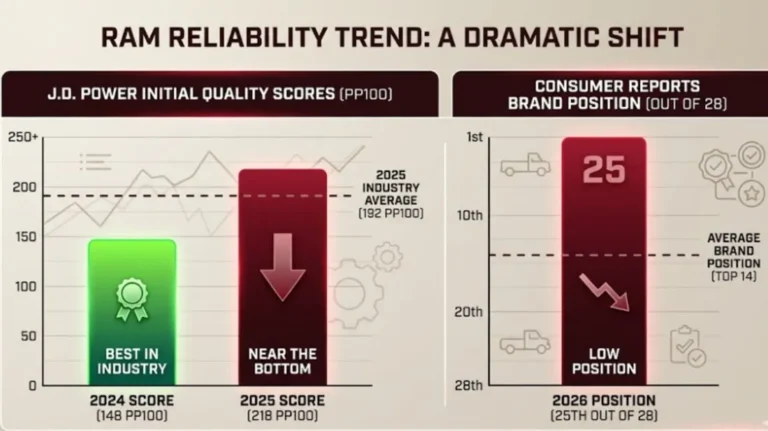
Buick leads all domestic mass-market brands in J.D. Power’s 2026 Vehicle Dependability Study with 160 problems per 100 vehicles. Ford made its best reliability showing in more than 15 years, climbing to 11th overall in Consumer Reports’ 2026 rankings. The Chevrolet Corvette, the Chevrolet Trax, the Ford Bronco Sport, and the Ford Maverick all score above average for predicted reliability. Ram, on the other hand, fell from the best brand in all of J.D. Power’s 2024 study to 218 problems per 100 vehicles in 2025 — near the bottom.
The five least reliable brands in Consumer Reports’ 2026 rankings are all American. The honest picture of American car reliability in 2026 is not all bad — but it requires knowing specifically which cars and which brands have earned the positive numbers.
Quick Facts – Most Reliable Cars
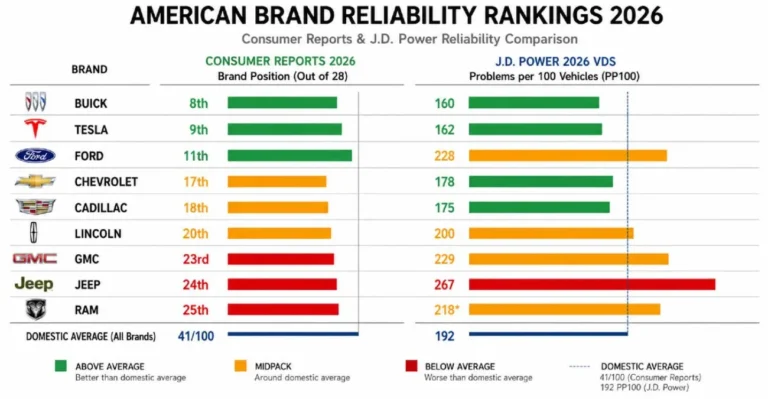
— Best American Brand — J.D. Power 2026 VDS: Buick — 160 problems per 100 vehicles (mass market leader)
— Best American Brand — Consumer Reports 2026: Buick — 8th overall out of 28 ranked brands
— Second Best — Consumer Reports 2026: Tesla — 9th overall
— Ford 2026: 11th overall — best Ford showing in over 15 years
— Chevrolet 2026: 17th overall (Consumer Reports)
— Cadillac 2026: 18th overall (Consumer Reports) / 4th overall J.D. Power VDS at 175 PP100
— GMC 2026: 23rd overall (Consumer Reports) / 229 PP100 (J.D. Power)
— Ram 2026: 25th overall (Consumer Reports) — worst American mainstream brand
— Lincoln 2026: 20th overall (Consumer Reports)
— Domestic Brand Average Score — Consumer Reports 2026: 41/100 — up from 2025
— Most Reliable Specific Models (Above Average Consumer Reports 2026): Buick Envision, Chevrolet Corvette, Chevrolet Trax, Ford Bronco Sport, Ford Maverick, Tesla Model Y (well above average)
— Least Reliable Specific Models — Consumer Reports 2026: Ram 1500, Lincoln Corsair PHEV, Chrysler Pacifica Hybrid, GMC Acadia (redesigned 2025), Jeep Grand Cherokee PHEV, Rivian R1T
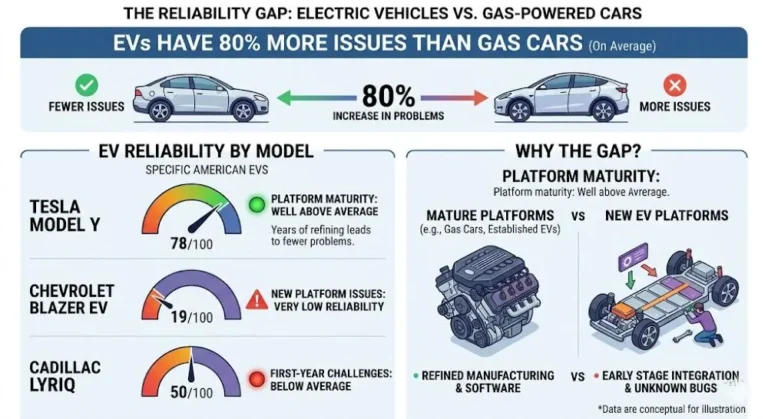
— Most Problematic New Category: First-generation EVs — Chevrolet Blazer EV scored 19/100
— EV vs Gas Reliability Gap: EVs have 80% more issues than gas cars on average — Consumer Reports 2026
— Bottom 5 Brands Globally (all American): Chrysler, GMC, Jeep, Ram, Rivian
Sources: Consumer Reports “Who Makes the Most Reliable Cars”, Autoblog Consumer Reports 2026 Rankings, J.D. Power 2026 Vehicle Dependability Study, TopSpeed Most Reliable Car Brands 2026
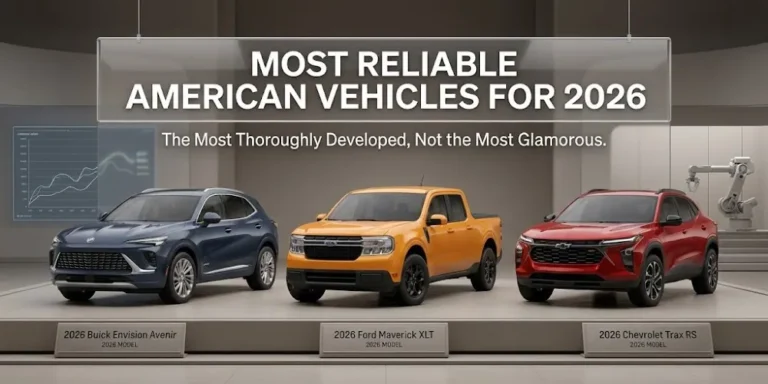
Overview – The Most Honest Assessment Of American Car Reliability In 2026
American car reliability in 2026 is a story of specific contrast. The same Consumer Reports study that ranks Buick 8th overall in reliability also ranks Ram 25th — the worst performance of any mainstream American truck brand. The same study that shows Ford at its best in 15 years also shows the F-150 performing below average for reliability. The same data that demonstrates the Chevrolet Corvette and Ford Maverick as genuinely reliable vehicles also documents the Chevrolet Blazer EV as scoring 19 out of 100 — one of the lowest reliability scores in the entire study.
The lesson is not that American cars are reliable or unreliable. The lesson is that in 2026 the specific model and the specific generation matters more than the brand badge on the hood. A 2026 Buick Envision and a 2026 Jeep Grand Cherokee PHEV wear different badges but share the same fundamental manufacturer identity — Stellantis owns neither, and GM owns both the Buick and the Jeep’s parent company. What separates them is not the badge. It is the engineering maturity of the specific platform, the stability of the powertrain, and whether the vehicle has been redesigned in the last two years.
Car prices are high, and making a smart purchasing decision has never been more important. The average transaction price for a new car is now more than $50,000 — at that price, choosing a vehicle that spends its first years as a repair bill rather than reliable transportation is a financial consequence, not merely an inconvenience. This guide covers what Consumer Reports and J.D. Power’s 2026 data actually says about American car reliability — which brands are improving, which are declining, which specific models score above average, and which ones to avoid regardless of how attractive their specifications or marketing make them appear.
The American domestic brand average reliability score in Consumer Reports’ 2026 study is 41 out of 100 — a meaningful improvement from 2025, but still trailing the Japanese and Korean brand averages that consistently occupy the top half of the overall rankings. The gap is narrowing. It has not closed. The buyers who understand that specific distinction are the buyers who will be happiest with their 2026 American car purchase.
The brands that rank lowest in Consumer Reports’ 2026 study — Ram, GMC, Jeep, and Chrysler — share specific documented failure patterns that explain why their reliability scores are where they are. Our complete guide to common issues that kill American cars covers every major failure from GM lifter collapse to Ram software recalls to Ford EcoBoost carbon buildup, providing the mechanical explanation behind the brand-level numbers.
Section 1 – The Most Reliable American Brand In 2026
Buick: The American Brand That Consistently Beats Its Own Manufacturer’s Average
Buick is the most reliable American mass-market brand in 2026 by the most important available measures. In J.D. Power’s 2026 Vehicle Dependability Study — which surveys more than 33,000 original owners of 2023 model-year vehicles after three years of ownership — Buick leads all domestic mass-market brands with 160 problems per 100 vehicles. For the 2026 Vehicle Dependability Study, Buick leads the mass market with 160 PP100. This is a genuinely impressive result — lower than Toyota (185 PP100), lower than Subaru (181 PP100), and significantly lower than the American brand averages that cluster toward and above 200 PP100.
In Consumer Reports’ 2026 reliability rankings, Buick ranks 8th overall out of 28 ranked brands — the highest-ranking domestic manufacturer in that study. The highest-scoring domestic brand is Buick in eighth place. Both of these rankings reflect something specific about Buick’s product strategy: the brand has consistently avoided first-year launches of new-technology platforms, maintained proven powertrain configurations, and focused on model-year stability rather than constant redesign.
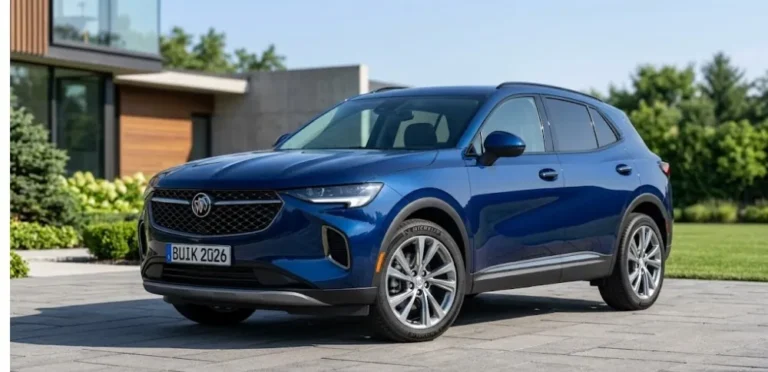
The Buick Envision specifically scores above average in Consumer Reports’ 2026 predicted reliability ratings — a recognition that reflects the vehicle’s mature compact SUV platform and its history of accumulated real-world ownership data across multiple model years. The Envision uses a well-understood turbocharged four-cylinder engine in a compact crossover body that prioritizes refinement and reliability over performance excitement or technology novelty.
The Buick Encore GX continues the same pattern — a compact crossover using proven mechanical components in a package that scores well on reliability surveys precisely because it has not been the subject of aggressive technology experimentation. In the current reliability environment, where newly redesigned vehicles and first-generation EVs consistently score below average, Buick’s strategy of evolutionary improvement on proven platforms produces the most consistent reliability record in the domestic brand lineup.
The specific lesson from Buick’s 2026 performance is not complex: the most reliable American vehicles are almost always the ones that have not been redesigned in the last two years and that use powertrain configurations with multiple years of real-world development. Buick has applied this principle more consistently than any other American brand, and the reliability data reflects that discipline directly.
Section 2 – Ford’s reliability Turnaround
The Best Showing In 15 Years — And The Specific Models Behind It
Ford’s 2026 Consumer Reports reliability performance is one of the most significant individual brand stories in the study. Ford made its best showing in a decade and a half, moving up to 11th overall in reliability — a result that reflects genuine improvement in specific model reliability rather than simply favorable year-to-year comparison.
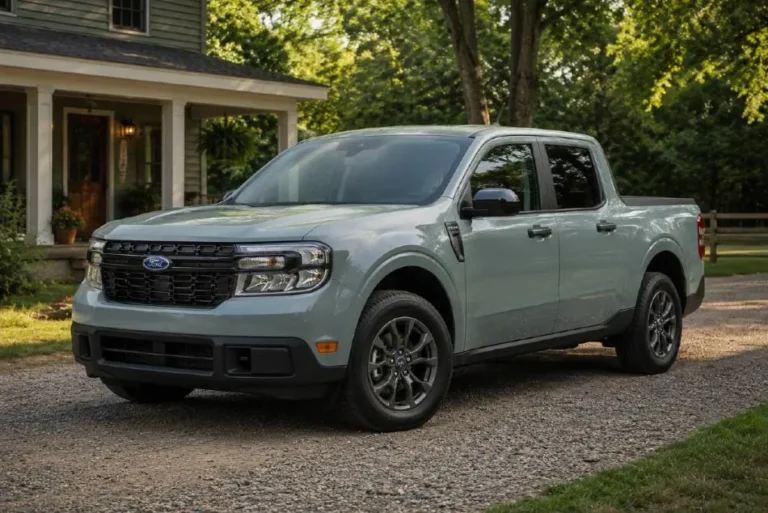
The specific models driving Ford’s improved ranking are the ones that most clearly illustrate what makes American cars reliable in 2026: the Ford Bronco Sport and Ford Maverick, both of which score above average for predicted reliability. These are not performance vehicles, not first-generation technology platforms, and not recently redesigned models. The Bronco Sport uses a well-developed turbocharged four-cylinder in a compact SUV body that has accumulated real-world reliability data across multiple years of production. The Maverick uses the same basic platform in a pickup truck configuration — with the hybrid variant using Ford’s proven hybrid system that has been in production long enough to demonstrate its reliability profile.
The Ford Maverick Hybrid deserves specific attention as the most reliably performing American pickup truck in the current market. It combines Ford’s proven 2.5-liter Atkinson-cycle hybrid system with a compact pickup body that starts under $25,000, producing 42 miles per gallon in city driving with a reliability score that exceeds most of its American pickup truck competitors. For buyers who want an American-branded pickup truck and want reliability to be the primary criterion, the Maverick Hybrid is the clearest current answer.
However, Ford’s 2026 reliability story is specifically not the F-150 story. Ford’s electrified models aren’t doing so hot, with the F-150, F-150 Hybrid, and F-150 Lightning landing below average for reliability. This is the specific nuance that matters for Ford buyers in 2026: the model that generates Ford’s sales volume and brand identity — the best-selling vehicle in America — is performing below average for reliability, while the smaller and less prominent models are the ones earning the positive scores.
For any buyer who wants a new Ford and wants reliability: the Bronco Sport and Maverick are the specific models where Consumer Reports’ 2026 data points positively. The F-150 in any of its configurations — gasoline, hybrid, or Lightning — is not where the positive data currently lives.
Section 3 – Chevrolet’s Reliable Models
The Corvette, The Trax, And The Specific Chevrolet Choices That Work
Chevrolet ranks 17th overall in Consumer Reports’ 2026 reliability study — a midpack result that reflects the same pattern of strong specific models alongside disappointing ones that characterizes most of the American brand landscape.
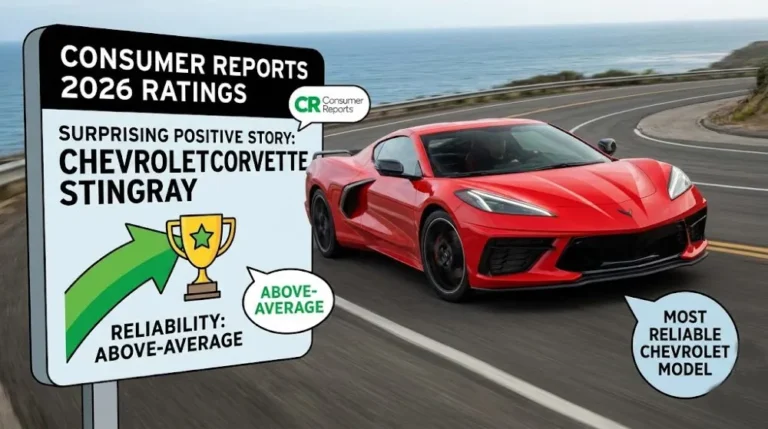
The Chevrolet Corvette scores above average for predicted reliability in Consumer Reports’ 2026 ratings — a genuinely impressive result for a high-performance sports car that made a fundamental platform change to mid-engine architecture for the C8 generation. The C8 platform has now been in production long enough to accumulate real-world reliability data, and that data supports an above-average reliability score. The Corvette is one of very few American performance cars that earns an above-average reliability score in the current study, making it a rare combination of performance capability and dependability.
The Corvette’s above-average reliability score in Consumer Reports’ 2026 study is all the more impressive when you understand the full scope of the performance car it represents — our complete guide to sports Chevy cars covers the Corvette lineup from the Stingray through the 1,250-horsepower ZR1X, showing what above-average reliability looks like across the full range of America’s most performance-focused car.
The Chevrolet Trax also scores above average for predicted reliability — a result that reflects the compact entry-level crossover’s straightforward powertrain and the production maturity of its platform. The Trax is not an exciting vehicle, but it provides reliable transportation in a small crossover body at accessible prices. For buyers who prioritize reliability over performance or luxury in the Chevrolet lineup, the Trax represents the value tier and the Corvette represents the performance tier — with above-average reliability scores at both ends of the lineup.
What is not recommended in the Chevrolet lineup from a reliability standpoint: the Blazer EV, which scored 19 out of 100 in Consumer Reports’ 2026 study — one of the lowest scores in the entire ranking. First-generation EV models score as low as 19/100 for reliability, which is essentially the product quality of an unfinished vehicle according to Consumer Reports’ assessment of why first-generation EVs perform so poorly. The Equinox and GMC Terrain, both redesigned for 2025, also carry well-below-average reliability scores due to their first-year production status. Consumer Reports reminds shoppers that it’s always wiser to avoid brand-new models, which often experience problems in their first year.
The pattern at Chevrolet in 2026 is consistent with the broader American brand pattern: established models on proven platforms score well, newly redesigned models and first-generation technology score poorly. Buying a Chevrolet that was redesigned more than two years ago and uses a proven gasoline powertrain produces a meaningfully better reliability outcome than buying the newest redesign.
Section 4 – Cadillac In 2026
A Luxury Brand With Solid Hardware And A Software Problem
Cadillac ranks 4th overall in J.D. Power’s 2026 Vehicle Dependability Study with 175 problems per 100 vehicles — second in the premium segment behind Lexus and ahead of every European premium brand in the study. This is a genuinely strong result that reflects Cadillac’s hardware quality and the maturity of its non-EV powertrain platforms.
In Consumer Reports’ 2026 rankings, Cadillac ranks 18th overall — a midpack result that is lower than its J.D. Power performance would suggest. The disparity between the two studies reflects methodology differences: J.D. Power’s VDS evaluates three-year-old vehicles (2023 model year), while Consumer Reports evaluates predicted reliability based on current and recent data including newer models that have introduced software-related problems. Cadillac’s newer models — particularly the EV lineup — carry below-average reliability scores that drag the brand average below where the mature gasoline-powered models alone would place it.
The Cadillac CT4 is specifically cited as a reliability standout — the CT4 skips the drama and delivers something better: calm reliability, solid engineering, and a luxury sedan that just keeps showing up. The CT4’s conventional turbocharged gasoline powertrain in a sport sedan body that has been in production across multiple years without major redesign produces the specific reliability profile that J.D. Power’s three-year-old vehicle study captures well.
For Cadillac buyers prioritizing reliability: the conventional gasoline-powered models — CT4, CT5, and the Escalade with the naturally aspirated V8 or the proven turbocharged six — represent the brand’s established reliability strengths. The new Lyriq and Optiq EVs score below average in Consumer Reports’ 2026 ratings, falling into the same first-generation EV reliability pattern that affects every manufacturer’s first-year electric models.
Section 5 – The Brands To Avoid In 2026
Ram, Jeep, GMC, And Lincoln — The Specific Problems
The five least reliable brands in Consumer Reports’ 2026 overall rankings are all American: Chrysler, GMC, Jeep, Ram, and Rivian. This is not an isolated bad year for any of these brands — it reflects documented and ongoing reliability concerns that prospective buyers need to understand before approaching a dealership.
Ram’s 2026 reliability position is the most dramatic single-brand story in the current data. Ram went from best brand overall in J.D. Power’s 2024 Initial Quality Study — 148 problems per 100 vehicles, better than Lexus — to 218 problems per 100 vehicles in 2025, near the bottom. Consumer Reports ranks Ram 25th overall in 2026. The specific causes are the hurricane engine introduction in the 2025 Ram 1500, software-related instrument cluster and ABS module recalls affecting hundreds of thousands of trucks, and the transition-year quality control issues that accompany major powertrain changes. The Ram 1500 is specifically cited as among the least reliable vehicles in 2026 alongside the Lincoln Corsair PHEV and the Chrysler Pacifica Hybrid.
The Ram 1500’s fall from J.D. Power’s best-in-industry score in 2024 to 25th in Consumer Reports’ 2026 ranking is the most dramatic single-brand reliability story in the current data — but the Ram 1500 platform remains one of the most capable and most luxurious full-size trucks available. Our complete Ram 1500 Limited guide covers everything the truck offers alongside the specific reliability concerns that buyers need to weigh before purchase.
GMC ranks 23rd overall in Consumer Reports’ 2026 study and 229 PP100 in J.D. Power’s 2026 VDS — among the lowest domestic brand scores. The GMC Acadia, redesigned for 2025, carries a well-below-average reliability score from Consumer Reports — a predictable result for a first-year redesign that has not had time to resolve the initial production and software issues that typically accompany a major platform change.
Jeep ranks 24th in Consumer Reports and earned a J.D. Power 2026 VDS score of 267 PP100 — among the highest problem frequencies in the study. The Jeep Grand Cherokee PHEV is specifically identified as among the least reliable vehicles of 2026, falling into the dual problem category of complex plug-in hybrid technology combined with software issues that affect multiple Stellantis products.
Lincoln ranks 20th overall in Consumer Reports — better than GMC and Ram but still below average. The Lincoln Corsair PHEV is among the least reliable vehicles in the 2026 study, continuing the pattern where plug-in hybrid complexity produces worse reliability outcomes than conventional gasoline versions of the same vehicle.
For buyers considering any of these brands, the specific advice from the data is consistent: if you want a Jeep, a Ram, or a GMC, choose a conventional gasoline model that has been in production for at least two years without a major redesign. Avoid plug-in hybrids, first-generation EVs, and first-year redesigns across all of these brands until the real-world data supports more confidence.
Section 6 – Tesla And Rivian
The New American EV Brands — Opposite Reliability Stories
The American EV-focused brands tell two completely opposite reliability stories in 2026, and understanding the contrast explains something important about what makes any EV reliable regardless of brand.
Tesla ranks 9th overall in Consumer Reports’ 2026 reliability study — an improvement of eight positions from the previous year. The Tesla Model Y scores well above average in Consumer Reports’ 2026 ratings, making it one of the most reliable vehicles in the entire study regardless of brand or category. Tesla’s reliability improvement reflects the maturity of its Model Y and Model 3 platforms, which have been in production long enough to address the software and manufacturing quality issues that characterized their early years. Both of Rivian’s models still have well-below-average reliability. The single exception in Tesla’s lineup is the Cybertruck, which receives a below-average reliability score — consistent with the general pattern that first-generation designs score poorly regardless of manufacturer.
Rivian represents the opposite position. Both the R1T and R1S carry well-below-average reliability scores in Consumer Reports’ 2026 data. The Rivian R1T is specifically cited as among the least reliable vehicles in 2026. Rivian has been in production for a shorter period than Tesla and is still working through the manufacturing quality and software issues that characterize early-production electric vehicles. The R1T and R1S are impressive vehicles in many engineering respects, but their reliability data in 2026 does not yet support recommending them to buyers who prioritize dependability over the novelty of the product.
The contrast between Tesla Model Y and Rivian R1T in the same reliability study — one well above average, one among the least reliable — makes the most important point about EV reliability in 2026: platform maturity matters more than the EV badge. A Model Y that has been in production and refined for years is reliable. A first-generation product from any manufacturer is not, regardless of how impressive its specifications are on paper.
Section 7 – The EV Reliability Reality
Why Electric Vehicles Average 80% More Problems Than Gas Cars
The most important single data point for any buyer considering an American EV purchase in 2026 is this: EVs have 80% more issues than gas cars on average, according to Consumer Reports’ 2026 analysis. This is not a critique of EV technology as a concept — it is a documented reality of where the technology is in its development cycle and why specific EV models within any manufacturer’s lineup consistently score below the same brand’s conventional gasoline models.
The problems affecting American EVs in 2026 divide into two categories. The first is software instability — infotainment systems that freeze, over-the-air updates that create new problems while solving old ones, and driver assistance systems that behave inconsistently across different software versions. Persistent problems with infotainment systems, spotty performance of over-the-air software updates and issues with vehicle exteriors have driven long-term dependability problems to new highs, according to J.D. Power’s 2026 Vehicle Dependability Study.
The second category is first-generation battery and electric motor technology — the specific combination of new manufacturing processes, new component suppliers, and new integration challenges that any entirely new mechanical system faces in its first years of mass production. New frontier of unreliability is dominated by software instability and first-generation battery tech. The Chevrolet Blazer EV at 19 out of 100, the Cadillac Lyriq and Optiq scoring below average, and the Lincoln Nautilus Hybrid scoring below average are all expressions of this same pattern.
The practical buying guidance from this data is specific: if you want an electric or hybrid American vehicle, choose a model that has been in production for at least two to three years. The second and third year of any EV production typically shows meaningful reliability improvement over the first year as software updates accumulate and manufacturing quality issues are resolved. The Ford Maverick Hybrid — not a new-generation EV but a mature hybrid system in a proven body — is the most reliable example of this principle applied to an American vehicle.
The EV reliability pattern of 2026 — 80% more problems than gas cars on average — reflects where first-generation American EV technology currently sits rather than where it is heading. Our complete guide to future American cars 2026–2029 covers every upcoming American EV and hybrid model, providing the production timeline context that tells buyers when second-generation versions of the most problematic current EVs are expected to arrive.
Section 8 – How To Use Reliability Data To Buy Correctly
The Specific Rules That Apply To Any American Car Purchase In 2026
Consumer Reports and J.D. Power’s reliability data points toward a set of specific purchasing rules that apply consistently across American brands in 2026. Buyers who follow these rules will make meaningfully better reliability choices than buyers who choose based on styling, marketing, or the appeal of the newest technology.
For buyers who want a third independent reliability reference alongside Consumer Reports and J.D. Power before committing to any American car purchase, the Kelley Blue Book most reliable American cars 2026 guide provides additional owner data and reliability assessments across current American model lineups.
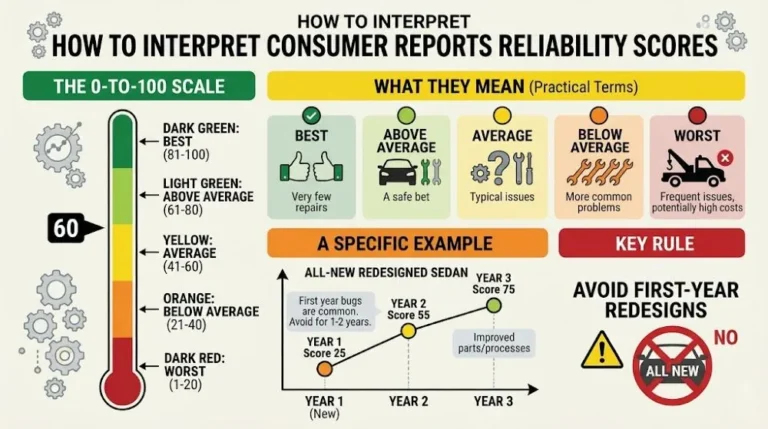
Rule One — Avoid the first year of any major redesign. Consumer Reports reminds shoppers that it’s always wiser to avoid brand-new models, which often experience problems in their first year. This rule applies universally across all American brands. The GMC Acadia redesigned for 2025 scores well below average. The Chevrolet Equinox redesigned for 2025 scores well below average. The Ram 1500 with the new Hurricane engine in 2025 fell dramatically in reliability rankings. The model year that follows a major redesign is almost always the worst reliability year in any generation’s production run.
Rule Two — Avoid first-generation EVs and PHEVs from American brands. The reliability pattern for first-generation electric and plug-in hybrid American vehicles is consistent enough in 2026 to treat as a reliable prediction: they score below average. The Chrysler Pacifica Hybrid, the Jeep Grand Cherokee PHEV, the Lincoln Corsair PHEV, the Chevrolet Blazer EV, the Cadillac Lyriq, and the Cadillac Optiq all score below average in Consumer Reports’ 2026 study. The exceptions — the Tesla Model Y, the Ford Maverick Hybrid — are vehicles that have been in production long enough to resolve first-generation issues.
Rule Three — Buy the brand that has stayed stable, not the brand that has grown fastest. Buick’s reliability leadership in 2026 is directly connected to its product strategy of evolutionary improvement rather than aggressive new model launches. A brand that introduces three new redesigned models in a single model year is almost certain to produce below-average reliability scores for those specific new models, regardless of how impressive the vehicles appear at launch.
Rule Four — Verify with both Consumer Reports and J.D. Power before purchasing. The two studies measure different things and produce different results. J.D. Power’s VDS measures three-year-old vehicles; Consumer Reports measures predicted reliability based on current and recent data. Using both together — checking whether a specific model scores above average in Consumer Reports and whether its brand scores well in J.D. Power’s three-year dependability data — gives the most complete available picture of what to expect.
Rule Five — Choose conventional gasoline over hybrid or EV when reliability is the priority. This rule will not apply forever — hybrid reliability is improving as technology matures — but in 2026, the data is clear. Hybrids are most reliable when they use proven systems; EVs have 80% more issues than gas cars. For any American brand where the conventional gasoline version and the electrified version are both available, the conventional gasoline version will almost always score better on reliability for the current generation.
Understanding which American cars score above average for reliability reduces but does not eliminate the likelihood of repairs — our complete guide to how to fix common car problems covers every warning sign from check engine lights to dead batteries to brake noise, providing the diagnostic knowledge that every American car owner needs regardless of which brand’s reliability score persuaded them to buy.
FAQ
Q: What is the most reliable American car brand in 2026?
A: Buick is the most reliable American car brand in 2026 by both major reliability studies. Buick leads all domestic mass-market brands in J.D. Power’s 2026 Vehicle Dependability Study with 160 problems per 100 vehicles. In Consumer Reports’ 2026 reliability rankings, Buick ranks 8th overall out of 28 brands — the highest-ranking domestic manufacturer. The five least reliable brands in Consumer Reports’ 2026 study are all American: Chrysler, GMC, Jeep, Ram, and Rivian.
Q: Which specific American cars are most reliable in 2026?
A: The most reliable specific American cars in 2026 based on Consumer Reports data are the Buick Envision (above average), Chevrolet Corvette (above average), Chevrolet Trax (above average), Ford Bronco Sport (above average), and Ford Maverick (above average). The Tesla Model Y scores well above average — the best result of any American-branded vehicle in the study. The Buick Encore GX and Cadillac CT4 are recognized by J.D. Power’s 2026 Vehicle Dependability Study as among the most dependable in their segments.
Q: Is the Ford F-150 reliable in 2026?
A: No. The Ford F-150, F-150 Hybrid, and F-150 Lightning all land below average for reliability in Consumer Reports’ 2026 study, despite Ford overall ranking 11th — its best showing in 15 years. The F-150’s below-average reliability score contrasts specifically with the Ford Bronco Sport and Ford Maverick, which score above average. For buyers who want a reliable Ford truck, the Maverick is the specific recommendation. For buyers who specifically need an F-150, Ford’s established 5.0-liter naturally aspirated V8 configuration has a better reliability track record than the turbocharged EcoBoost configurations.
Q: Are American EVs reliable in 2026?
A: American EVs as a group are not reliable in 2026. Consumer Reports documents that EVs have 80% more issues than gas cars on average in 2026. First-generation American EVs — the Chevrolet Blazer EV (19/100), the Cadillac Lyriq and Optiq (below average), the Rivian R1T and R1S (well below average), and the F-150 Lightning (below average) — all score poorly. The exception is the Tesla Model Y, which scores well above average due to its production maturity. The recommendation for buyers who want an electric American vehicle is to wait for second-generation models or choose a Tesla Model Y.
Q: What should I avoid when buying an American car for reliability?
A: Avoid the following when prioritizing reliability in an American car purchase: any first-year redesign across all American brands; any first-generation EV from American brands other than Tesla; plug-in hybrid models including the Chrysler Pacifica Hybrid, Jeep Grand Cherokee PHEV, and Lincoln Corsair PHEV; the Ram 1500 in its current generation with the new Hurricane engine; any GMC product redesigned for 2025; and the Rivian R1T or R1S. Choose models that have been in production for at least two years without a major redesign and that use conventional gasoline powertrains with documented reliability histories.
Q: Is the Chevrolet Corvette reliable?
A: Yes. The Chevrolet Corvette scores above average for predicted reliability in Consumer Reports’ 2026 ratings — an impressive result for a high-performance sports car. The C8 mid-engine platform has been in production long enough to accumulate real-world reliability data, and that data supports an above-average reliability finding. The Corvette’s LT2 naturally aspirated V8 powertrain contributes to its reliability standing. It is one of very few American performance cars that earns an above-average reliability score in Consumer Reports’ current study.
The Bottom Line
The most reliable American cars in 2026 are the ones that have been in production the longest without being redesigned. Buick understands this. Ford’s Bronco Sport and Maverick demonstrate it. The Chevrolet Corvette and Trax confirm it. The rule is consistent enough across American brands that it functions as a reliable prediction rather than a general guideline.
The least reliable American vehicles in 2026 are the newest ones — the first-year redesigns, the first-generation EVs, and the newly introduced powertrain configurations that have not had enough real-world production time to resolve the issues that always accompany major engineering changes. The Ram 1500’s fall from best-in-industry to 25th place in 24 months is the most dramatic illustration of what happens when a major new powertrain meets first-year production reality. The Chevrolet Blazer EV’s 19-out-of-100 reliability score is the most extreme illustration of what first-generation EV technology costs in reliability terms.
For buyers who want the most complete available set of independent reliability guidance before a 2026 purchase decision, the CarEdge 10 reliable cars for 2026 complete analysis draws on Consumer Reports, J.D. Power, and CarEdge’s own pricing data to identify the specific models that best combine reliability with value in the current market.
The domestic brand average is 41 out of 100. It is improving. The gap between American brands and the Japanese brands that consistently occupy the top of the reliability rankings is narrowing. It has not closed. The buyers who are reading the actual data — Consumer Reports and J.D. Power, annually, for the specific model and the specific year — are making decisions based on what the evidence shows rather than what the advertising suggests. For American car buyers who want reliability to be their primary criterion in 2026, that specific habit is the most important single investment available.
Editorial Note
This article was written and reviewed in June 2026. All reliability rankings and scores are sourced from the following primary sources: Consumer Reports’ “Who Makes the Most Reliable Cars?” published December 4, 2025 — primary source for all Consumer Reports brand rankings (Buick 8th, Tesla 9th, Ford 11th, Chevrolet 17th, Cadillac 18th, Lincoln 20th, GMC 23rd, Jeep 24th, Ram 25th), all model-specific above-average and below-average designations, the domestic brand average score of 41/100, the 80% more issues figure for EVs, and the Chevrolet Blazer EV 19/100 figure.
Autoblog’s “The Winners and Losers of Consumer Reports’ 2026 Rankings” (December 10, 2025) — primary source for the Ford 15-year best showing context, the F-150 below-average confirmation, and the five least reliable brand list; J.D. Power’s 2026 Vehicle Dependability Study as reported by The Car Guide (February 17, 2026) — primary source for J.D. Power brand rankings including Buick 160 PP100, Cadillac 175 PP100, Chevrolet 178 PP100, GMC 229 PP100, and Ford 228 PP100; and TopSpeed’s “Most Reliable Car Brands in 2025–2026” (February 17, 2026) — supplementary source for the Cadillac CT4 reliability characterization, the first-generation EV reliability pattern description, and the Buick mass-market leadership confirmation.
J.D. Power VDS scores are problems per 100 vehicles — lower scores indicate better reliability. Consumer Reports brand scores are on a 0-to-100 scale — higher scores indicate better reliability. The Ram 218 problems per 100 vehicles figure is from the J.D. Power 2025 Initial Quality Study as previously documented. All model-specific Consumer Reports reliability designations reflect predicted reliability ratings based on data collected from 380,000+ vehicles covering model years 2000 through early 2026.

1 Comment
Ronald Rein · at 6:28 pm
Your choices leave a lot to be learned before someone goes out to buy one. LaCrosse and Cascada are out of production. Good liuck with parts for the Opel built Cascada. The Continental is also out of production. A few of the others should be out of production because they are not as good and or reliable as you seem to think.
Comments are closed.