Last Updated: March 04 2026 | Read Time: 9 minutes
Safety scores, real prices, insurance realities, and honest opinions — everything you need to make the right call for best first car for teenagers.
At A Glance – Our Top 7 Picks
1. Chevrolet Trax — Best Overall Value | Starts at $21,600
2. Ford Bronco Sport — Best for Active Teens | Starts at ~$29,500
3. Ford Maverick Hybrid — Best Fuel Economy | Starts at ~$28,145
4. Chevrolet Equinox — Best All-Around Compact SUV | Starts at ~$28,200
5. Jeep Compass — Best Personality + Practicality | Starts at ~$26,995
6. Ford Escape — Best Safety Tech for the Price | Starts at ~$30,095
7. Buick Encore GX — Best Premium Pick Under $35K | Starts at ~$29,995
Safety Benchmark: All picks carry IIHS Top Safety Pick, NHTSA 4–5 Star ratings, or both — plus standard automatic emergency braking.
Teen Driving Stat: Motor vehicle crashes remain the third leading cause of death for teenagers in the U.S. (IIHS, 2025)
Sources: IIHS 2025/2026 ratings, NHTSA 5-Star data, KBB, Edmunds, U.S. News & World Report, iSeeCars
Why Choosing Your Teen’s First Car Is The Most Important Vehicle Decision You’ll Make
There’s a very specific kind of silence that happens when a parent hands car keys to a teenager for the first time. It’s equal parts pride, excitement, and quiet terror. Every parent who’s been there knows exactly what that feels like — and every parent also knows that the car sitting in the driveway plays a massive role in how that next chapter goes.
Picking the right first car for a teenager in 2026 is not the same decision it was ten or fifteen years ago. The good news is that modern cars — even affordable ones — are dramatically safer than anything that existed in previous generations. Standard automatic emergency braking, lane departure warning, blind-spot monitoring, and forward collision alerts are now common even on entry-level vehicles. If there’s one advantage today’s teen drivers have over every previous generation, it’s this: the cars available to them are loaded with technology specifically designed to compensate for exactly the kind of mistakes that inexperienced drivers make.
The not-so-good news is that the market is genuinely confusing right now. Between rising sticker prices, tariff-driven cost increases on parts and manufacturing, insurance rates that remain near historic highs for young drivers, and a sea of choices across every segment, finding the right car requires cutting through a lot of noise.
This list cuts through it. We focused exclusively on American-brand vehicles — Ford, Chevrolet, Jeep, Buick — because these brands offer the best combination of dealer availability, parts affordability, service network coverage, and resale stability for buyers across the country. Every pick on this list has been selected based on real 2026 data: current MSRP pricing, IIHS and NHTSA crash test results, standard safety technology content, real-world fuel economy, and the kind of practical, daily-driving experience that actually matters when a 16-year-old is navigating a school parking lot for the first time.
These are not just safe choices. They are genuinely good choices that teens will actually want to drive — which matters more than most parents like to admit.
What We Looked For — Our Criteria
Before we get to the list, here’s the exact framework we used to evaluate every vehicle.
Safety ratings came first, full stop. We required a minimum of 4 stars from NHTSA or at minimum Good ratings in critical IIHS Top Safety Pick ratings. Any vehicle that scored Poor in a major crashworthiness test was removed from consideration regardless of price or features.
We then looked at standard safety technology. Automatic emergency braking with pedestrian detection, lane-keeping assist, forward collision warning, and a rearview camera are the baseline. Vehicles that offer blind-spot monitoring and rear cross-traffic alert at lower price points scored higher.
Teen-specific features earned bonus consideration. Chevrolet’s Teen Driver system, Ford’s MyKey system, and similar parental monitoring tools are genuinely useful for real-world teen driving situations — not just nice-to-have marketing features.
Price and total cost of ownership mattered. We looked at the starting MSRP, but we also factored in insurance costs (teen insurance can add $3,000–$5,000 per year to a family policy), fuel economy, and the likely maintenance cost profile. An affordable sticker price that comes with brutal insurance premiums or poor reliability isn’t actually a good deal.
Finally, we considered driveability for new drivers. Massive trucks and high-horsepower performance vehicles are excluded for good reason — not because teens can’t handle them in theory, but because the data is clear that inexperienced drivers in high-power, large-footprint vehicles have statistically higher accident rates. The right first car is manageable in size, predictable in handling, and forgiving of the kind of minor mistakes every new driver makes.
Our 7 Best First Cars For Teenagers In 2026
Number 1 — Chevrolet Trax 2026
Best Overall Value for Teen Drivers
– Starting Price: $21,600 (LS) | Range: $21,600–$26,695
– Engine: 1.2L Turbocharged 3-cylinder — 137 hp / 162 lb-ft
– Transmission: 6-speed automatic | Drive: Front-Wheel Drive only
– Fuel Economy: 28 city / 32 highway / 30 combined (EPA)
– NHTSA Rating: 4 Stars Overall
– IIHS: Good in frontal overlap tests; note rear-passenger concerns in updated side test
– Teen-Specific Feature: Standard Chevrolet Teen Driver system
Recommended Trim for Teens: LT ($23,100) or 1RS ($23,100)
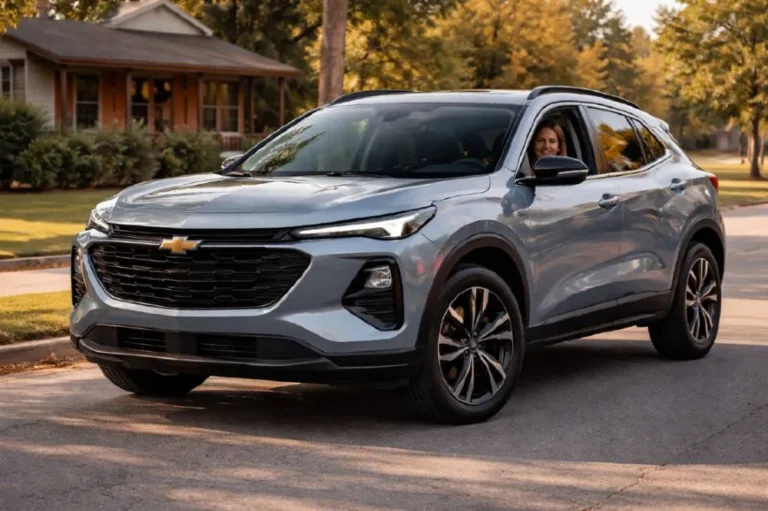
The Chevy Trax is the most compelling first-car story in the American market right now, and it’s not particularly close. At $21,600 to start — less than many used cars sell for — the 2026 Trax is a subcompact SUV that feels like it should cost significantly more. The completely redesigned second-generation Trax (which debuted for 2024) didn’t just update an old car. It essentially replaced it with something dramatically better in almost every dimension.
The interior is the biggest surprise. Most people who get in a 2026 Trax for the first time comment on how much space it has. The passenger volume is genuinely generous for the class — adult-sized rear passengers sit comfortably, and up to 54 cubic feet of cargo space with the rear seats folded puts it in range of compact SUVs that cost $10,000 more. The 11-inch HD touchscreen on LT and higher trims is large, clean, and intuitive, with standard wireless Apple CarPlay and Android Auto.
For a teen driver, the headline feature is the standard Chevrolet Teen Driver system. This is not a marketing gimmick — it’s a genuinely useful parental tool that lets you set maximum speed limits (a chime activates when your teen approaches the threshold), cap the audio volume (so they can’t blare music at hearing-damaging levels), and generate a report card that logs driving behavior every time the car is used. You can see how fast they drove, whether stability control activated, whether they got into any forward-collision alerts. For parents handing over keys to a new driver for the first time, this kind of real-world data is worth real money.
Safety technology across all Trax trims includes forward collision warning with automatic emergency braking, pedestrian detection, lane departure warning, lane-keep assist, automatic high beams, and a standard rearview camera. Blind-spot monitoring and rear cross-traffic alert are available for just $395 through the Driver Confidence package — a small investment that pays dividends for new drivers who are still developing their awareness of surrounding traffic.
The honest caveat: the Trax’s IIHS story has some nuance. It scored Good in the most important frontal overlap tests — the ones that simulate the most common real-world collision types. The rear-passenger scores in newer updated IIHS tests were less impressive. For a teenager who will typically be driving solo or with one passenger in the front seat, this is a manageable trade-off at the price point. But it’s worth knowing.
The bottom line on the Trax: at $23,100 for the LT trim — fully equipped with the big screen, Teen Driver, and standard safety suite — this is the best bang-for-buck first car for a teenager in the American market in 2026. Nothing else comes close at this price.
Why parents love it: Teen Driver system, affordable insurance rates, manageable size for a new driver, great cargo space.
Why teens love it: Sharp looks that don’t scream “starter car,” wireless CarPlay, responsive touchscreen, available sporty RS trim styling.
Number 2 — Ford Bronco Sport 2026 – Best For Active Teens
– Starting Price: ~$29,500 (Big Bend) | Range: ~$29,500–$43,000
– Engine: 1.5L EcoBoost 3-cylinder — 181 hp / 190 lb-ft (standard); 2.0L EcoBoost 4-cylinder — 245 hp (Badlands/First Edition)
– Transmission: 8-speed automatic
– Fuel Economy: 25 city / 28 highway (1.5L)
– NHTSA Rating: 5 Stars Overall
– IIHS: Good across most crashworthiness tests; Marginal in updated moderate-overlap rear passenger; overall strong frontal protection
– Teen-Specific Feature: Ford MyKey system (standard)
– Recommended Trim for Teens: Big Bend ($29,500) or Outer Banks ($33,000)
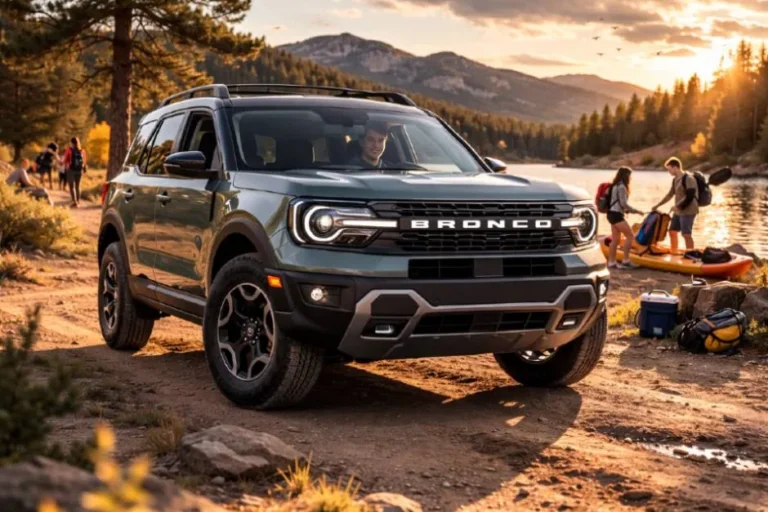
Here’s a vehicle that has become one of the most popular new cars for young Americans under 30, and the reasons are completely understandable. The Bronco Sport looks genuinely interesting. It has real personality in a segment that can feel anonymous. And it backs up the style with one of the strongest NHTSA safety records in its class — a full 5-star overall rating that speaks directly to what matters most when a teenager is behind the wheel.
The Bronco Sport is built on the same unibody platform as the Ford Escape, which means it has car-like handling and a comfortable daily ride despite its rugged appearance. The standard 1.5L EcoBoost three-cylinder makes 181 horsepower — enough to feel genuinely capable without being the kind of power that tempts a 17-year-old to make bad decisions at highway merge ramps. The size is right, too. At under 173 inches long, it’s compact enough to be easy to park and comfortable in tight spaces, which matters enormously for new drivers building spatial awareness.
Ford’s MyKey system — standard on all Bronco Sport models — is one of the most comprehensive teen driver monitoring tools in the industry. Using MyKey, parents can program a dedicated key fob that limits top speed to 80 mph, activates seat belt reminders earlier, reduces the maximum audio volume, and automatically enables Do Not Disturb mode to limit phone interaction while driving. The MyKey settings can’t be overridden by the teen driver without the master key, which removes the obvious workaround that some teens might attempt.
Ford’s Co-Pilot360 package is standard on most Bronco Sport trims, bringing automatic emergency braking, lane-keeping alert, blind-spot monitoring, rear cross-traffic alert, and automatic high beams. This is one of the most comprehensive standard safety suites in the segment — other manufacturers charge extra for features the Bronco Sport includes from the factory.
The honest trade-off: the Bronco Sport is more expensive than the Trax, and the insurance cost for a teenager will be meaningfully higher due to its higher vehicle value. If budget is the primary concern, the Trax wins on pure economics. But if the family can afford it, the Bronco Sport offers a step up in safety rating, build quality, standard feature content, and the kind of broad appeal that makes it genuinely exciting for a young driver to own.
Why parents love it: 5-star NHTSA rating, comprehensive MyKey teen driver system, Co-Pilot360 safety suite standard on most trims.
Why teens love it: Genuinely cool looking, rugged personality, practical for outdoor activities, right size for solo driving and hauling gear.
Number 3 — Ford Maverick Hybrid 2026 – Best Fuel Economy And One Of The Most Unique First Cars On The Market
– Starting Price: ~$28,145 (XL Hybrid FWD) | Range: ~$28,145–$42,340
– Engine: 2.5L Hybrid 4-cylinder — 191 hp combined system output; OR 2.0L EcoBoost 4-cylinder — 238 hp
– Transmission: CVT (Hybrid) or 8-speed automatic (EcoBoost)
– Fuel Economy (Hybrid): 42 city / 35 highway / 38 combined (EPA)
– NHTSA Rating: 4 Stars Overall (2025 data — 2026 not yet tested)
– IIHS: Good in side crash; Marginal in updated moderate-overlap front test (2024-25 data)
– Teen-Specific Feature: Ford MyKey (standard); available Co-Pilot360
– Recommended Config for Teens: XLT Hybrid FWD (~$29,145)
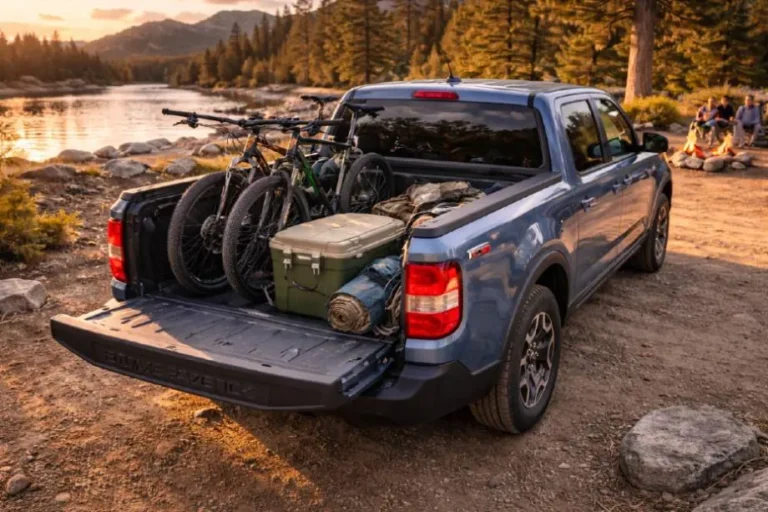
The Ford Maverick Hybrid is one of the most unusual vehicles on this list — and potentially one of the most practical. It’s a compact pickup truck with a unibody design that drives more like an SUV than a traditional truck. It’s the smallest pickup sold in America in 2026. And when equipped with the standard hybrid powertrain, it returns 42 miles per gallon in city driving — a figure that most compact sedans can’t match, let alone a vehicle with an open cargo bed.
For the right kind of teenager, the Maverick is a genuinely inspired first car choice. If your teen is active — hauling sports equipment, musical gear, camping supplies, mountain bikes, or anything else that simply doesn’t fit in a traditional car — the 4.5-foot cargo bed solves a real problem that no SUV with a hatchback fully addresses. The Maverick is also FLEXBED-compatible, meaning it has mounting points and optional dividers that let you configure the bed for specific gear. It’s practical in a way that most first-car recommendations simply aren’t.
Fuel costs deserve special attention here. At 42 mpg city, a teen driver doing typical suburban and urban driving on the Maverick Hybrid will spend dramatically less on gas than with any other vehicle on this list. At $4 per gallon for gas, the fuel savings versus a non-hybrid vehicle getting 28 combined mpg — over 12,000 miles of annual driving — could easily exceed $600 per year. Over four years of high school and the first years of college, that adds up to a real number.
The 13.2-inch touchscreen is the largest display in the class, with standard wireless Apple CarPlay and Android Auto. The Ford Co-Pilot360 safety suite — which adds blind-spot monitoring, adaptive cruise control, and lane-centering steering on upper trims — is available as an option on the base trims or comes standard on Lariat and above.
The honest trade-offs: the Maverick’s IIHS frontal crash score in the updated test was Marginal for rear-seat passenger protection. The cargo bed means the vehicle is slightly longer and wider than a subcompact SUV, which could be less ideal for very new drivers in tight urban environments. And the hybrid powertrain, while exceptionally fuel-efficient, isn’t the fastest accelerator in any scenario. None of these are dealbreakers for the right buyer — but they’re worth knowing before you commit.
Why parents love it: Extraordinary fuel economy cuts costs significantly over time, MyKey teen monitoring system, practical cargo bed for active teens.
Why teens love it: Actually feels unique and cool among high school parking lots, massive screen, hybrid powertrain feels smooth and modern, bed is genuinely useful.
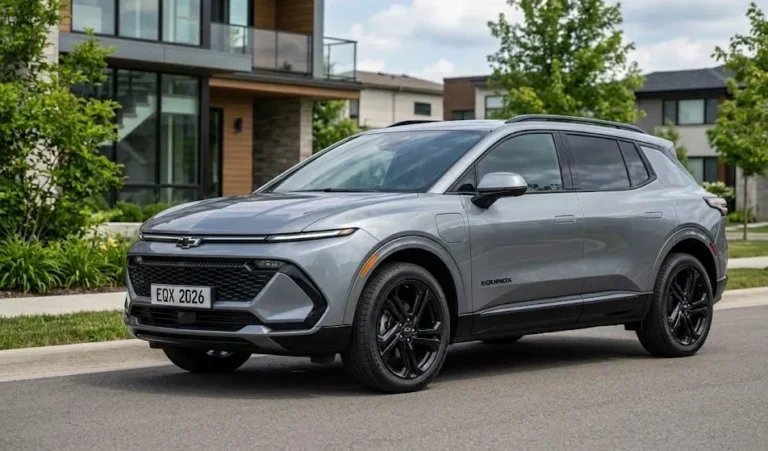
Number 4 — Chevrolet Equinox 2026 – Best All-Around Compact SUV For A New Driver
– Starting Price: ~$28,200 (LS) | Range: ~$28,200–$38,000+
– Engine: 1.5L Turbocharged 4-cylinder — 175 hp / 203 lb-ft
– Transmission: 6-speed automatic | Available Drive: FWD or AWD
– Fuel Economy: 26 city / 31 highway / 28 combined (EPA, FWD)
– NHTSA Rating: 5 Stars Overall (2024-25 data, applies to 2026)
– IIHS: Multiple Good ratings in key crashworthiness tests; IIHS Top Safety Pick consideration
– Teen-Specific Feature: Chevrolet Teen Driver system (standard)
– Recommended Trim for Teens: LT FWD (~$30,200)
If the Trax is too small and the Bronco Sport feels too rugged, the 2026 Chevrolet Equinox is the answer. It occupies the sweet spot between entry-level and midsize SUV — spacious enough for real-world family use without being the kind of large vehicle that overwhelms a new driver. The Equinox has been one of the best-selling vehicles in America for over a decade, and its popularity is built on a straightforward formula: solid reliability, competitive pricing, a comfortable ride, and consistently strong safety ratings.
The 5-star NHTSA overall rating on the current-generation Equinox is the headline safety achievement. For parents who are specifically worried about frontal crash protection — the most statistically common accident type for teen drivers — this rating offers genuine peace of mind. The standard Chevy Safety Assist package includes forward collision warning, automatic emergency braking with pedestrian detection, lane-keep assist with lane departure warning, automatic high beams, and a standard rear vision camera.
The Teen Driver system returns from the Trax — same functionality, same ability to set speed caps, generate report cards, and monitor driving habits. Given that this is one of the most genuinely useful teen-driver features in the industry, having it standard across the Chevrolet SUV lineup is a meaningful advantage over many competitors.
The Equinox also offers available all-wheel drive — a real-world advantage in snow-belt states where teen drivers will be navigating winter conditions. The Trax is front-wheel drive only, so if you live anywhere that gets meaningful snowfall between November and March, the Equinox’s AWD option moves it up the list significantly.
Why parents love it: 5-star NHTSA rating, standard Teen Driver system, available AWD for winter safety, proven long-term reliability track record.
Why teens love it: Roomy enough for passengers and cargo, comfortable ride, modern infotainment system, doesn’t feel like a punishment car.
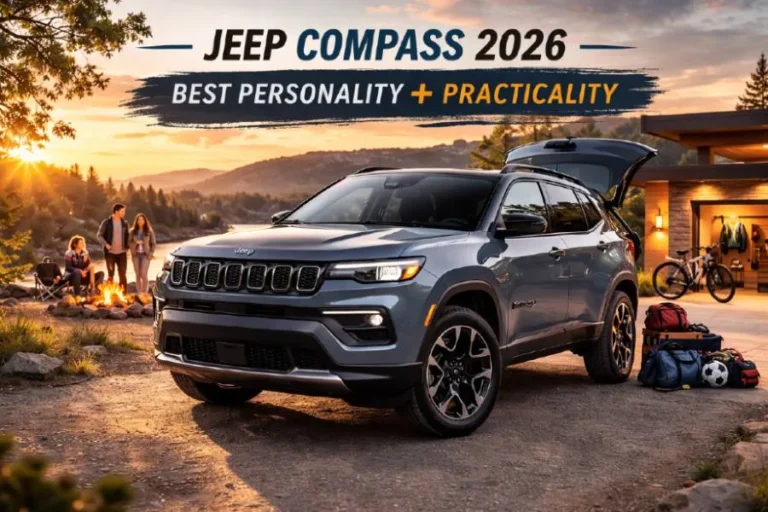
Number 5 — Jeep Compass 2026 – Best Personality Plus Practicality
– Starting Price: ~$26,995 (Sport) | Range: ~$26,995–$37,000+
– Engine: 2.0L Turbocharged 4-cylinder — 200 hp / 221 lb-ft
– Transmission: 8-speed automatic | Available Drive: FWD or 4WD
– Fuel Economy: 24 city / 32 highway / 27 combined (FWD)
– NHTSA Rating: 5 Stars Overall
– IIHS: Good ratings in key crashworthiness tests; IIHS Top Safety Pick status on select builds
– Teen-Specific Feature: Available Uconnect Family app monitoring, ParkView rear camera standard
– Recommended Trim for Teens: Latitude 4×2 (~$30,495)
There are practical reasons to put the Jeep Compass on this list. A 5-star NHTSA overall safety rating. Solid IIHS crashworthiness scores. A 200-horsepower turbocharged engine that’s powerful enough to feel genuinely fun without crossing into the territory where horsepower becomes a liability for inexperienced drivers. A manageable 173-inch length that makes it easy to park and maneuver.
But if we’re being honest, the Compass also makes this list for a reason that’s harder to quantify in data: it’s one of the most genuinely desirable vehicles in this price range for a young driver. The Jeep brand carries a cultural relevance among American teenagers that no amount of feature sheets can replicate. A 16-year-old who is genuinely excited about their first car is more likely to take care of it, pay attention to service intervals, and feel positively about the driving experience. That psychological dimension of the purchase decision matters more than most parents acknowledge.
The 2026 Compass is available with four-wheel drive — a genuine 4WD system, not just all-wheel drive — which gives it capability that goes well beyond school parking lots. For families in mountainous states, rural communities with dirt and gravel roads, or northern regions with serious winter conditions, the Compass’s 4WD credentials are real-world useful. Standard safety features include automatic emergency braking, forward collision warning, blind-spot monitoring on most trims, lane departure warning, and a rearview camera with dynamic guidelines.
The 10.1-inch Uconnect 5 touchscreen is intuitive and well-organized. Wireless Apple CarPlay and Android Auto are standard. The available Uconnect Family mobile app allows parents to track the vehicle’s location, receive speed alerts, and review driving history — similar in concept to Ford’s MyKey and Chevy’s Teen Driver systems.
Why parents love it: 5-star NHTSA rating, available 4WD, standard comprehensive safety tech, location and speed monitoring through Uconnect app.
Why teens love it: Authentic Jeep identity, goes off-road, looks genuinely cool, removable top available on higher trims.
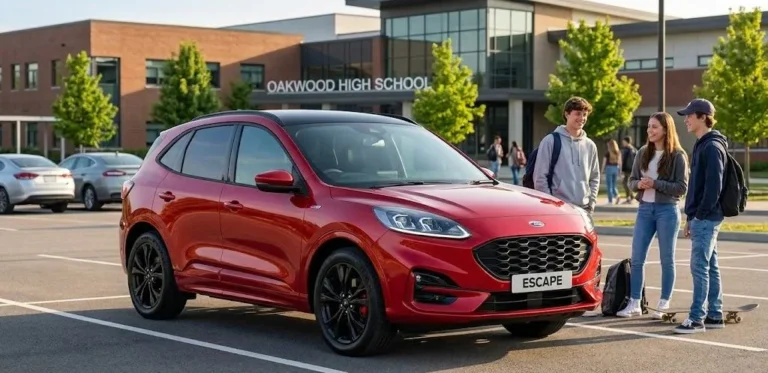
Number 6 — Ford Escape 2026 – Best Safety Technology For The Price
– Starting Price: ~$30,095 (Active) | Range: ~$30,095–$38,000+
– Engine: 1.5L EcoBoost 3-cylinder — 181 hp; OR 2.5L PHEV — 221 hp combined system
– Transmission: 8-speed automatic (gas); CVT (hybrid/PHEV) | Available Drive: FWD or AWD
– Fuel Economy: 28 city / 34 highway / 30 combined (1.5L FWD)
– NHTSA Rating: 5 Stars Overall
– IIHS: IIHS Top Safety Pick+ on select configurations — among the highest ratings available
– Teen-Specific Feature: Ford MyKey (standard); available Co-Pilot360 Assist 2.0
– Recommended Trim for Teens: Active FWD (~$30,095) or ST-Line ($31,495)
The Ford Escape is the most safety-decorated vehicle on this list, full stop. On select configurations, the 2026 Escape earns IIHS Top Safety Pick+ status — the highest award the Institute gives, which requires top scores not just in crashworthiness but also in crash avoidance technology and headlight performance. Combined with a 5-star NHTSA overall rating, the Escape offers the most comprehensive safety credential package of any American-brand vehicle in the compact SUV segment at this price point.
For parents who have decided that safety is the single most important criterion — full stop — and are willing to spend $30,000 to get it, the Escape is the answer. Nothing else on this list can match the Top Safety Pick+ credential, and that credential represents a real, measurable difference in how well this vehicle protects its occupants in the types of crashes most likely to involve a teen driver.
Ford’s Co-Pilot360 is standard, bringing automatic emergency braking, lane departure alert, blind-spot monitoring, rear cross-traffic alert, and automatic high beams. The available Co-Pilot360 Assist 2.0 package — standard on higher trims — adds adaptive cruise control with stop-and-go, lane centering, predictive speed assist, and intersection assist. These are the kinds of features that actively assist an inexperienced driver during the most demanding driving scenarios: highway driving at speed, navigating intersections, and maintaining safe following distances in traffic.
The MyKey teen monitoring system is standard. The 13.2-inch touchscreen with wireless Apple CarPlay and Android Auto is one of the largest in the class. The available plug-in hybrid version — the Escape PHEV — adds electric-only range alongside full hybrid capability, which could reduce fuel costs dramatically for teens with short daily drives where the battery charge covers most of the mileage.
Why parents love it: IIHS Top Safety Pick+ on select builds — the highest safety award available, comprehensive Co-Pilot360 standard, MyKey teen monitoring.
Why teens love it: Sporty ST-Line trim looks sharp, large touchscreen, smooth ride, available PHEV option for low fuel costs.
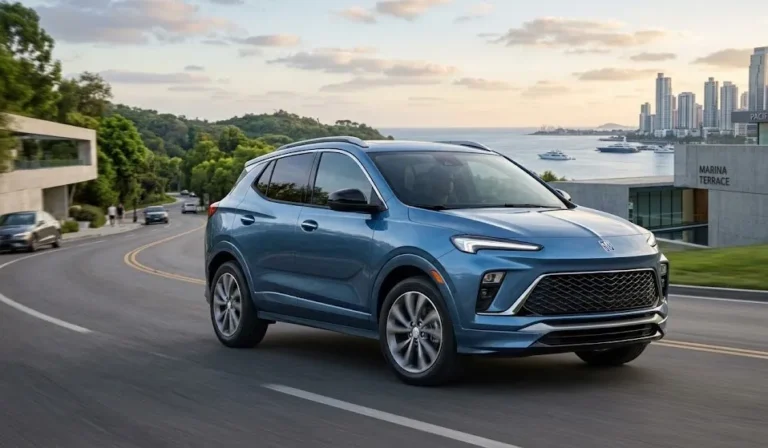
Number 7 — Buick Encore GX 2026 – Best Premium Pick Under $35,000
– Starting Price: ~$29,995 (Preferred) | Range: ~$29,995–$36,500+
– Engine: 1.2L Turbocharged 3-cylinder — 137 hp / 162 lb-ft; OR 1.3L Turbo 4-cylinder — 155 hp
– Transmission: 6-speed automatic | Available Drive: FWD or AWD
– Fuel Economy: 29 city / 33 highway / 31 combined (1.3L AWD)
– NHTSA Rating: 4 Stars Overall
– IIHS: Good ratings in primary crashworthiness tests; Top Safety Pick consideration on select builds
– Teen-Specific Feature: Available Buick Teen Driver (shared with GM platform)
– Recommended Trim for Teens: Select AWD (~$33,500)
The Buick Encore GX occupies a specific and useful niche: it’s a genuine premium small SUV — built by General Motors on a refined platform with noticeably better interior materials, quieter cabin isolation, and a more polished overall experience than the Trax or Equinox — yet it’s priced within range of those vehicles when you compare similarly-equipped models.
For families where the teen driver will also be the car for family weekend use, or for a parent who simply wants the vehicle to have a premium feel without paying for a full luxury brand, the Encore GX makes a compelling argument. The cabin is genuinely quieter than the Trax — active noise cancellation is standard on most trims — and the material quality on the dashboard and door panels is a noticeable step above what you find in the mainstream Chevrolet models.
The safety credentials are solid without being class-leading. The NHTSA 4-star overall rating trails the Bronco Sport, Equinox, Escape, and Compass on pure safety scoring — worth noting before making the final decision. But the available AWD and real-world stability in adverse conditions, combined with standard GM safety tech, make it a reasonable choice. If you’re choosing between the Encore GX and the Equinox, the Equinox wins on safety ratings. If you’re choosing between the Encore GX and a budget non-American luxury vehicle, the Encore GX wins on dealer network, parts availability, and service familiarity.
Why parents love it: Premium interior feel at a mainstream price, standard safety tech, GM Teen Driver system available, genuine AWD capability.
Why teens love it: Feels noticeably nicer than other cars at its price point, Buick badge carries subtle prestige, quiet and refined daily driver.
What The Statistics Actually Say About Teen Drivers In 2026
Before buying any car for a teenager, it’s worth spending a few minutes with the statistics — not to frighten anyone, but because understanding the actual risk profile helps explain why our criteria prioritized what they did.
According to the Insurance Institute for Highway Safety, teen drivers crash approximately four times more often per mile traveled than drivers over 20 years old. Motor vehicle crashes are the third leading cause of death for Americans aged 15–19. Roughly 19% of all fatal crashes in the U.S. in recent years involved a teenage driver.
The most common accident types for teen drivers are: rear-end collisions (failing to maintain safe following distance), single-vehicle crashes (running off the road), and intersection accidents. These are exactly the collision types that automatic emergency braking, lane departure assist, and intersection warning systems are designed to address. This is why every single vehicle on our list includes these technologies as standard equipment — because for a teen driver, they’re not optional safety extras. They’re primary safety infrastructure.
Weight and size also matter. Every vehicle on this list exceeds the IIHS minimum recommended curb weight of 2,750 pounds for teen driver vehicles. Lighter, smaller cars offer less crash energy absorption. The physics of a collision in a subcompact sedan versus a compact SUV are genuinely different — in favor of the SUV.
High horsepower is a genuine risk factor, not just a parental concern. The data consistently shows that inexperienced drivers in high-powered vehicles have higher crash rates. None of the vehicles on our list exceeds 245 horsepower (the Bronco Sport Badlands), and our recommended trims for most picks are in the 137–200 hp range. This isn’t timidity — it’s what the data supports.
What Adding A Teen To Your Policy Will Cost In 2026 — And How To Lower It
No first-car guide is complete without an honest conversation about insurance, because for many families, the insurance cost is the biggest single line item in the first-car budget — sometimes larger than the car payment itself.
Adding a 16-year-old to a family auto policy raises the household’s total insurance cost by approximately $2,500–$5,000 per year, according to 2025–2026 data from Insurify and Bankrate. Exact amounts depend heavily on the driver’s state, the family’s existing policy history, and — critically — the vehicle being insured. For a full breakdown of what American families are paying right now, read our guide to car insurance cost in the USA in 2026.
A higher-value vehicle costs more to insure. This is why the $21,600 Chevrolet Trax will typically carry lower insurance premiums for a teen driver than the $33,000 Buick Encore GX, even when both are insured on the same family policy. The actual difference depends on your insurer and state, but it’s real and can be substantial.
Here are the specific strategies that actually reduce teen insurance costs in 2026.
Good Student Discount: Most major carriers — State Farm, Progressive, Geico, Allstate — offer 10–15% discounts for teen drivers with a GPA of 3.0 or higher. If your teen is maintaining a B average or better, ask your insurer specifically about this discount. It’s commonly available but not always proactively offered.
Usage-Based / Telematics Programs: Programs like State Farm’s Drive Safe & Save, Progressive’s Snapshot, and Allstate’s Drivewise monitor actual driving behavior — hard braking, rapid acceleration, nighttime driving frequency, and overall mileage. Teen drivers who drive carefully can save 10–25% compared to standard rates through these programs. And as a secondary benefit, you get visibility into your teen’s actual driving habits.
Choosing the Right Vehicle: Insurance companies rate vehicles partly based on safety performance. Vehicles with Top Safety Pick+ ratings from IIHS sometimes receive favorable insurance ratings from certain carriers. The Ford Escape — the safety leader on our list — is worth asking your insurer about specifically before making the final purchase decision.
Driver’s Education Completion: Formal driver’s education courses — particularly those approved by state DMVs — typically earn a 5–10% discount from most major carriers. If your teen is completing a driver’s ed program, make sure to notify your insurer before or immediately after the course completion.
Adding to the Family Policy vs. Separate Policy: In almost every case, adding a teen to an existing family policy is cheaper than buying them a separate policy. The family policy shares the loss history of adult drivers, which lowers the overall premium calculation. A standalone policy for a 16-year-old reflects only their own inexperienced-driver risk profile — which is expensive.
Cars That Are The Wrong Choice For Teen Drivers In 2026
Understanding what not to buy is just as useful as the picks above. These categories represent genuinely bad choices for inexperienced drivers, regardless of what the marketing says.
High-performance sports cars: Cars like the Dodge Challenger, Camaro SS, or the legendary 1969 Chevrolet Camaro SS are dream machines for experienced enthusiasts — not starting points for new drivers. For a teenager, they are statistically dangerous. High horsepower directly correlates with higher crash risk for new drivers, and the insurance premium on any of these for a 16-year-old will be extraordinary — potentially exceeding $6,000–$8,000 per year for the vehicle alone.
Full-size trucks: Ford F-150, Chevrolet Silverado, GMC Sierra. These are brilliant trucks. They are also very long, very wide, have significant blind spots that experienced truck drivers manage intuitively but new drivers don’t, and are genuinely difficult to maneuver in typical parking and urban driving situations. The data on teen crash rates in full-size trucks is not encouraging.
Very old, low-cost used vehicles: The temptation to buy a 15-year-old car for $5,000 to keep costs down is understandable. But pre-2015 vehicles are missing the automatic emergency braking, blind-spot monitoring, and lane-departure technology that modern studies show meaningfully reduce teen crash rates. The cost savings on the vehicle are frequently offset by the increased probability of a serious accident — and the medical, legal, and insurance consequences that follow.
Convertibles: Any convertible performs significantly worse in rollover crash scenarios. For a demographic with above-average crash rates, removing the structural roof protection is a risk not worth taking regardless of price.

FAQs
Q: What is the best first car for a teenager in 2026?
A: The best first car depends on your budget and priorities. If value is the primary concern, the 2026 Chevrolet Trax at $21,600 is the standout choice — affordable, well-equipped with the Teen Driver monitoring system, and right-sized for a new driver. If safety is the absolute top priority and budget allows, the 2026 Ford Escape on select builds earns IIHS Top Safety Pick+ status — the highest available safety award. The Ford Bronco Sport at $29,500 is our recommendation for active teens who need a rugged capable vehicle with 5-star NHTSA safety.
Q: Are American brand cars good for teen drivers?
A: Yes. Ford and Chevrolet in particular offer two of the most comprehensive teen-driver monitoring tools in the industry — Ford’s MyKey and Chevrolet’s Teen Driver system. These are factory-built parental controls that set speed limits, audio volume caps, and generate driving behavior reports. Both systems are standard on all Ford and Chevrolet models listed above. American brands also benefit from the largest dealer service networks in the country, making maintenance accessible and affordable regardless of where your teen is attending school.
Q: What is the safest car for a teenage driver in 2026?
A: Among American brands, the 2026 Ford Escape on select configurations earns IIHS Top Safety Pick+ — the highest safety award available in 2026. The 2026 Chevrolet Equinox, Ford Bronco Sport, and Jeep Compass all carry 5-star NHTSA overall ratings. Every vehicle on our list has NHTSA ratings of 4 stars minimum.
Q: How much does car insurance cost for a teenager?
A: Adding a 16-year-old to a family auto policy increases annual insurance costs by approximately $2,500–$5,000, depending on state, vehicle, and the family’s existing policy history. Choosing a lower-value vehicle (like the Trax versus a higher-priced option), pursuing good student discounts, completing driver’s education, and enrolling in a telematics/usage-based insurance program are the most effective strategies to reduce that cost.
Q: Should I buy my teenager a new or used car?
A: Both can work well. If buying used, prioritize vehicles from 2021 model year or newer — recent enough to include standard automatic emergency braking and other key safety technologies. IIHS and Consumer Reports’ joint safe vehicles for teens resource specifically identifies recommended used models by price range. If budget allows for a new car, the $21,600 starting price of the 2026 Chevrolet Trax has made the “new vs. used” calculation more competitive than it’s ever been for American-brand subcompact SUVs.
Q: Does horsepower matter when choosing a teen’s first car?
A: Yes, and significantly. Research consistently shows that inexperienced drivers in high-horsepower vehicles have higher accident rates. As a practical guideline, look for vehicles with under 200–225 horsepower for a teenage driver’s first car. All of our recommended trims fit within this range. The dopamine hit of a fast car is not worth the statistical consequences for a driver who is still developing the reflexes and judgment that come with experience.
Conclusion
Choosing the first car for your teenager is genuinely one of the more consequential purchases a family makes. The vehicle they learn to drive in shapes their habits, their confidence, and — statistically — their accident risk during the most dangerous years of any driver’s life.
The good news in 2026 is that the American automotive brands have produced a lineup of genuinely excellent options at every price point. The Chevy Trax at $21,600 is probably the most impressive first-car value story the domestic market has seen in years. The Ford Escape’s Top Safety Pick+ credentials represent the pinnacle of what any car in this price range can offer in crash protection. And the Ford Maverick’s 42-mpg hybrid drivetrain makes the economics of first-car ownership more manageable than any previous generation of teenagers has experienced.
None of these cars will prevent every accident. Nothing will. But the right vehicle, equipped with the right technology, monitored with the right parental tools, and insured thoughtfully — that combination meaningfully changes the odds. And that’s the whole point.
Editorial Note
This article was written and reviewed in February 2026. All pricing reflects manufacturer MSRP as of February 2026 and excludes destination charges, dealer fees, and applicable taxes unless noted. Safety ratings are sourced from IIHS 2025/2026 data and NHTSA 5-Star Safety Ratings current as of the date of publication. Insurance cost estimates are based on Insurify and Bankrate national averages and will vary significantly by state, insurer, and individual policy. Always obtain multiple insurance quotes before purchasing a vehicle for a teen driver. This article does not constitute financial or insurance advice.



0 Comments