Last Updated: September 12, 2026 | Read Time: 9 minutes
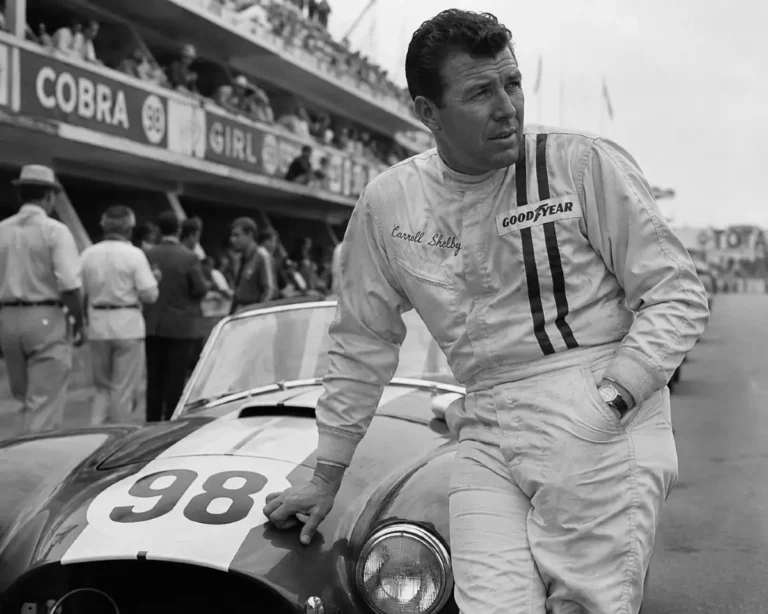
In 1961, Carroll Shelby was a Le Mans-winning racing driver from Texas who had recently retired because of heart problems and was raising chickens. He had an idea — an idea so specific that he wrote it down on a paper bag before he had the money, the engine, or the car to make it real. The idea was to take a lightweight British sports car body, put an American V8 under the hood, and beat the Europeans at their own game. Two phone calls, one to AC Cars in Thames Ditton, England and one to Ford Motor Company in Dearborn, Michigan, made the idea a production plan.
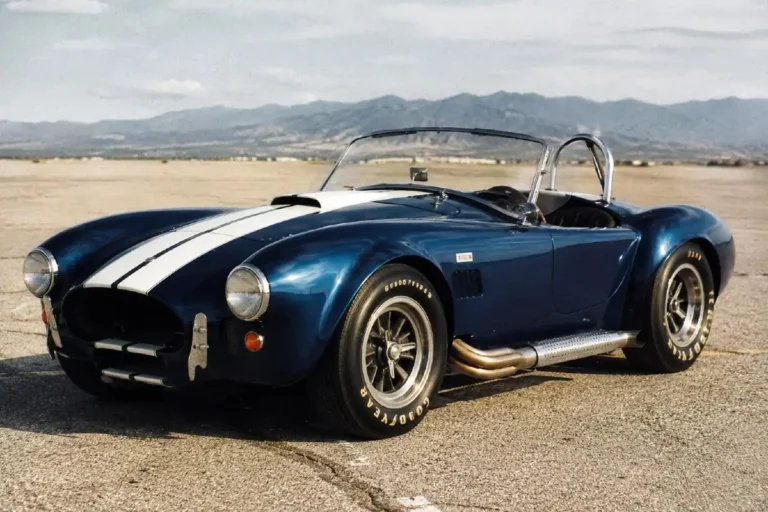
The first car was assembled in January 1962 in a Los Angeles shop that barely had room for the work. Its chassis number was CSX0001. It weighed 2,020 pounds. It had a 260 cubic inch Ford V8 producing approximately 260 horsepower. In its first road test, a journalist drove it to 60 mph in 4.2 seconds. The sports car world had not seen that number from anything at that price. Carroll Shelby’s impossible idea had become the most important American sports car of its decade.
Quick Facts – First Shelby Cobra
— First Cobra Chassis Number: CSX0001
— Year First Built: January 1962
— Builder: Shelby American — Venice, California
— Body Source: AC Cars — Thames Ditton, Surrey, England
— Body Basis: AC Ace aluminum-bodied roadster
— Original Engine (CSX0001): Ford 260 cubic inch V8 — approximately 260 HP
— Production Cobra Engine: Ford 289 cubic inch V8 — 271 HP (street) / more in race prep
— Ultimate Engine: Ford 427 cubic inch side-oiler — 425 HP street / 485+ HP race
— Carroll Shelby’s Background: Le Mans winner (1959) / retired driver / Texas chicken farmer
— Ford’s Motivation: Challenge Ferrari at Le Mans / compete with Corvette
— AC Cars’ Motivation: Replace Bristol engine (discontinued) with viable alternative
— First Press Introduction: January 1962 — Los Angeles
— First Road Test: 0-60 mph in 4.2 seconds (289 Cobra)
— Curb Weight: Approximately 2,020 lbs (260 Cobra) — among lightest American sports cars
— SCCA Class: Won SCCA national championship 1963 and 1964
— Le Mans Goal: Challenge Ferrari — ultimately entered 1964 and 1965 Le Mans
— Key People: Carroll Shelby (concept and program), Phil Remington (fabrication), Ken Miles (driver and development), Dave MacDonald (driver), Bob Bondurant (driver)
— 289 Cobra Production: Approximately 655 units (1962–1965)
— 427 Cobra Production: Approximately 316 units (1965–1967)
— Total Original Cobra Production: Approximately 998 documented chassis numbers
Collector Values:
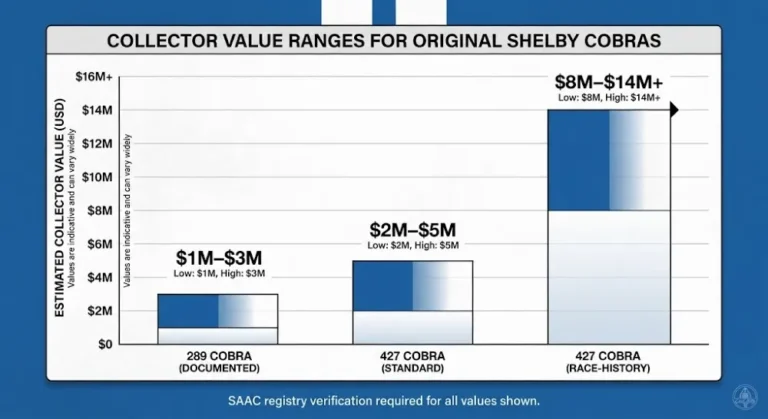
— 289 Cobra documented original: $1,000,000–$3,000,000+
— 427 Cobra documented original: $2,000,000–$5,000,000+
— Exceptional race-history 427: $8,000,000–$14,000,000+
— CSX0001: Priceless / not currently in private ownership
Sources: Shelby American Automobile Club (SAAC) Registry, Carroll Shelby’s autobiography The Carroll Shelby Story, Shelby American official history, Mecum and Barrett-Jackson auction records, Road & Track Cobra retrospectives
Overview
The Chicken Farmer’s Impossible Idea That Changed American Sports Car History
The story of the first Shelby Cobra begins not in a race shop or a wind tunnel but on a chicken farm in Leona, Texas, where Carroll Shelby was trying to make money after his racing career ended in 1960 because of a heart condition that his doctors told him would kill him if he kept racing. He was forty years old. He had won Le Mans in 1959 driving an Aston Martin DB3S alongside Roy Salvadori. He had driven for Aston Martin, Ferrari, Maserati, and Allard in his racing career, and he had beaten all of them at various times.
He also had an idea that he could not shake. The idea was not complicated. The best sports car racers in the world in 1961 were all European — Ferrari, Aston Martin, Jaguar, Lotus — and they were fast because their engineers had decades of sports car racing experience that American manufacturers did not. But American manufacturers had something the Europeans did not have in quantity: big, powerful, reliable V8 engines that could be produced cheaply and maintained easily. If those engines could be put in a lightweight sports car body, the combination of European chassis sophistication and American engine muscle should produce something that could compete with the best European machinery.
The specific version of this idea that Carroll Shelby had was not original — Briggs Cunningham had tried it in the 1950s with less success than he hoped, and various hot rodders had experimented with similar concepts in different contexts. What made Shelby’s version different was its specific execution: instead of building a new chassis, he would find an existing lightweight sports car platform that could accept a Ford V8 with manageable modification, partner with Ford to get the engine and financial backing, and build a competitive car at a price that American buyers could afford.
The two phone calls that made CSX0001 possible were placed to AC Cars in England and to Ford Motor Company in Dearborn. Both conversations were remarkably brief for transactions of their historical significance. AC Cars had just lost its supplier for the Bristol six-cylinder engine that had powered the AC Ace and needed an alternative powertrain — they were receptive to the idea of an American V8 if Shelby could provide one. Ford had just lost Enzo Ferrari in a botched acquisition attempt and was looking for a way to embarrass Ferrari on the racetrack — they were receptive to any plan that promised to do that at a reasonable cost.
Shelby had no money of his own to invest. He had no engine. He had no production facility. What he had was the Le Mans winner’s credibility that made both Ford and AC Cars take his calls, the specific technical insight that the AC Ace’s aluminum chassis could accept a Ford V8 with relatively minor modification, and the force of personality that made everyone who heard the idea believe that it was not only possible but inevitable.
The Shelby Cobra’s specific challenge to Ferrari arrived in a moment when the American sports car market was defined by the Corvette — our complete guide to the 1964 Corvette Stingray covers the specific C2 generation that the Cobra competed against and alongside in the American sports car market, showing how the two most significant American sports cars of the 1960s approached the European performance challenge from completely different engineering and commercial philosophies.
Section 1 – The AC ACE And Why It Was The Right Body
The British Foundation That Made The Cobra Possible
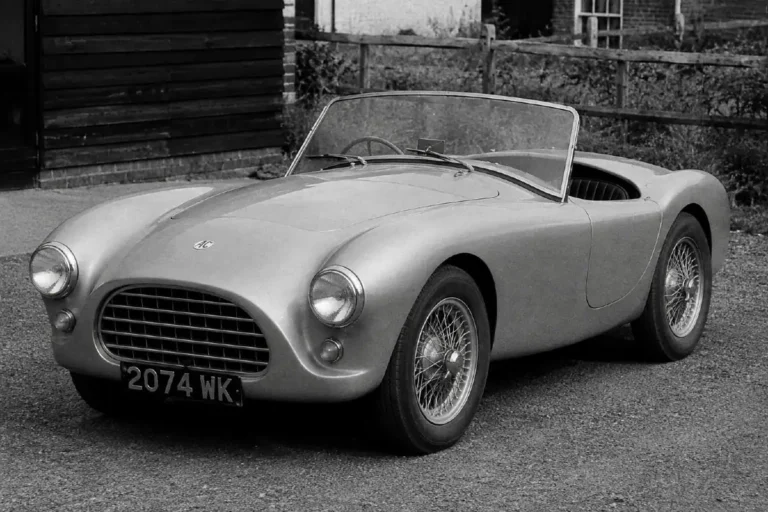
The AC Ace was not, by 1961, the most celebrated British sports car. That distinction belonged to Jaguar’s E-Type, which had been introduced to thunderous praise in March 1961 and was the sports car that everyone was talking about. The Ace was older, simpler, and less powerful — a small English sports car builder’s roadster that used an aluminum body on a tubular steel chassis and a Bristol six-cylinder engine borrowed from a pre-war BMW design. It was quick enough for gentlemen’s club racing and pleasant enough for English country road touring, but it was not a serious contender in international competition.
What the AC Ace had that no more celebrated British sports car offered was a specific combination of advantages that made it uniquely suitable for Shelby’s concept. Its tubular steel chassis was strong but relatively simple — the kind of structure that Phil Remington, Shelby American’s master fabricator, could modify to accept a Ford V8 without a ground-up redesign.
Its aluminum body was light — the Ace weighed approximately 1,900 pounds with the Bristol engine, which meant that a heavier Ford V8 substituting for the Bristol six would still produce a car significantly lighter than anything American with comparable power. And its dimensions were appropriate for the American V8 — the engine bay was wide enough, with modification, to accommodate the compact Ford small-block without the compromises that a tighter European engine bay would have required.
The AC Ace’s specific history with aluminum construction was also relevant. AC Cars had been building aluminum-bodied sports cars since the 1950s and had developed the construction techniques and supplier relationships that allowed them to produce consistent, quality aluminum bodies at a production scale that Shelby’s plan required. When Shelby’s first Cobra was built, the body came directly from AC Cars’ standard production process — the same hands, the same tools, the same aluminum alloy that the British market Aces used.
The complete history of AC Cars — from the Thames Ditton company’s founding through the AC Ace’s development, the Cobra partnership with Carroll Shelby, and the company’s continuation to the present day — is documented at the AC Cars official heritage page, providing the British institutional perspective on the partnership that produced CSX0001 alongside Shelby American’s American institutional documentation.
When Shelby approached AC Cars with his proposal — he would send them a Ford V8, they would build him a body and chassis modified to accept it, he would assemble the completed car in California — AC’s management recognized both the opportunity and the specific timing that made it attractive. The Bristol engine was being discontinued, and AC Cars had no alternative V8 supplier identified for the American market. Shelby’s proposal solved a production problem that AC would have had to solve anyway, and it offered the additional benefit of a potentially much larger American market for what would become a more powerful and more exciting car than the Bristol-engined Ace had ever been.
Section 2 – Ford’s Motivation And The Ferrari Connection
Why Ford Wrote The Check – And What They Got In Return
Ford Motor Company’s specific motivation for supporting Carroll Shelby’s Cobra project was the Ferrari acquisition attempt that collapsed in spectacular fashion in the summer of 1963 — and the corporate decision, immediately following that collapse, to pursue Ferrari in competition instead of in the boardroom.
The sequence of events that led to Ford’s racing investment began when Henry Ford II authorized a serious attempt to acquire Ferrari in 1963. Ferrari’s financial situation was difficult, Enzo Ferrari had been in negotiations about a potential sale, and Ford saw the opportunity to acquire one of the most prestigious racing organizations in the world alongside the road car brand that sustained it. The negotiations were advanced enough that Ford’s financial team had prepared detailed acquisition documents when Enzo Ferrari withdrew, publicly humiliating Ford by reversing course at the last minute and citing Ford’s attempts to control the racing program as the specific deal-breaker.
Henry Ford II’s response to the humiliation was direct: he authorized a racing program with the specific goal of beating Ferrari at Le Mans, and he approved funding for the program at a scale that would make the effort genuinely competitive rather than symbolic. The GT40 was the primary weapon — a purpose-built Le Mans car developed with Ford funding at a level that matched or exceeded what Ferrari was spending. But the Cobra was the secondary weapon, already in development when the Ferrari negotiations collapsed, and its SCCA racing success was the first demonstration that Ford’s money in Carroll Shelby’s hands could produce results against European competition.
Before the Ferrari acquisition attempt failed, Ford had already made the specific decision that connected them to Shelby’s Cobra project. Ford had tried to buy the Corvette program from General Motors and failed. They had introduced the Thunderbird as a personal luxury car rather than a sports car, abandoning the two-seat configuration that might have given it sports car credibility. And they had watched the Corvette establish itself as the American sports car while Ford had nothing in the segment to respond with.
When Carroll Shelby called Ford’s product planning office with his concept — a lightweight sports car using Ford’s newest V8 — the timing was perfect. Ford would supply engines at no cost to Shelby and would provide financial backing for the racing program in exchange for the marketing benefit of a competitive Ford-powered sports car that embarrassed the Corvette and challenged Ferrari.
The deal’s specific terms reflected the creative financial arrangement that Shelby had assembled: Ford supplied the 260 V8 engines and later the 289 and 427, provided financial support for the racing program, and received the marketing benefit of the Cobra’s association with the Ford name. Shelby retained control of the racing operation and the car’s development direction. AC Cars received a steady order for bodies and chassis. Each party got what they most needed without giving up what they most valued.
Section 3 – Building CSX0001
What Actually Happened In That Los Angeles Shop In January 1962
The physical creation of CSX0001 — the first Shelby Cobra — was both simpler and more complicated than the mythology around it suggests. Simpler because the basic operation was mechanical: remove one engine, install another. More complicated because that basic operation required solving a series of specific engineering problems that Phil Remington’s skills and Carroll Shelby’s specific vision were necessary to address.
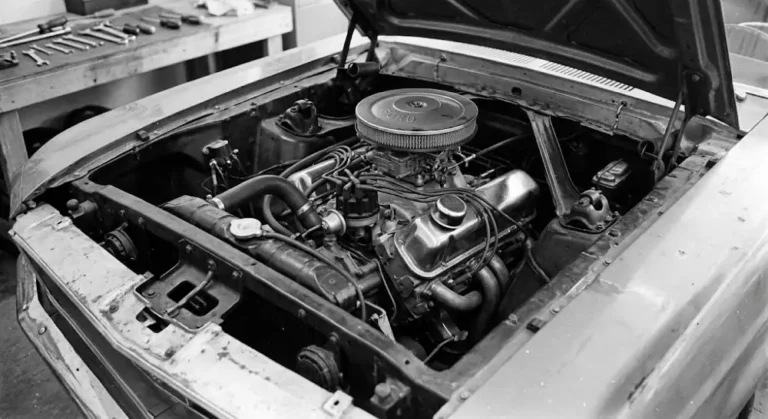
The AC Ace body arrived at Shelby’s Venice, California facility in late 1961 — a complete car minus its Bristol six-cylinder engine, which AC had removed before shipping because the plan was always to install the Ford V8 at Shelby’s end. The Ford 260 cubic inch V8 arrived from Dearborn — the newest small-block in Ford’s inventory, lighter and more compact than the older Ford big-blocks and specifically suited to the transplant application.
Phil Remington’s specific contribution was the engineering work that made the V8 installation viable. The AC Ace’s tubular steel chassis required modification to accept the Ford V8’s different mounting points, different transmission interface, and different cooling requirements. The steering rack needed repositioning to clear the larger engine. The cooling system needed enlargement to manage the V8’s heat output. The front suspension geometry needed adjustment to manage the increased weight over the front axle. None of these modifications were beyond the capability of a skilled fabricator working with period tools and materials — but all of them required the specific combination of mechanical knowledge, improvisation skill, and racing experience that Remington had accumulated across a career building competitive race cars.
The first completed CSX0001 weighed approximately 2,020 pounds — heavier than the Bristol-engined AC Ace but still dramatically lighter than any American-engineered performance car of the period. A Corvette of 1962 weighed approximately 3,100 pounds. A period Ford Thunderbird weighed more than 4,000 pounds. The Cobra’s power-to-weight ratio — approximately 260 horsepower in 2,020 pounds — produced performance numbers that no production American car could match in 1962.
The original period road tests that established the Cobra’s specific performance credentials — the 0-60 mph times, the quarter-mile figures, and the driving impressions that journalists recorded in 1962 and 1963 — are part of Road and Track’s Shelby Cobra original road test archive, providing the primary automotive journalism documentation of how the Cobra performed in its own era rather than retrospective estimates.
The car’s first road test occurred before the paint was properly cured — the story that is consistently told by journalists who were present describes a car that was still outgassing paint fumes when they drove it, a car whose interior was unfinished and whose fit and finish was, by the standards of a production sports car, rough. What the car was not rough about was its acceleration.
The journalists who drove CSX0001 in its initial press showing recorded 0-60 mph times that were genuinely startling in the context of what was available in January 1962. The car’s specific combination of very light weight and 260 horsepower produced an experience that experienced automotive journalists described with adjectives they had not previously needed for an American car.
Carroll Shelby’s specific genius in this moment was marketing as much as engineering. He understood that the first Cobra needed to make its case immediately and publicly, before anyone had time to examine it carefully or identify its rough edges. He scheduled the press showing before the car was entirely finished because he knew that what journalists experienced in a car — the acceleration, the sound, the specific physical sensation of a fast sports car — would overwhelm whatever concerns they might have had about the quality of the paint.
Section 4 – From 260 To 289 To 427
The Cobra’s Technical Evolution In Three Engines
The progression from the original 260 cubic inch V8 through the 289 and ultimately to the 427 is the technical evolution that transformed the first Shelby Cobra from a promising concept into a legendary American race car. Each engine change represented not just more power but a fundamental recalibration of what the car was capable of doing.
The 260 cubic inch V8 in CSX0001 was Ford’s newest small-block in early 1962 — a good engine for the application but one that was already in the process of being superseded by the slightly larger 289. The 260 produced approximately 260 horsepower in the Cobra’s initial configuration, which was sufficient to establish the car’s basic performance credentials but not enough to make it genuinely competitive with the best European sports cars in race preparation. The 260-engined Cobra was the proof of concept — the car that demonstrated the idea worked. Almost immediately after CSX0001 was completed, the decision was made to transition the production Cobra to the 289.
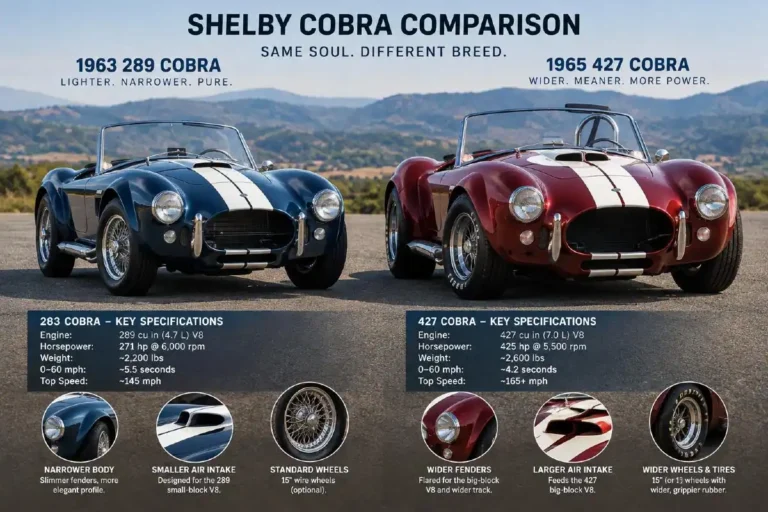
The Ford 289 cubic inch V8 is the engine most closely associated with the production Cobra in popular understanding, and for good reason: it was the engine in the majority of the approximately 655 Cobras produced between 1962 and 1965, and it was the engine that established the Cobra’s SCCA racing dominance. In street form, the 289 Cobra produced 271 horsepower — meaningfully more than the 260 but still recognizably in the compact small-block character that made the car’s handling balance tractable. In race preparation, the 289 could be tuned to significantly higher output levels while maintaining the engine’s fundamental reliability.
The 427 cubic inch side-oiler represented a completely different philosophy from the small-block Cobras. When Ford’s 427 — the massive, heavy-breathing engine that had been developed for NASCAR oval track racing — became available for the Cobra program, Shelby and his engineering team recognized that simply dropping it into the existing Ace-derived chassis was not feasible. The 427 was physically too large, too heavy, and produced too much torque for the original chassis to handle safely. The solution was a new, wider, stiffer chassis — one that Shelby American designed specifically to accept the 427 and that required a wider body to cover the wider track.
The resulting 427 Cobra was, in its race specification, the most brutally effective American sports car of the 1960s. With approximately 485 horsepower in race form and a curb weight that remained below 2,500 pounds, the 427 Cobra’s power-to-weight ratio exceeded virtually anything that could be bought for any price in 1965 and 1966. Period road tests consistently documented 0-60 mph times in the 4.0-second range for the street-spec 427 — numbers that were not exceeded by any production car until the early 1970s when specific European supercars began reaching comparable figures.
The 427 Cobra’s racing career was brief — Shelby concentrated the program’s energy on the GT40 for Le Mans competition — but its road presence established the Cobra’s specific reputation as the most viscerally exciting American sports car of the era. The 427 Cobra is the configuration most commonly referenced when people speak of the Cobra legend, and it is the configuration that commands the highest auction values in the contemporary collector market.
Section 5 – Racing Dominance
SCCA Championships And The Le Mans Assault
The Shelby Cobra’s racing career is the specific chapter of its history that validated Carroll Shelby’s concept against the most demanding available test: competition against the best sports cars in the world, driven by the best racing drivers of the era, on circuits where the car’s specific strengths and weaknesses would be fully exposed.
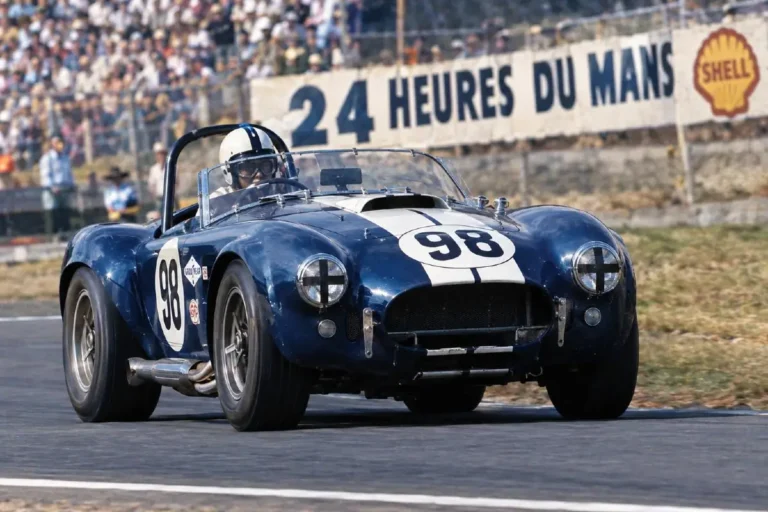
The SCCA (Sports Car Club of America) A-Production class competition was the Cobra’s first racing arena and the one where its specific advantages — power-to-weight ratio, reliability, and the accessibility of Ford’s dealer service network for parts and maintenance — were most decisive. In 1963 and 1964, the Cobra dominated SCCA A-Production competition with a thoroughness that was remarkable even by the standards of a car with obvious advantages. Ken Miles, Bob Bondurant, Dave MacDonald, and a roster of other talented American drivers brought Cobras to SCCA championships with a consistency that made the class essentially uncompetitive for any other entry.
The drivers who raced Cobras in this period were the specific individuals who shaped the car’s character as much as its mechanics did. Ken Miles — the British-born American racing driver who was perhaps the most technically gifted of Shelby’s drivers — was central to the Cobra’s development as much as its racing success. Miles could provide the specific, articulate feedback about chassis behavior, tire wear patterns, and engine response that Shelby’s engineers needed to improve the car race by race. His relationship with Shelby was sometimes contentious — both were strong personalities with strong opinions about how racing cars should be developed — but it was consistently productive.
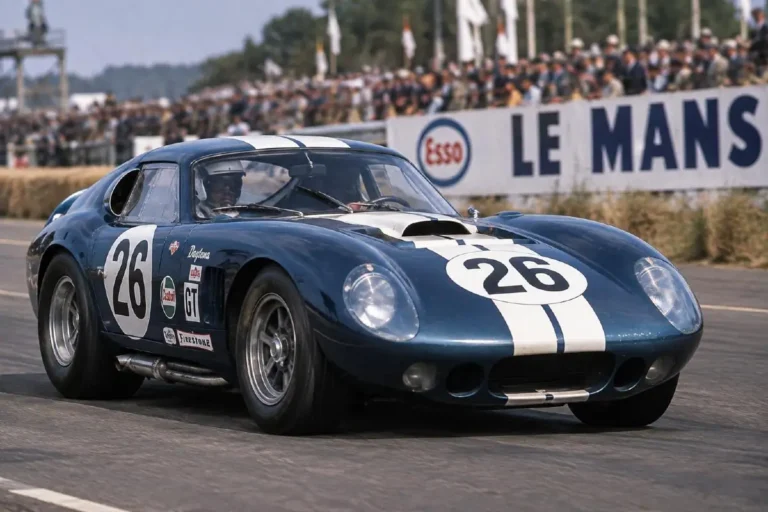
The Le Mans assault was the goal that Carroll Shelby had announced from the beginning — the specific promise to Henry Ford II and to the automotive press that justified Ford’s investment and established the Cobra’s place in the larger story of American racing in the 1960s. The 1964 Le Mans entry represented the first serious Cobra presence at the circuit, with a team of Cobra Daytona Coupes — a specially developed aerodynamic closed-body version of the Cobra designed specifically for the high-speed demands of Le Mans by engineer Peter Brock — that finished fourth overall and first in the GT category.
The 1965 FIA Manufacturers Championship was the Cobra’s most significant international achievement — winning the World Manufacturers Championship against Ferrari in the GT class, the first American manufacturer to win that title. This specific achievement was the vindication of Carroll Shelby’s original concept: an American V8 in a lightweight car, properly developed and raced by talented drivers, could beat Ferrari in international competition.
The 427 cubic inch V8 that gave the Shelby Cobra its ultimate expression was the same engine family producing legendary performance across the American muscle car era — our complete guide to the 1969 Chevelle covers how big-block V8 performance in a different body style created one of the most celebrated American muscle cars of the same decade, showing how the same appetite for American V8 power that Shelby had identified in the early 1960s was being expressed across the entire American performance car market.
Section 6 – Carroll Shelby The Man
The Personality Behind The Car – Why This Specific Person Made It Happen
Understanding the first Shelby Cobra requires understanding Carroll Shelby specifically — not just the racing credentials that made Ford and AC Cars return his phone calls, but the specific combination of personal qualities that made the Cobra project succeed where similar concepts had failed in other hands.
Carroll Hall Shelby was born on January 11, 1923, in Leesburg, Texas — a small farming community in East Texas that was as far from the Le Mans circuit as geography could arrange. He discovered his specific talent for driving racing cars relatively late compared to the European drivers who had been racing since adolescence — his first serious racing was in the early 1950s when he was already in his late twenties.
His rise was rapid precisely because his talent was exceptional. He drove for Aston Martin, Ferrari, and Maserati in sports car racing across Europe and America, and he won Le Mans in 1959 — the most prestigious single event in sports car racing — in a way that established him as one of the best sports car racers in the world. What distinguished Shelby from other talented drivers who had the same concept of American power in a European body was his specific gift for selling the idea.
Shelby had what people who worked with him consistently described as an almost supernatural ability to make people believe in a plan that had not been proven — to make Ford’s product planners believe that this Texas chicken farmer’s sports car concept was a serious business opportunity, to make AC Cars’ conservative English management believe that an American V8 in their conservative English chassis was a natural evolution rather than a radical departure, and to make racing drivers believe that the car they were being asked to race was the best available rather than the fastest-improved-upon.
Phil Remington, who was as important to the Cobra’s physical creation as Shelby was to its conceptual and commercial creation, described working for Shelby as simultaneously the most challenging and most creative professional experience of his career. Remington was a self-taught engineer of extraordinary ability who could solve fabrication problems in real time that formally trained engineers would have spent weeks analyzing. His partnership with Shelby — the visionary promoter and the gifted builder — was the specific human combination that turned CSX0001 from an idea into a car in the few months between the initial AC Cars and Ford conversations and the January 1962 press showing.
Shelby himself drove the Cobra in early testing and development, despite his officially retired status due to his heart condition. He continued driving at speed longer than his doctors recommended, because the specific knowledge of what a car felt like under racing conditions was the information he needed to direct the development program. When he could no longer drive at racing pace, he relied on Ken Miles to be the sensory extension of the development program — Miles who could feel what the car needed and communicate it in the specific language that engineers could act on.
Section 7 – The Cobra In The Collector Market
What Original Cars Are Worth And The Replica Problem
The Shelby Cobra’s collector market is one of the most complex and most value-intensive in the entire classic American car world. Original Cobras — cars with documented SAAC-registry chassis numbers, verifiable provenance, and authenticated mechanical specifications — are among the most valuable American cars ever auctioned. The complexity arises from the specific challenge that the Cobra poses for collectors: it is, alongside the Ferrari 250 GTO and the Lamborghini Miura, one of the most replicated cars in automotive history.
Barrett-Jackson’s Shelby Cobra auction history — alongside Mecum’s documented results — provides the broadest available public record of what original Cobras have actually sold for across multiple auction seasons, giving buyers and sellers the transaction evidence that verifies the value ranges cited in this article.”
The replica problem is not incidental to understanding the Cobra collector market — it is central to it. More Cobra replicas have been built than original Cobras were produced. Factory Five Racing, Kirkham Motorsports, Backdraft Racing, and dozens of smaller builders have produced high-quality replica Cobras that can, when freshly built and well-presented, be visually indistinguishable from an original to anyone who has not studied the specific details that authenticate the genuine article.
The SAAC registry — the Shelby American Automobile Club’s official registry of documented original Cobra chassis numbers — is the primary tool that buyers use to distinguish genuine Cobras from replicas, and any transaction above $100,000 that involves a claimed original Cobra should be verified against that registry as a non-negotiable first step.
Genuine 289 Cobras with documented chassis numbers, verifiable provenance, and authenticated mechanical specifications sell in the $1 million to $3 million range in the current auction market — a price range that reflects the approximately 655 genuine 289 Cobras produced and the specific historical significance of a documented original example. The 427 Cobra commands higher values — $2 million to $5 million for standard examples — because of the even lower production numbers (approximately 316 genuine 427 Cobras) and the 427’s specific status as the most powerful and most visually dramatic Cobra configuration.
The Shelby Cobra’s 427 cubic inch side-oiler and its $2 million to $5 million collector values place it at the extreme apex of 1960s American performance car collecting — our complete guide to the 1970 Dodge Super Bee covers the muscle car era that followed the Cobra’s racing dominance, documenting the 426 Hemi and 440 Six Pack performance culture that grew from the same American appetite for maximum power that Carroll Shelby had identified and served with the Cobra program.
The most exceptional auction results for original Cobras have exceeded these ranges dramatically. Race-history 427 Cobras with documented competition history — cars that raced in SCCA competition, in Shelby’s own racing program, or in major international events — have achieved prices above $8 million and in some exceptional cases above $13 million at major auction events. The specific provenance of a documented race car — the specific events it competed in, the specific drivers who drove it, the specific results it achieved — adds value that purely financial calculation does not fully explain. These are not simply old cars. They are artifacts of specific historical events, and their value reflects that specific historical significance.
The original Shelby Cobra’s $1 million to $14 million+ value range places it in a collector category that most enthusiasts can appreciate but few can access. For buyers who want to live with the spirit of what Carroll Shelby created — a lightweight, V8-powered American sports car that values driving feel above all else — our guide to the best American sports cars under $10K covers the accessible alternatives that carry elements of the Cobra’s DNA at prices that honor the original’s affordable-performance philosophy.
CSX0001 itself — the first Cobra, the car that Carroll Shelby drove to the press showing in January 1962, the car that proved the concept — is in the collection of the Shelby American organization and is not available in the private market. Its value, if it were available, would be determined by its specific historical significance as the first example of one of the most important American sports cars in history — a significance that no financial figure can adequately represent.
FAQ
What was the first Shelby Cobra?
A: The first Shelby Cobra was chassis number CSX0001 — an AC Ace aluminum roadster body from England fitted with a Ford 260 cubic inch V8 engine at Carroll Shelby’s Venice, California facility in early 1962. It was first shown to the automotive press in January 1962. Carroll Shelby, a retired Le Mans-winning racing driver from Texas, created the Cobra by partnering with AC Cars, which supplied the body and chassis, and Ford Motor Company, which supplied the engine and financial backing for the racing program.
How did Carroll Shelby get the idea for the Cobra?
A: Carroll Shelby conceived the Cobra concept while working as a chicken farmer in Texas after retiring from racing due to a heart condition in 1960. He had the specific insight that a lightweight British sports car body fitted with an American V8 would produce a car with a power-to-weight ratio that could compete with the best European sports cars. Two phone calls — to AC Cars and to Ford — translated the concept into a production plan. AC Cars needed a replacement for the Bristol engine. Ford needed a sports car to challenge Ferrari and compete with the Corvette. Shelby’s proposal solved both problems simultaneously.
What engine did the original Shelby Cobra have?
A: The original CSX0001 used a Ford 260 cubic inch V8 producing approximately 260 horsepower. Production Cobras quickly transitioned to the 289 cubic inch V8 producing 271 horsepower in street form. The ultimate Cobra configuration used the 427 cubic inch side-oiler big-block producing 425 horsepower in street form and over 485 horsepower in race preparation — requiring a completely new, wider chassis and wider body to accommodate the massive engine.
How many original Shelby Cobras were made?
A: Approximately 655 genuine 289 Cobras were produced between 1962 and 1965. Approximately 316 genuine 427 Cobras were produced between 1965 and 1967. Total documented original Cobra production is approximately 998 chassis numbers. All genuine Cobras are listed in the SAAC (Shelby American Automobile Club) registry, and any claimed original Cobra should be verified against this registry before purchase.
What is an original Shelby Cobra worth?
Genuine 289 Cobras with documented provenance sell for $1 million to $3 million. Genuine 427 Cobras sell for $2 million to $5 million for standard examples, with race-history examples reaching $8 million to $13 million or more at major auctions. CSX0001, the first Cobra ever built, is held in the Shelby American collection and is not available in the private market. The market is complicated by the very large number of high-quality Cobra replicas — SAAC registry verification is essential for any transaction involving a claimed original.
What is the difference between a Shelby Cobra replica and an original?
A: An original Shelby Cobra has a documented SAAC-registry chassis number (CSX prefix followed by a specific number), verifiable provenance traceable through ownership history and competition records, and authenticated components that can be verified against factory records. A replica — even a high-quality one from a reputable builder — has a different chassis numbering system and no SAAC registry presence. Replicas range from extremely high quality to crude kit-car builds, and many are sold honestly as replicas. The problem arises when replicas are misrepresented as originals — SAAC registry verification eliminates this risk for any buyer at any price point.
The Bottom Line
The first Shelby Cobra is the most important American sports car of the 1960s for a specific reason that has nothing to do with the speed numbers or the race wins, though both are remarkable. The most important thing about CSX0001 is that it demonstrated something the American automotive industry and the automotive press had not previously believed: that an American manufacturer could build a sports car that was competitive with the best European products on the Europeans’ own terms — handling, performance, and race results.
The car that Carroll Shelby showed to journalists in January 1962 was roughly finished, still smelling of fresh paint, and in some observable ways clearly not a polished production sports car. What it was, in every observable way that a journalist who drove it could measure, was faster than almost anything they had ever driven at any price. That specific experience — the specific sensation of 2,020 pounds being propelled by 260 horsepower with nothing between the driver and the physics of the situation — was the argument that Carroll Shelby had been making on paper bags and in phone calls for two years, and it was irrefutable.
The Cobra went on to win SCCA championships, challenge Ferrari at Le Mans, win the FIA Manufacturers Championship, and establish the specific American sports car identity that the Corvette had promised but not yet fully delivered. It was built by a Texas chicken farmer, powered by a Ford V8, bodied by a small English sports car company, and assembled in a Los Angeles shop that barely had room for the work. It changed American racing permanently. And it proved that the impossible idea written on a paper bag was not only possible but inevitable.
Carroll Shelby’s specific achievement with the Cobra — proving that American engineering combined with competitive development could produce a car that beat Ferrari on the racetrack — established the tradition that continues in modern American performance vehicles. Our complete guide to the fastest SUVs in the world covers the modern expression of that tradition, from the Rivian R1S Quad-Motor’s 1,025 horsepower to the Jeep Grand Cherokee Trackhawk’s 707 HP and 180 mph top speed.
Editorial Note
This article was written and reviewed in September 2026. All historical facts — CSX0001 chassis number, January 1962 press introduction date, 260 cubic inch Ford V8 initial engine, approximately 2,020-pound curb weight, Carroll Shelby’s Le Mans 1959 win with Aston Martin and Roy Salvadori, AC Ace aluminum body from Thames Ditton Surrey, Phil Remington’s fabrication role, Ken Miles’ driving and development role, the 289 Cobra production of approximately 655 units, the 427 Cobra production of approximately 316 units, and the total approximately 998 documented chassis numbers,
Are from the SAAC registry documentation and Carroll Shelby’s published autobiography The Carroll Shelby Story alongside multiple published Cobra histories including Wallace Wyss’s Shelby’s Wildlife: The Cobras and Mustangs and the Shelby American official corporate history.
The Ford and Ferrari acquisition negotiation context is from multiple published sources including David Friedman’s The Race: How Formula 1 Made the Modern World and multiple period press accounts. The SCCA championship years of 1963 and 1964 and the 1965 FIA World Manufacturers Championship win are confirmed by SCCA records and FIA historical documentation.
The 2026 collector value ranges — 289 Cobra at $1 million to $3 million, 427 Cobra at $2 million to $5 million, exceptional race-history 427 at $8 million to $13 million+ — are editorial assessments based on Mecum, Barrett-Jackson, RM Sotheby’s, and Gooding and Company auction records from 2022 through 2025 and Hagerty Valuation Tool data as of July 2026. Carroll Shelby was born January 11, 1923 in Leesburg, Texas and died May 10, 2012 in Dallas, Texas. The description of the Cobra concept being written on a paper bag is from Carroll Shelby’s own telling of the story in multiple published interviews.