Last Updated: April 15, 2026 | Read Time: 12 minutes
Three engine choices producing up to 375 horsepower from a 396 big-block. A secret factory program that stuffed a 427 under the hood of just 323 cars. Over 86,000 SS units sold in a single model year. A current collector market where a survivor-condition car brings $150,000 and a COPO exceeds $300,000. The 1969 Chevelle was not the most powerful year — that belongs to the 1970 LS6 454. But it was the year the Chevelle SS became everything: attainable, beautiful, and fast enough to embarrass almost anything on the street.
At A Glance – 69 Chevelle Key Facts
– Production Year: Model year 1969 (introduced September 1968)
– Total Chevelle Production: Approximately 455,000 units
– SS Units Produced: Over 86,000
– Malibu Sport Coupes: Over 367,000 units
– Convertibles Produced: Fewer than 9,000 units
– SS 396 Package Price: $347.60 option on any two-door body style
– Base SS Engine: L35 — 396 cubic inch, 325 hp
– Mid Engine: L34 — 396 cubic inch, 350 hp
– Top Engine: L78 — 396 cubic inch, 375 hp
– COPO Engine: L72 — 427 cubic inch, 425 hp
– COPO Units Produced: Approximately 323 confirmed units
– Yenko COPO Units: 99 confirmed through Yenko Chevrolet, Canonsburg PA
– Quarter Mile (L78 SS 396): Approximately 13.5–14.0 seconds at 103–105 mph
– Quarter Mile (COPO 427): Approximately 13.3–13.5 seconds at 107–109 mph
– Current Average Collector Value: $59,161 (Classic.com average)
– Value Range: $14,000 (project) to $275,000+ (concours survivor)
– COPO Value: $300,000+ for highly original examples
– Status: One of the most actively traded classic American muscle cars
Sources: HowStuffWorks, TopSpeed, Classic.com, Hagerty, Wikipedia, ADM Cars
Overview – The Year The Chevelle SS Became America’s Muscle Car For Everyone
There is a specific moment in American automotive history when a car stops being one manufacturer’s performance offering and becomes something larger — a cultural reference point that people who weren’t born until thirty years after production ended still recognize by sight, by sound, and by the specific cultural weight that attaches itself to cars that were genuinely great at the right moment.
The 69 Chevelle SS is that kind of car.
It was not the quickest American muscle car of 1969. The Dodge Charger Daytona, the Pontiac GTO Judge, and the Ford Boss 429 Mustang were all legitimate performance alternatives. The COPO Camaro was faster in a straight line with the same basic engine. But the 1969 Chevelle SS occupied a specific position in the market — and in American car culture — that none of its competitors quite replicated. It was a mid-size car with full-size performance. It was beautiful in a way that was proportionally correct rather than merely dramatic. It was attainable enough that working Americans could buy one, and capable enough that they had no reason to want for more.
Chevrolet billed the 69 Chevelle as “America’s most popular mid-size car” — a marketing claim that the production numbers supported. Over 455,000 Chevelles were produced in the 1969 model year across all body styles and trim levels. Over 86,000 of those were SS-equipped. More than 367,000 were the Malibu sport coupe in various configurations. These were not niche numbers. These were mainstream American car sales — a car that appeared in middle-class driveways across the country while simultaneously winning drag strips and earning the kind of reputation that makes a car immortal.
In 2026, the 69 Chevelle SS is among the most actively traded classic American muscle cars in the collector market. Its average sale price on Classic.com is $59,161. Its highest sale prices, for concours-condition originals or documented COPO units, exceed $300,000. And the car’s cultural presence — in film, in music, in the garages of serious collectors and casual enthusiasts alike — has not diminished one bit in the 57 years since it rolled off the assembly line at the Chevrolet assembly plant in Fremont, California or Baltimore, Maryland.
This is the complete story of the 69 Chevelle — the history, the specifications, the engine options, the rare variants, and the collector market as it stands today.
Section 1 – The Chevelle’s Story To 69
From Mild To Wild: How The Chevelle Became A Muscle Car
The Chevrolet Chevelle was introduced for the 1964 model year as part of GM’s A-Body platform — a mid-size car positioned between the compact Chevy II and the full-size Impala. The original Chevelle was a sensible car: well-proportioned, reasonably priced, and available in a range of body styles from a practical station wagon to a sporty convertible. It was not designed as a performance car. It was designed as a family car with broad appeal.
The muscle car era changed that calculation completely.
By 1966, Chevrolet had introduced the SS 396 as a specific Chevelle model — not an option package, but a distinct model with its own VIN designation and its own equipment list. The 396 cubic inch big-block Turbo-Jet V8 made the Chevelle SS a legitimate performance machine. The car’s mid-size proportions gave it a power-to-weight ratio that the heavier full-size Chevrolets could not match, and its styling — particularly the 1968 model’s coke-bottle body lines — established the visual identity that the 1969 Chevelle refined and perfected.
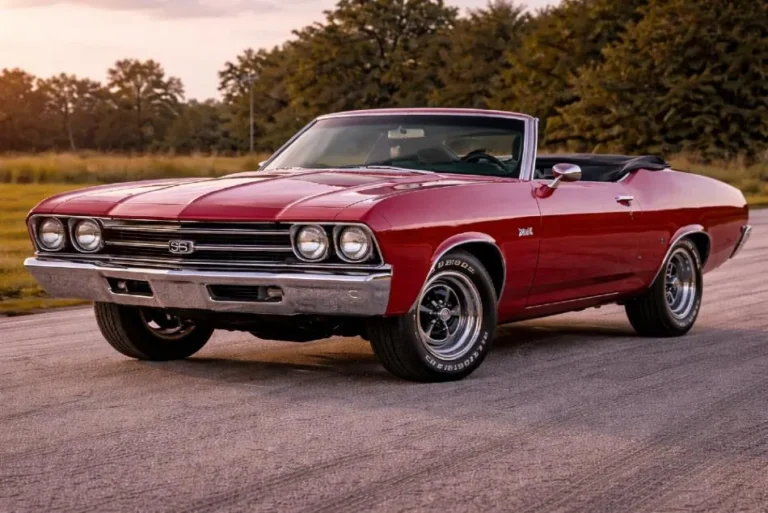
For 1968, the Chevelle received its most significant redesign of the era: a new body with pronounced fender flares, a lower roofline, and the characteristic long-hood, short-deck proportion that defined American muscle car aesthetics at their peak. The 1968 Chevelle SS was a genuinely beautiful car. The 1969 version — which carried forward the same basic body with a series of refinements — is the one that most collectors and historians point to as the SS Chevelle at its visual peak.
The 1969 model year brought the SS 396 back as an option package rather than a separate model — a $347.60 addition to any two-door Chevelle body style including the pillared coupe, the hardtop sport coupe, and the convertible. This change widened availability significantly: instead of being limited to the Malibu sport coupe and convertible, the SS 396 package could now be specified on the more affordable 300 Deluxe series hardtop. Chevrolet also extended the option to the El Camino, the car-based pickup that shared the Chevelle platform.
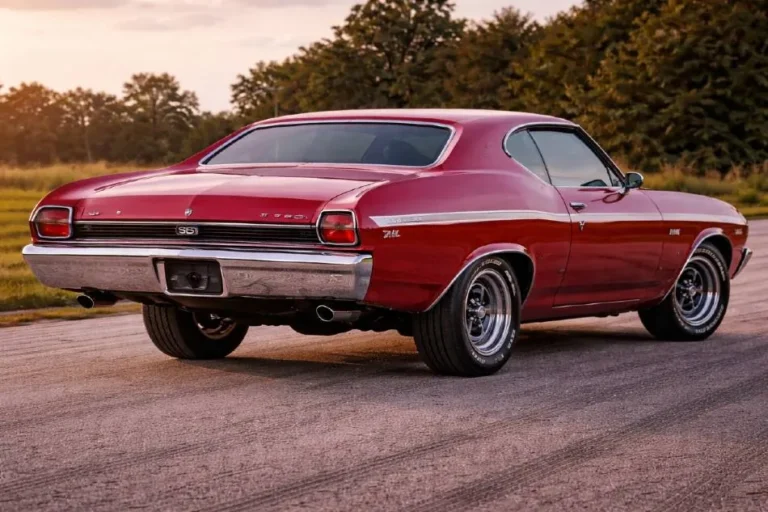
The styling changes for 1969 were focused and effective. New taillamp lenses were larger and more vertical, flowing cleanly into the quarter panels. The front grille was revised. A single chrome bar connected the quad headlights. Smaller side marker lighting bezels were phased in. The SS 396 cars got more prominent SS badging inside and out, and the standard five-spoke mag wheels — one of the most visually correct wheel designs of the era — burnished the image further.
The power-bulge hood was still primarily visual on most models, but it established the aggressive stance that communicated performance before anyone saw the engine. The result was a car that looked exactly right for what it was — a mid-size American muscle machine at the peak of the muscle car era, wearing its intentions on every body panel.
Section 2 – The Engines
Three 396s, A Secret 427, And The Options That Made The Car
The engine story of the 1969 Chevelle SS is really three stories — the mainstream 396 options available at any Chevrolet dealership, the hotter L78 that separated serious buyers from casual ones, and the COPO 427 that could only be obtained through a factory ordering loophole that most buyers didn’t know existed.
The L35 — 325 HP Base SS Engine
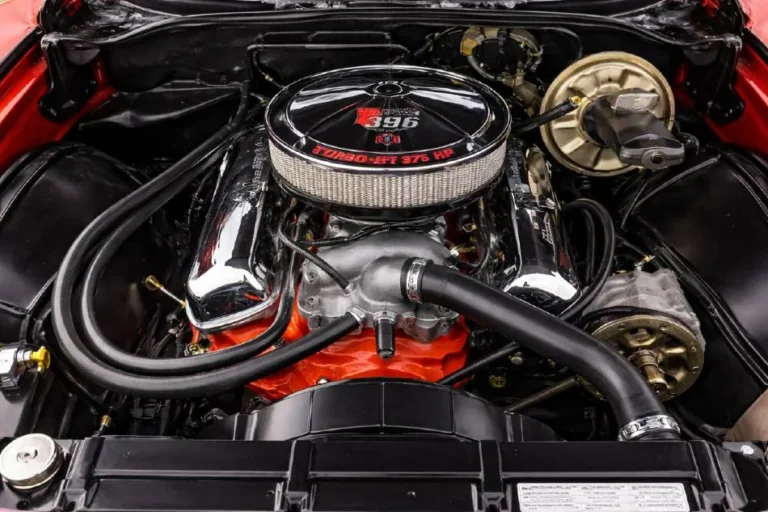
The L35 was the entry-level SS 396 engine — 325 horsepower and 410 lb-ft of torque from a single four-barrel carburetor and relatively mild cam timing that prioritized reliability and broad-range power delivery over peak output. This was the engine that most SS Chevelles were sold with, and it was genuinely capable. The L35’s broad torque curve made it responsive in everyday driving and quick enough on the street to satisfy the majority of buyers who wanted performance alongside practicality.
In period testing, an L35 SS Chevelle with the Turbo-Hydramatic automatic transmission ran the quarter mile in approximately 14.5 seconds at around 98 mph. With the Muncie four-speed manual and a skilled driver, the number dropped closer to 14.0. These were competitive numbers for a mid-size American car in 1969, though they did not place the L35 at the front of the performance hierarchy.
The L35’s durability and its wide availability of original and reproduction parts make it one of the most practical engines to build around today for buyers who want a driver-quality 69 Chevelle SS rather than a show car.
The L34 — 350 HP Mid-Range Option
The L34 added 25 horsepower over the L35 through a slightly more aggressive cam profile and improved cylinder head flow. At 350 horsepower and an improved high-rpm character compared to the base engine, the L34 occupies an interesting middle position in the SS 396 engine hierarchy — more capable than the base engine in the upper rev range, but not enough different in daily driving to justify the additional cost for most buyers at the time.
In hindsight, the L34 is often overlooked by historians focused on the more dramatic L78, and undervalued by collectors who want either the base car’s originality and value, or the top-spec L78’s rarity and performance credentials. Original L34 cars in documented, numbers-matching condition represent some of the better values in the 1969 Chevelle market today.
The L78 — 375 HP: The Street Fighter
The L78 is the engine that makes 1969 Chevelle enthusiasts’ eyes light up. 375 horsepower from a solid-lifter, high-compression 396 cubic inch big-block — the same basic engine architecture as the L35, but with the valve train, carburetion, and internal specifications of a purpose-built performance unit.
The L78 used solid lifters rather than the hydraulic units in the base engines, which meant a slightly rougher idle character and a requirement for more frequent valve adjustments, but also a significantly more aggressive high-rpm capability. The 800-cfm Holley four-barrel carburetor fed fuel through free-flowing cylinder heads that made the engine breathe well at the revs where its power lived. The L78 wanted to be revved, and when it was, it delivered.
Period testing of the L78 SS 396 Chevelle showed quarter-mile times in the 13.5 to 14.0 second range at trap speeds of 103 to 105 mph — numbers that placed it among the faster muscle cars available in 1969. The L78 was also the engine that responded most dramatically to basic bolt-on modifications: a set of headers and a carb tune could push the quarter-mile into the mid-13s without significant mechanical work.
More potent editions of the 396 engine made the options list, developing 350 or 375 horsepower. The L78’s 375-horsepower rating was among the highest claimed for any production 396 big-block across GM’s lineup. Though a 375-horsepower cowl induction version was available, few were sold in favor of interest in the COPO program’s more exotic hardware.
The L72 COPO — 427 HP: The Factory Race Car
The Central Office Production Order — COPO — was a GM ordering mechanism originally designed for fleet purchases: police departments, taxi companies, and other commercial buyers who needed non-standard vehicle specifications in quantity. By the late 1960s, a handful of Chevrolet dealers had discovered that the COPO system could also be used to circumvent GM’s corporate ban on engines larger than 400 cubic inches in mid-size passenger cars — a ban specifically designed to keep the Chevelle from receiving the 427 big-block that was available in the Corvette and the full-size Chevrolet line.
Around an estimated 323 Chevelle two-door hardtops were fitted with an L72 427 cubic inch engine rated at 425 horsepower and 460 lb-ft of torque, ordered through the Central Office Production Order system. Some Chevrolet dealers used the COPO system — this also included some Camaros and Novas of the same model year — and out of the 323 COPO orders, a confirmed 99 were sold through the Yenko Chevrolet dealership in Canonsburg, Pennsylvania.
The L72 used in the COPO Chevelle was not the Corvette’s L88 — it was a different application of the 427 architecture, rated at 425 horsepower and better suited to street use than the L88’s race-only temperament. The COPO Chevelle also came with an M22 “Rock Crusher” four-speed manual or a Turbo 400 automatic, and a KQ-code 12-bolt Positraction rear end. These were serious cars — not dress-up packages, but purpose-built drag racing weapons that happened to also carry Chevelle badges and could be driven on public roads.
The rarest of the rare were the COPO Chevelles. Like the COPO Camaros, these could only be specially ordered from the factory with a big-block 427. Don Yenko’s involvement — his dealership accounted for 99 of the 323 documented COPO Chevelles — adds a specific layer of collector significance. Yenko-badged COPO Chevelles carry a premium above already-premium COPO values, and their documentation trail makes them among the most carefully authenticated collector cars in the American muscle car market.
According to MotorTrend, highly original examples of the 1969 COPO Chevelle would set you back over $300,000. The COPO represents the extreme of the 1969 Chevelle market — a car that was rare, powerful, and significant even in 1969, and that has become one of the most sought-after and authenticated muscle cars in American history.
The COPO program produced legendary cars across Chevrolet’s lineup in 1969 — not just the 323 COPO Chevelles, but also the COPO Camaros that have become the most iconic Camaros in American muscle car history. Our complete guide to the 69 Camaro SS covers the full story of that car, including how it compared to the Chevelle SS for buyers who wanted the 396 big-block in a smaller, sportier package.
Section 3 – Body Styles And Configurations
What You Could Order And What That Means Today
The 1969 Chevelle SS was available across three primary body styles — the hardtop sport coupe, the pillared coupe, and the convertible — with the SS 396 package applicable to any of them as a $347.60 factory option.
The Sport Coupe Hardtop
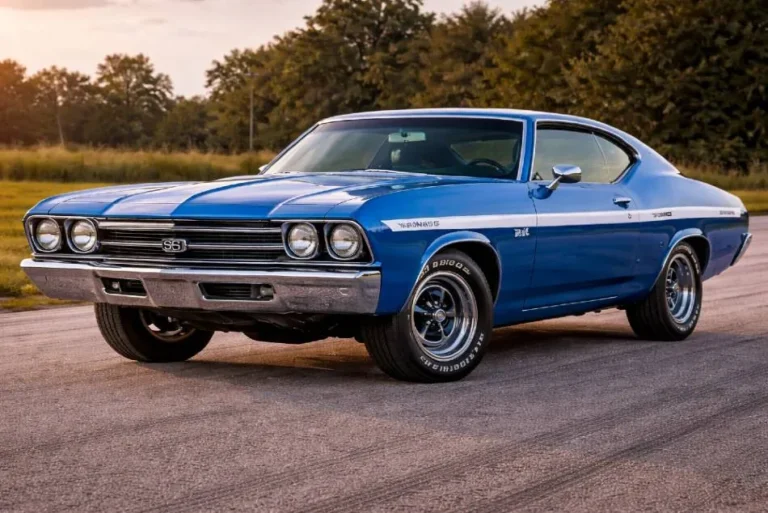
The pillarless hardtop is the body style that most people picture when they think of the 1969 Chevelle SS — the two-door fastback configuration with the clean greenhouse, the flowing roofline, and the absence of the B-pillar that gives the car its airy, sporting appearance with the windows down. This was the most popular SS 396 configuration and the most common in the current collector market.
The hardtop’s combination of visual drama, structural integrity, and collector-friendly proportions makes it the most desirable of the non-convertible body styles for most buyers. Numbers matching hardtop SS 396 cars represent the core of the 1969 Chevelle collector market.
The Pillared Coupe
The pillared coupe — with a fixed B-pillar between the front and rear windows — was a more practical but less desirable configuration. The 1969 model year’s expansion of the SS package to include the 300 Deluxe series hardtop and pillared coupe meant that buyers could get SS equipment on a slightly less expensive body shell. These cars are less common in the current collector market because they were less desirable in period and many have been modified or lost over the decades.
The Convertible
The 1969 Chevelle convertible is the rarest of the three primary body styles — fewer than 9,000 Chevelle convertibles were produced in 1969 across all trim levels, making any SS convertible a genuinely scarce car. The combination of the open-body structure’s inherent flex, the additional weight of the convertible top mechanism, and the specific premium that open cars carry in the collector market makes the 1969 Chevelle SS convertible one of the most valuable non-COPO configurations.
Convertible SS 396 cars — particularly those with the L78 engine and a four-speed manual — represent the top of the mainstream 1969 Chevelle SS market, with well-preserved examples commanding prices well above the L78 hardtop equivalent.
The El Camino
The El Camino — Chevrolet’s car-based pickup that shared the Chevelle’s A-body platform — was also eligible for SS 396 equipment in 1969. An El Camino SS 396 is a specific and increasingly recognized subset of the 1969 Chevelle collector market, occupying a position between the car collector world and the truck collector world that gives it a unique appeal and a somewhat separate valuation dynamic.
Section 4 – The 69 SS Package
What $347.60 Actually Bought You In 1969
The Super Sport package on a 1969 Chevelle was not a performance tune. It was a comprehensive equipment package that transformed a standard Chevelle into a visually and dynamically distinct machine. Understanding what the SS package included — and what it didn’t — is essential for authenticating a 1969 Chevelle SS in the current market.
The SS 396 package included the Turbo-Jet 396 V8 in L35 specification as the base engine, with the L34 and L78 available as upgrades. It added a special performance-tuned suspension with revised spring rates and shock absorber calibration. The power-bulge hood — primarily visual on most applications — was standard SS equipment. Black-accented grille treatment set the SS apart from the standard Chevelle’s bright work. Wide-oval F70-14 tires on the standard five-spoke mag wheels were standard. More-prominent SS 396 badging appeared inside and out.
The package did not include the cowl induction hood as standard equipment — that was part of the separate ZL2 option that added functional cold-air induction. It did not include bucket seats as standard — those were a separate option. And critically for authentication purposes, the SS package did not include the specific VIN prefix that would have identified an SS Chevelle separately from the 1969 model year’s change making the SS a package rather than a series.
This last point is the single most important authentication issue in the 1969 Chevelle market. Because the SS 396 became an option package rather than a separate model in 1969, all SS396s produced from this point on shared the same VIN prefix with the Malibu sport coupe. The original buildsheet and/or Protect-O-Plate — an aluminum tag included with the original sales invoice from Chevrolet dealers — can identify a genuine SS, especially for a numbers-matching original which is unaltered.
A 1969 Chevelle whose VIN says Malibu is not automatically not an SS — it may simply be an original SS car whose VIN reflects the production year’s packaging change. But this also means that many non-SS Chevelles have been converted to SS specification over the decades, making the buildsheet and Protect-O-Plate documents the critical authentication tools for any serious collector purchase.
Section 5 – Performance Numbers
What The 1969 Chevelle SS Actually Did
The 1969 Chevelle SS was not the fastest American car of its era. It was one of the most competent — a car whose combination of big-block power, competent suspension, and well-sorted steering made it genuinely capable in ways that some more powerful alternatives were not.
Quarter-Mile By Engine Configuration
– L35 (325 hp) with automatic: Approximately 14.5 seconds at 98 mph
– L35 (325 hp) with four-speed manual: Approximately 14.0 seconds at 100 mph
– L34 (350 hp) with four-speed manual: Approximately 13.8 seconds at 103 mph
– L78 (375 hp) with four-speed manual: Approximately 13.5–14.0 seconds at 103–105 mph
– COPO L72 (425 hp) with M22 four-speed: Approximately 13.3–13.5 seconds at 107–109 mph
These figures are from period testing and contemporary documentation. SAE gross horsepower ratings — the standard of the era — were measured without accessories and under favorable testing conditions, meaning that actual output at the flywheel in real-world configuration was typically 10 to 20 percent lower than the published figure. The L78’s 375 horsepower gross translates to approximately 310 to 330 net horsepower under modern measurement standards — still impressive, but calibrated appropriately against modern cars.
The numbers that matter most for understanding the 1969 Chevelle SS’s performance legacy are not the absolute times — which do not compare favorably against a modern Honda Civic with 158 horsepower — but the times relative to the competition of 1969. In that context, an L78 SS Chevelle running 13.5 seconds was genuinely fast, capable of beating the majority of American performance cars available at its price point, and respectable against the genuine exotics of the era.
Handling And Ride
The SS Chevelle’s performance-tuned suspension made it a noticeably more capable handler than the standard Malibu it was based on. The revised spring rates reduced body roll in cornering and improved steering precision. The wide-oval tires provided more grip than the narrow tires on base Chevelles. In the context of 1969 American cars, the SS Chevelle was a reasonably competent handler — not in the league of European sports cars or even the contemporary Camaro on a road course, but capable enough to manage its power without becoming genuinely dangerous in everyday driving.
The brakes on standard SS Chevelles were front-disc, rear-drum units with power assist — appropriate for the era and the car’s weight, though the 427 COPO cars pushed the braking system harder than it was ideally designed to manage.
Section 6 – Yenko Chevtolet And The 427 Story
The Dealer Who Changed Everything
Don Yenko’s Chevrolet dealership in Canonsburg, Pennsylvania is one of the most significant names in American muscle car history — not because of any racing achievement or factory relationship, but because of a specific business decision that Yenko made in the late 1960s to exploit the COPO ordering system to its full potential.
Yenko had been modifying Chevrolets for performance use since the early 1960s. By 1969, he had developed a relationship with GM’s special orders department that allowed him to place COPO orders for vehicles with non-standard engine specifications — specifically the 427 big-block that GM’s management had banned from mid-size passenger cars. Out of the 323 documented 1969 COPO Chevelles, a confirmed 99 were sold through Yenko Chevrolet.
The Yenko Chevelles were not simply COPO orders with different badging. Yenko added his own identification — Yenko/SC badging, specific stripe packages, and documentation that has made these cars some of the most carefully authenticated and most valuable examples in the COPO Chevelle market. A Yenko-documented COPO Chevelle carries a premium above a standard COPO example, reflecting both the name recognition and the complete documentation chain that Yenko’s business practice maintained.
The 99 Yenko Chevelles represent a documented production run small enough that every surviving example is known, tracked, and authenticated by the community of COPO Chevelle specialists who maintain the registry. Owning one is not simply owning a fast old car. It is owning a documented piece of American automotive history.
Section 7 – The 69 Chevelle In Context
How It Compared To Its Competitors In 1969
The 1969 muscle car market was the most competitive in American automotive history. Every major manufacturer was running a performance program, every program was escalating, and buyers had more genuine performance choices than they had ever had or would ever have again.
Against the Pontiac GTO — the car that had essentially created the muscle car segment in 1964 — the 1969 Chevelle SS offered comparable power with slightly better weight distribution and arguably cleaner styling. The GTO’s 400 cubic inch Ram Air engines were formidable, but the SS 396’s availability at a lower price point and across more body styles gave it a market breadth the GTO couldn’t match.
Against the Plymouth Road Runner — Chrysler’s deliberately stripped-down, value-performance muscle car that debuted in 1968 — the Chevelle SS offered more engine options and more body style choices, though the Road Runner’s 383 and 440 engines were genuine competition. The Road Runner’s intentionally spartan interior was its primary differentiator from the more comfortable Chevelle.
Against the Ford Torino Cobra — the Malibu-sized Ford that was making serious noise in 1969 with its 428 Cobra Jet engine — the Chevelle held its own on the street but was aware that the Cobra Jet was a difficult opponent in similar weight class. The Ford’s 428 produced 335 horsepower in officially rated form — believed by most to be significantly understated, as all the period muscle car engines’ ratings were.
The Ford Torino Cobra’s 428 Cobra Jet made the 1969 Chevelle SS fight for every straight-line advantage — a rivalry that traces a direct line to the modern competition between Ford and Chevrolet’s performance programs. Our guide to the fastest Ford muscle cars covers that lineage from the Boss 302 and the 428 Cobra Jet through to the 815-horsepower Mustang GTD.
The 1969 Chevelle’s position in this competitive landscape was not “best in every category” — it was “best combination overall.” Its styling, its range of engine options, its price accessibility, and its genuine performance capability made it the most complete package in the segment for most buyers. The sales numbers — over 86,000 SS units — confirmed that American buyers agreed.
The 1969 Chevelle SS’s collector market trajectory — from attainable performance car to six-figure investment — mirrors the path taken by other beloved American performance machines. Our Dodge Viper complete guide covers five generations of a more recent American performance car that followed the same pattern from production icon to sought-after collector piece after its 2017 discontinuation.
Section 8 – The 69 Chevelle SS Interior
What The Cockpit Looked Like And What It Offered
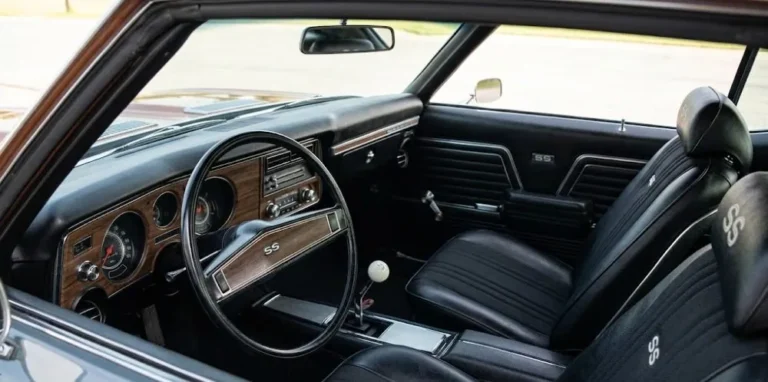
The interior of the 1969 Chevelle SS reflected the era’s approach to performance car cockpits — functional, driver-oriented, and more comfortable than the stripped-down appearance might suggest.
The standard SS interior featured a floor-mounted shifter for four-speed manual cars (column-mounted shifters were standard on automatic-equipped cars until 1969 in some configurations), a sport steering wheel, and instrumentation that prioritized the speedometer and fuel gauge over the tachometer and oil pressure gauge that serious drivers wanted. A tachometer was available as an option — and in an L78 car with a four-speed, it was effectively mandatory for anyone who wanted to use the engine correctly.
Bucket seats were optional rather than standard — a bench seat was the base configuration even on SS-equipped cars. The optional bucket seats, available with an Astro-Ventilated surface material that improved air circulation in hot weather, added both comfort and the visual identity of a serious performance car interior. The optional center console, available with bucket seats and floor shift cars, housed the gear lever and provided additional storage.
SS 396 emblems were embroidered on the headrests of bucket seat cars — a small but specific detail that distinguishes original SS interiors from later-converted examples. The circular HVAC vents that would become a Chevrolet design signature in subsequent generations first appeared in refined form on the 1969 Chevelle.
The interior’s dated quality — analog gauges, straightforward switchgear, the specific texture of late-1960s American automotive plastics and vinyl — is precisely what most 1969 Chevelle owners love about it. It is an interior that communicates its era with complete honesty, and that honesty is inseparable from the car’s character.
Section 9 – The Collector Market
What A 1969 Chevelle Is Worth Today, Honestly
The 1969 Chevelle SS is one of the most actively traded classic American muscle cars in the collector market, with a price range that spans from accessible to extraordinary depending on configuration, condition, and documentation.
Current Market Values By Configuration
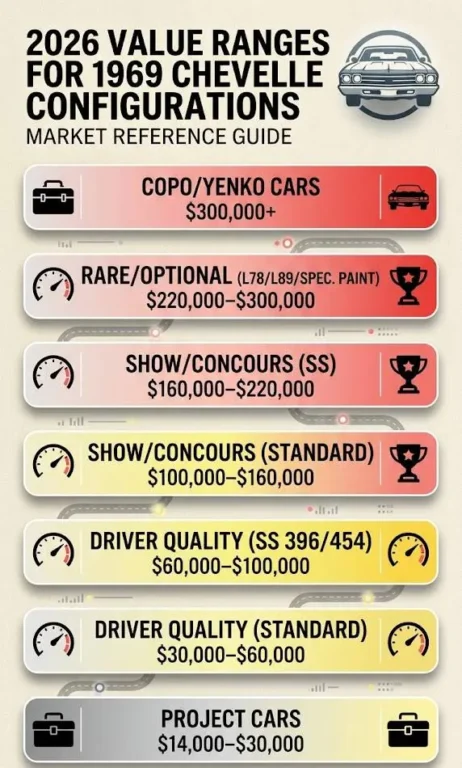
Project cars and incomplete examples: $14,000–$30,000. These are cars that need significant mechanical or body work, or cars whose documentation is incomplete. They represent the entry point for buyers who want to build a 1969 Chevelle rather than buy a finished one.
Driver-quality L35 SS Hardtops: $35,000–$65,000. Well-maintained, running, and presentable SS 396 cars with the base engine. The Classic.com average of $59,161 reflects this category primarily — cars that are enjoyable to drive and own without demanding the premium of full restoration or show-quality presentation.
Show-quality restored examples: $65,000–$120,000. Professional-quality restorations with documented authenticity, correct colors and options, and high-quality workmanship. These cars compete at regional shows and attract buyers who want a correct and presentable example without the premium of a concours survivor.
Numbers-matching survivor originals: $100,000–$200,000. Unrestored or lightly touched-up cars that retain their original driveline, original paint, and documented factory configuration. Good examples of the 1969 SS396 Chevelle can be seen anywhere from $59,000 to over $100,000, depending on condition. Chevelles in highly original and/or survivor condition are few and far in-between, and command a premium, typically in the $100,000 to $150,000 range, with very few making it closer to $200,000.
L78 375 hp cars: Add a significant premium above L35 equivalent condition. The L78 is the most desirable mainstream SS engine, and documented L78 cars in any condition carry a premium of 20 to 40 percent above comparable L35 examples.
Convertibles: Add a premium above equivalent hardtop configuration. The combination of low production numbers, inherent rarity, and the specific appeal of a convertible muscle car makes any 1969 Chevelle SS convertible a premium acquisition regardless of engine specification.
COPO 427 cars: $200,000–$300,000+ for highly original examples. The COPO represents the absolute apex of the 1969 Chevelle market. Only 323 units exist, every one of them is known and tracked, and the documentation chain for any COPO car is the subject of intense scrutiny by the specialist community.
Yenko-documented COPO cars: $300,000+, potentially significantly more for exceptional examples. The 99 Yenko Chevelles are among the most coveted and most carefully authenticated muscle cars in the entire American collector car market.
What Drives Value In The 1969 Chevelle Market
Authentication is the single most critical value driver in the 1969 Chevelle market, for one specific reason: because the SS 396 was an option package rather than a separate series in 1969, the VIN alone does not confirm SS specification. The buildsheet and Protect-O-Plate are the primary documentation tools, and their presence — or absence — accounts for a significant portion of any car’s value.
Numbers matching — meaning the engine, transmission, and rear axle carry codes that confirm they left the factory in this specific car — commands a premium because it confirms authenticity of the most expensive and most easily swapped components. A 1969 Chevelle SS 396 with a documented, numbers-matching L78 engine is worth significantly more than the same car with an engine replacement, regardless of the replacement’s quality.
Condition and presentation matter enormously, as they do in any collector car market. But in the 1969 Chevelle market, they matter second to authentication — a car in excellent condition that cannot be documented as an original SS is worth less than a slightly rougher car with a complete paper trail.
Options drive incremental value. A car with the cowl induction hood, the four-speed manual, the Positraction rear end, factory air conditioning, and the correct color combination for its documentation will sell for more than an equivalent car in a less desirable specification. The Protect-O-Plate and buildsheet confirm which options were factory-installed, making them insurance against option fraud as much as authentication tools.
Purchasing a 1969 Chevelle SS at the current market average of $59,161 is only the beginning of the ownership cost conversation — insuring a collector car with documented value requires specific agreed-value classic car insurance that differs significantly from standard auto coverage. Our guide to car insurance cost in the USA in 2026 covers the insurance landscape including the collector car market’s specific considerations
FAQ
Q: What is a 1969 Chevelle SS worth in 2026?
A: The average sale price for a 1969 Chevelle SS on Classic.com is approximately $59,161 as of 2026. However, values range from $14,000 for unfinished project cars to $275,000 for concours-condition survivors, with COPO 427 examples exceeding $300,000 for highly original documented cars. The specific value of any 1969 Chevelle SS depends on the engine specification, body style, documentation authenticity, condition, and options.
Q: How much horsepower did the 1969 Chevelle SS have?
A: The 1969 Chevelle SS 396 was available with three engine specifications: the L35 producing 325 horsepower, the L34 producing 350 horsepower, and the L78 producing 375 horsepower — all from a 396 cubic inch big-block V8. The COPO Chevelle, available through the factory ordering program, used the L72 427 cubic inch engine rated at 425 horsepower. All figures are SAE gross ratings as used in the era.
Q: What is a COPO Chevelle?
A: A COPO Chevelle is a 1969 Chevelle that was factory-ordered through GM’s Central Office Production Order program with a 427 cubic inch engine — an engine that GM’s corporate policy prohibited from being offered in mid-size passenger cars through regular sales channels. Approximately 323 COPO Chevelles were produced in 1969, of which 99 were sold through Don Yenko’s Chevrolet dealership in Canonsburg, Pennsylvania. COPO Chevelles are among the rarest and most valuable American muscle cars, with highly original examples selling for over $300,000.
Q: How do I authenticate a 1969 Chevelle SS?
A: Authenticating a 1969 Chevelle SS requires the original buildsheet and/or the Protect-O-Plate — the aluminum tag included with the original sales invoice. These documents confirm factory SS specification, because the 1969 model year changed the SS 396 from a separate model series to an option package, meaning the VIN alone does not confirm SS equipment. Numbers matching — confirming that the engine, transmission, and rear axle codes correspond to the car’s factory documentation — is the second primary authentication standard.
Q: How many 1969 Chevelle SS cars were produced?
A: Over 86,000 SS-equipped Chevelles were produced in the 1969 model year. Total Chevelle production across all trim levels and body styles exceeded 455,000 units. Of the SS total, fewer than 9,000 were convertibles, making the SS convertible configuration significantly rarer than the hardtop. COPO-equipped cars numbered approximately 323 confirmed units.
Q: Is the 1969 or 1970 Chevelle more valuable?
A: The 1970 Chevelle with the LS6 454 cubic inch engine — producing 450 horsepower and 500 lb-ft of torque — is generally considered the most valuable standard-production Chevelle SS due to its maximum factory power output. A concours-condition 1970 LS6 Chevelle can exceed what a comparable 1969 L78 car brings at auction. However, the 1969 COPO Chevelle, due to its extreme rarity and historical significance, occupies the same price tier or higher than all but the finest 1970 LS6 examples. Many collectors now find the 1969 market more accessible than the 1970 peak, which has driven increasing interest and appreciation in 1969 examples.
Q: What transmissions were available in the 1969 Chevelle SS?
A: The 1969 Chevelle SS was available with several transmission options: a three-speed manual as the base gearbox, the Muncie M20 wide-ratio four-speed manual, the Muncie M21 close-ratio four-speed manual, the Muncie M22 “Rock Crusher” heavy-duty four-speed (standard in COPO cars), and the Turbo-Hydramatic 400 three-speed automatic. For L78-equipped cars, the four-speed manual options were the correct performance choice, and four-speed cars carry a premium in the current collector market.
The Bottom Line
The 1969 Chevelle SS is not the most powerful Chevelle ever built. It is not the most technically sophisticated American car of its era. It was not the cheapest muscle car you could buy in 1969 or the most expensive.
What it was — and what it remains — is the most complete American muscle car of its moment. The combination of correct proportions, a range of engine options that covered every performance need from the street to the drag strip, production numbers that made it genuinely part of American middle-class culture, and the specific styling of the 1969 body that has aged better than almost any other car of its decade — all of this adds up to a car that was right when it was made and that has only gotten more right with time.
The market knows it. The $59,161 average sale price tells one part of the story. The $300,000 COPO tells another. The fact that 57 years after production ended, people are still researching, restoring, and arguing about the 1969 Chevelle SS tells the most important part of all.
Some cars are products of their era. The 1969 Chevelle SS is a document of its era — and like all important documents, it has only increased in significance the further we get from the moment it was written.
Editorial Note
This article was written and reviewed in April 2026. All production figures are sourced from Wikipedia and HowStuffWorks historical documentation. Engine specifications are sourced from Automobile-Catalog, HowStuffWorks, and period automotive publications. COPO production numbers — 323 total units and 99 Yenko-documented examples — are sourced from ADM Cars research and the 1969 Chevelle COPO documentation community. Collector values are sourced from Classic.com, Hagerty, and TopSpeed’s 2024 market analysis. The SS package price of $347.60 is a documented historical figure from period Chevrolet dealer materials. All values represent market conditions as of early 2026 and are subject to change.


0 Comments