Last Updated: March 12 2026 | Read Time: 12 minutes
Five generations. Twenty-six years. Approximately 32,000 hand-built cars. One V10 engine that never apologized to anybody. Here is everything about the Dodge Viper — where it came from, what it became, and why people are paying more for a used one in 2026 than they paid new.
The Dodge Viper By The Numbers
– Production Years: 1992 – 2017 (with brief pauses in 2007 and 2011–2012)
– Total Produced: Approximately 32,000 across all generations
– Generations: Five (Gen 1 through Gen 5)
– Engine: 8.0L or 8.4L naturally aspirated V10 — always
– Power Range: 400 hp (1992) to 645 hp (2017 ACR)
– Transmission: 6-speed manual always. No automatic. No exceptions.
– Drive: Rear-wheel drive. Always.
– Top Speed (Final Gen): 177 mph (285 km/h)
– 0 – 60 mph (2017 ACR): 3.3 seconds
– Assembly Plant: Conner Avenue Assembly Plant, Detroit, Michigan (from 1995)
– Final Year of Production: 2017
– Current Collector Value Range: $45,000 – $200,000+ (depending on generation, spec, and condition)
– Production Status: Discontinued. No confirmed production revival.
Sources: Wikipedia Dodge Viper, AutoEvolution, CarBuzz, World Parts Direct, Kelley Blue Book
There Was Nothing Else Like It. There Still Isn’t.
The Dodge Viper was not a rational car. It was never designed to be. It was designed to be the kind of vehicle that makes you feel something the moment you see it sitting still — something between excitement and genuine concern, which is honestly the exact combination that separates a truly great sports car from everything else that merely goes fast. The Viper joined a lineage of American performance landmarks — from the 1969 Chevrolet Camaro SS to the original Shelby Cobra — that defined what domestic engineering could achieve when engineers were given permission to be genuinely ambitious.
From 1992 to 2017, the Viper was the most extreme, most single-minded, most viscerally American performance car in production. While the rest of the world’s supercar manufacturers were adding turbos, electronics, stability systems, and leather-lined infotainment suites, Dodge kept building a car with a massive naturally aspirated V10 engine, a manual gearbox, rear-wheel drive, and the absolute minimum between you and the road. For most of its production life, the Viper was famous for what it didn’t have as much as for what it did. And for a specific type of driver — one who wanted a pure, unfiltered, deeply demanding driving experience — that was exactly the point.
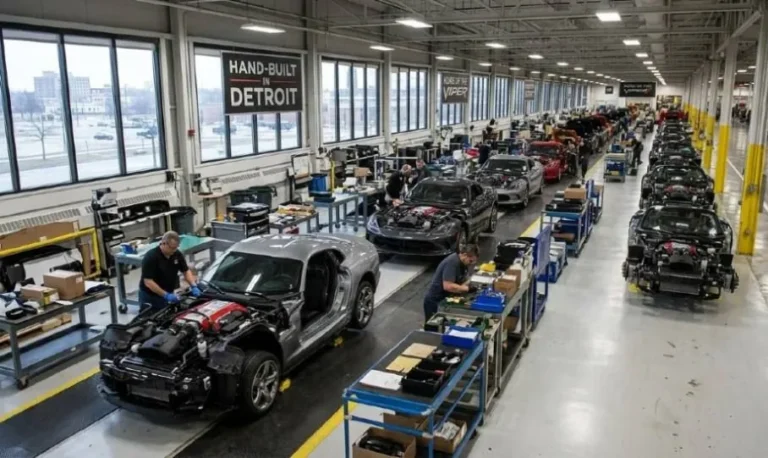
Approximately 32,000 Vipers were built across twenty-six years of production. Every single one was assembled by hand at the Conner Avenue Assembly Plant in Detroit, Michigan. The plant was dedicated exclusively to Viper production, and each car took considerably longer to build than a production-line vehicle. When Chrysler finally discontinued the Viper after the 2017 model year, they didn’t just stop making a car. They closed the entire facility.
In 2026, the Viper has been out of production for nine years. In that time, well-maintained examples — particularly the final generation cars and the legendary ACR — have appreciated meaningfully in the collector market. First-generation cars in good condition are climbing steadily as original analog-era examples become increasingly rare. The story of the Dodge Viper is not over simply because the factory is closed. If anything, the story has entered its most interesting chapter.
This guide covers everything: the origin story, all five generations with complete specifications, the special editions that defined the Viper’s most extreme moments, why it was discontinued, what collector cars are selling for today, and what a potential return could realistically look like. Whether you’re a longtime Viper owner, a serious prospective buyer, or someone who just wants to understand why this car matters so much to so many people — you’re in the right place.
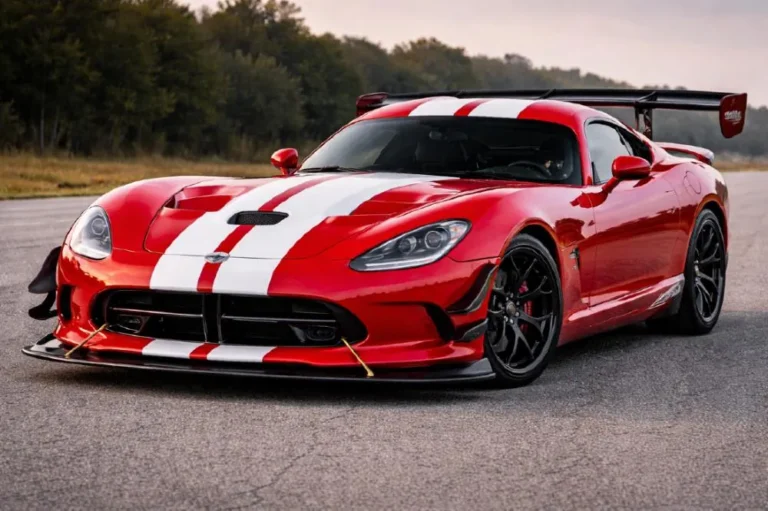
How The Dodge Viper Was Born: The Bob Lutz Hallway Conversation
Every legendary car has an origin story, and the Dodge Viper’s is one of the best in American automotive history — because it started with a hallway conversation and zero guarantee it would ever become a real vehicle. The car’s origin has been thoroughly documented by the company itself — the Dodge official Viper history traces Team Viper’s mandate to turn the concept into a production car in under 36 months.
The year was 1988. Chrysler’s president Bob Lutz — one of the most consequential automotive executives in American history — spent a weekend with a Shelby Cobra kit car. That weekend reminded him of something he believed the American industry had forgotten: that a car could be raw, simple, viscerally exciting, and unapologetically focused on the driving experience above everything else.
He walked into Chrysler’s headquarters and asked chief designer Tom Gale a straightforward question. Why couldn’t they build a modern-day Cobra for America?
Gale went to work. His studio shaped a voluptuous roadster concept that shocked journalists when it appeared at the 1989 Detroit Auto Show — all long hood, aggressive stance, and side exhausts running the length of the doors. The public reaction was immediate and overwhelming. Chrysler formed a special “Team Viper” of approximately 85 engineers and gave them a mandate to turn the concept into a production car in under 36 months. For context: most automakers require five to seven years to bring a new vehicle from concept to production. Team Viper did it in less than three.
Carroll Shelby — the same Carroll Shelby whose name today graces the F-150 Shelby Super Snake Sport, Cobra and the original GT350 Mustang — served as an advisor to the Team Viper program. He drove a pre-production Viper as the pace car for the 1991 Indianapolis 500, putting the car in front of an enormous American audience before a single retail unit had been sold.
The first retail Vipers were delivered in January 1992. They sold for $52,000 — a significant price, but not unreachable for a serious performance enthusiast. The automotive press went predictably wild. Car and Driver clocked a 0-60 time of 4.4 seconds. The quarter mile ran in 13.1 seconds at 108 mph. These were numbers that embarrassed dedicated European sports cars costing two or three times as much.
One important technical footnote to the origin story: Chrysler owned Lamborghini at the time the Viper’s V10 engine was being developed. Engineers were sent to Lamborghini’s facility in Italy for consultation during the engine design process. The result — an 8.0-liter aluminum-block V10 producing 400 horsepower and 450 lb-ft of torque — was not a Lamborghini engine. But Lamborghini’s metallurgical expertise influenced the aluminum casting work. It’s a piece of trivia that Viper purists love and that adds another layer to the car’s unusual origin story.
Every Dodge Viper, Every Spec, Honestly Explained
Generation 1 — SR I And SR II: 1992 To 2002
– Engine: 8.0-liter V10
– Power: 400 hp (1992–1996) / 450 hp (1997–2002)
– Torque: 450 lb-ft (1992) / 490 lb-ft (from 1996)
– Transmission: 6-speed manual (Borg Warner)
– Body Styles: RT/10 Roadster (1992); GTS Coupe (1996)
– Curb Weight: Approximately 3,280 pounds
– 0–60 mph: 4.4 seconds (Car and Driver tested)
– Top Speed: Approximately 163 mph (1992 roadster)
– Original MSRP: $52,000 (1992) — rising to approximately $68,000 by 2002
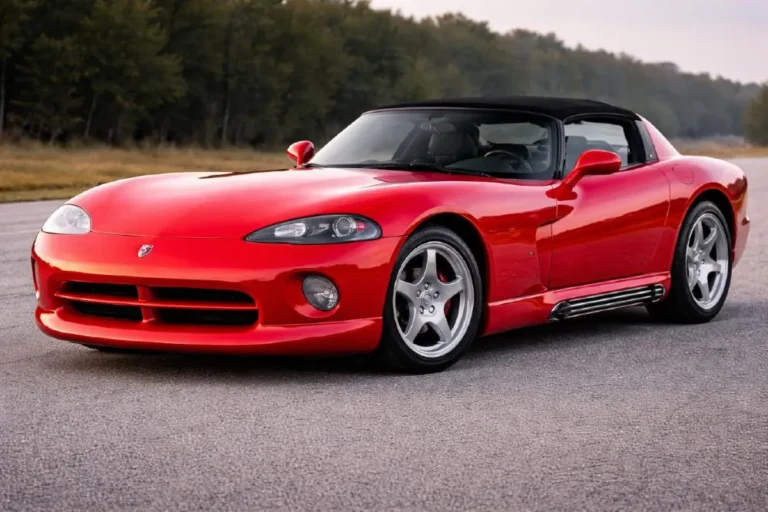
The first-generation Viper is the purest expression of everything the car represented — and also the most demanding ownership experience of any Viper generation. Early cars had no ABS. No traction control. No exterior door handles. The windows were vinyl panels that you unzipped. Air conditioning was not available until 1994, and even then only as an option. The soft top was a canvas affair that required genuine effort and patience to erect.
None of that mattered to the people buying these cars. The 8.0-liter V10 produced sounds and sensations unlike anything else in production, and the side-exit exhausts — running along the door sills and exiting just ahead of the rear wheels — ensured that nobody within two blocks was unaware of the Viper’s presence.
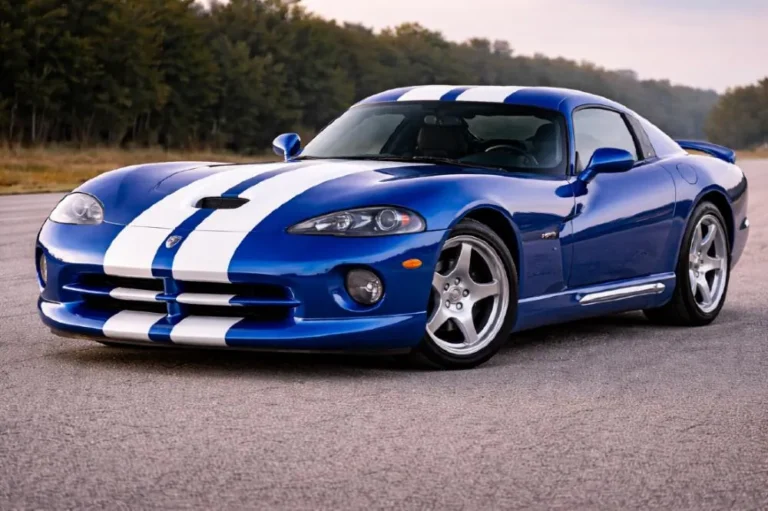
The GTS coupe arrived for 1996 as the car many enthusiasts consider the definitive first-gen Viper. The double-bubble roofline — two raised sections accommodating helmets in track use — became the most recognizable Viper silhouette. The GTS also received the power increase to 450 horsepower and a stiffer chassis. The blue-with-white-stripes GTS coupe in particular is an automotive icon that photographers and designers continue to reference decades later.
The SR II updates in the mid-1990s brought ABS and airbags — making the Viper marginally more survivable in worst-case scenarios, though the car’s reputation as unforgiving of driver error was completely intact. The “widowmaker” nickname emerged from this era — not because the car was malicious, but because it demanded genuine skill and respect, and drivers who underestimated it occasionally paid a serious price.
Generation 2 — SRT10: 2003 To 2006
– Engine: 8.3-liter V10
– Power: 500 hp
– Torque: 525 lb-ft
– Transmission: 6-speed Tremec T-56 manual
– Body Styles: Roadster (2003); Coupe (2006)
– Curb Weight: Approximately 3,410 pounds
– 0–60 mph: 3.9 seconds
– Top Speed: 190 mph
– Original MSRP: Approximately $82,000 (2003)
After an eleven-year run on the original platform, Dodge gave the Viper its first comprehensive redesign for 2003. The new SRT10 designation reflected the vehicle’s move into the Chrysler SRT (Street and Racing Technology) performance division. The 8.0-liter V10 grew to 8.3 liters, and power jumped to 500 horsepower — a 100 hp increase over the final first-generation cars, achieved entirely through displacement and engineering refinement rather than forced induction. This remained a fully naturally aspirated engine throughout.
The chassis was new, the styling was updated with more aggressive headlights and wider bodywork, and the interior received meaningful improvements in material quality and ergonomics. The side-exit exhausts remained — a direct connection to the original car’s identity. An anti-lock braking system was now standard rather than optional, and the Tremec T-56 6-speed manual provided a more refined shift action than the original Borg Warner unit.
The coupe version — the SRT10 Coupe — arrived for 2006 and immediately became the enthusiast’s choice, reviving the GTS’s double-bubble roofline in updated form. The 2006 coupe also received revised chassis tuning and is considered by many observers to be the dynamic high point of the second generation.
Generation 3 — SRT10 Refresh: 2008 To 2010
– Engine: 8.4-liter V10
– Power: 600 hp
– Torque: 560 lb-ft
– Transmission: 6-speed Tremec TR-6060 manual
– Body Styles: Roadster and Coupe
– Curb Weight: Approximately 3,440 pounds
– 0–60 mph: 3.7 seconds
– Top Speed: 202 mph — the first production Dodge to break 200 mph
– Original MSRP: Approximately $90,000
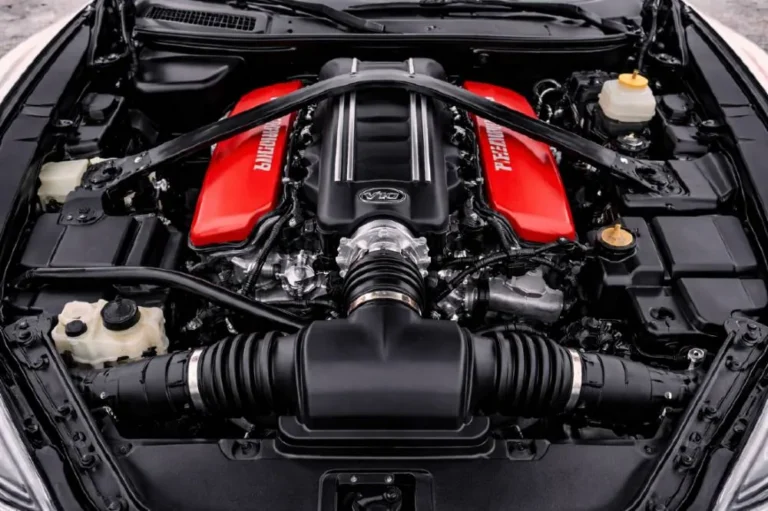
The third generation brought the Viper’s V10 to its largest displacement — 8.4 liters — and pushed power to 600 horsepower. Torque grew to 560 lb-ft. These were numbers that most dedicated supercars of the era couldn’t match with naturally aspirated engines, and the Viper achieved them with a single camshaft design of elegant mechanical simplicity rather than exotic overhead-cam architecture.
The 202-mph top speed was a milestone — the first production Dodge to crack 200 mph. The Tremec TR-6060 transmission was stronger and more precise than its predecessor, better suited to the increased power output. Brembo four-wheel disc brakes were standard. Stability control made its first Viper appearance, though it was deliberately tunable rather than intrusive — keeping the Viper’s analog character intact while providing a safety net for drivers who needed it.
The third generation Viper did not get an extended run. Chrysler’s financial crisis — which ultimately led to a government-assisted bankruptcy in 2009 — cut the SRT10’s production life short. The Viper went on hiatus after the 2010 model year, and the Conner Avenue plant went quiet for two years while Chrysler restructured under the Fiat acquisition.
Generation 4 — SRT Viper: 2013 To 2014
– Engine: 8.4-liter V10
– Power: 640 hp
– Torque: 600 lb-ft
– Transmission: 6-speed Tremec TR-6060 manual
– Body Styles: Coupe (primary); Roadster
– Curb Weight: Approximately 3,354 pounds
– 0–60 mph: 3.5 seconds
– Top Speed: 206 mph
– Original MSRP: Approximately $99,995
The fourth generation Viper returned from its two-year hiatus with 640 horsepower, 600 lb-ft of torque, and — critically — an entirely new aluminum space-frame chassis that was significantly lighter and more rigid than any previous Viper structure. The result was a 50-pound weight reduction over the previous generation despite the addition of more modern safety and electronic content.
Stability control was improved and now offered multiple calibrated settings rather than a simple on-off switch. Launch control made its Viper debut. The interior received its most significant upgrade to date — Alcantara and leather surfaces, a proper infotainment system, and a digital instrument cluster that displayed performance data including lateral G-forces and lap timing.
The SRT Viper designation replaced the Dodge branding for these two years — an unusual marketing decision that was reversed for the fifth generation. This briefly caused confusion in the marketplace, but the cars themselves were exceptional and the SRT GTS and ACR variants from this generation are among the most capable track-day Vipers ever built.
Generation 5 — Final Generation VX: 2015 To 2017
– Engine: 8.4-liter V10 (refined)
– Power: 645 hp (standard) — 645 hp (ACR, with aerodynamic rather than mechanical peak power difference)
– Torque: 600 lb-ft
– Transmission: 6-speed Tremec TR-6060 manual
– Body Styles: Coupe (primary); Roadster
– Curb Weight: Approximately 3,354 pounds (base) — 3,374 pounds (ACR)
– 0–60 mph: 3.3 seconds (ACR)
– ACR Nürburgring Lap Record: 7:01.30 — production car lap record at the time (2017)
– Top Speed: 177 mph (ACR, aerodynamics-limited); 206 mph (standard)
– Original MSRP: Approximately $87,895 (base 2015); ACR approximately $119,495
– Final Year of Production: 2017
The fifth and final generation Viper is the most refined, most capable, and most technologically complete version of the car in its twenty-six year history. The Dodge branding returned — the SRT designation was dropped — and the car received its final round of chassis and powertrain refinements that produced a 0-60 time of 3.3 seconds in ACR configuration.
The ACR — American Club Racer — deserves its own extended discussion, which follows. But the standard fifth-gen Viper was itself an extraordinary machine. Eight driving modes. Launch control refined over three previous generations. A Bilstein third-spring suspension system. Available carbon fiber aero package. A cabin that — while still driver-focused to a degree that modern luxury SUV buyers would find alarming — offered genuine comfort alongside performance.
Dodge built a series of limited-edition final-year models to close out production with appropriate ceremony. The 1:28 Edition honored the Viper’s 2017 Nürburgring lap time. The 1:33 Edition referenced the ACR-E (Electric concept). Eight special-edition color-and-stripe packages paid tribute to specific chapters in the Viper’s history. All of these final-year editions were produced in extremely small numbers and are among the most collectible Vipers in existence.
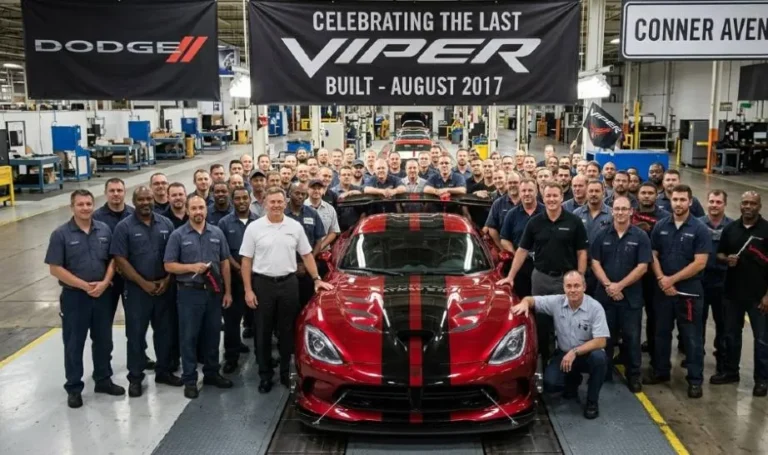
The last Dodge Viper was built at the Conner Avenue Assembly Plant in August 2017. The factory was permanently closed shortly afterward.
The American Club Racer: The Most Extreme Production Viper Ever Built
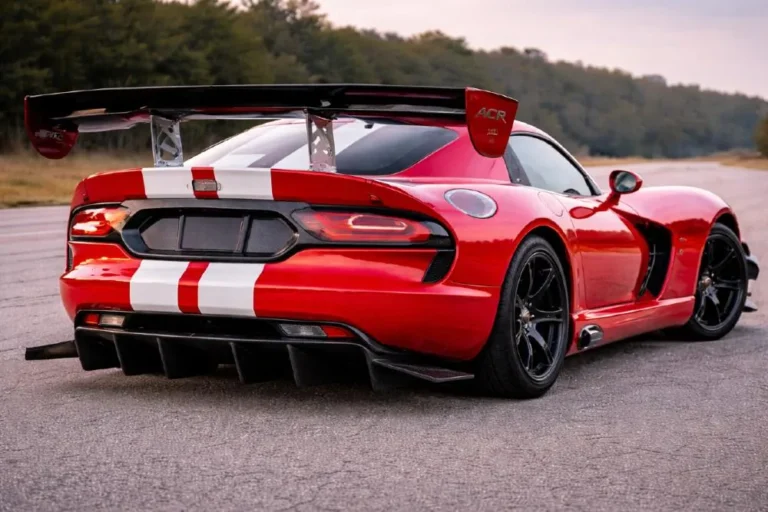
Of all the versions, variants, and special editions in the Viper’s history, none carries more weight in the enthusiast community than the ACR — American Club Racer. The ACR philosophy was simple and almost brutally honest: take the standard Viper, add the most aggressive aerodynamics a street-legal car could carry, tune the suspension for track use, and create the fastest lap time possible on a production car with a license plate.
The fifth-generation Viper ACR set a production car lap record at the Nürburgring Nordschleife in 2017 — the most demanding and respected road course in the world — with a time of 7 minutes and 01.3 seconds. At the time of the record, no other production car wearing a license plate had lapped the 12.9-mile circuit in less than seven minutes. The ACR did it with the same 8.4-liter naturally aspirated V10 that powered the standard Viper — no turbos, no electrification, no exotic hybrid assistance. Just 645 horsepower, 600 lb-ft of torque, a manual gearbox, and a set of extraordinarily capable aerodynamic components.
Those aerodynamic components are the ACR’s most visually dramatic element. The Extreme Aero Package — standard on the ACR — included a massive carbon fiber rear wing mounted on adjustable aluminum uprights, a front splitter assembly, dive planes, and an underbody diffuser. The entire package was designed and validated in actual wind tunnel testing rather than the digital simulations that many manufacturers use in lieu of the real thing. At high speed, the Extreme Aero Package generates approximately 1,700 pounds of downforce. To put that in perspective: the ACR, at speed, is being pushed toward the road with more force than its own curb weight.
The Extreme Aero Package made the ACR slower in a straight line than the standard Viper — the drag penalty is real. But on any circuit with corners, the downforce advantage completely overwhelms the top-speed penalty. The ACR is not the Viper that wins a drag race from a stoplight. It’s the Viper that destroys everything else when the road starts to bend.
Earlier ACR generations were equally impressive within the context of their era. The 2010 ACR was the first production car to set lap records at all thirteen American Le Mans Series racetracks. The fourth-generation SRT Viper TA (Time Attack) was developed alongside the ACR as a dedicated track tool for serious amateur racing.
ACR cars command significant premium on the used market — particularly fifth-generation Extreme Aero models in documented original specification. These are consistently the highest-value Vipers at auction.
The Honest Reason The Dodge Viper Was Killed In 2017
The Viper was not discontinued because Dodge wanted to stop making it. Every account from the people inside Chrysler FCA at the time tells the same story: the Viper was killed by economics and regulation, not by lack of enthusiasm.
The core problem was volume. The Viper was hand-built at a dedicated facility — the Conner Avenue plant — with a production rate that never approached the kind of volume needed to make the economics sustainable on its own. In its best years, Viper annual production reached approximately 3,000 cars. In its worst, it was fewer than 600. At those volumes, every regulatory compliance upgrade, every new safety standard, every required technology addition costs an enormous amount per unit — because the cost is amortized across a tiny number of vehicles.
Federal passive-safety regulations were the most specifically cited issue. Complying with updated FMVSS (Federal Motor Vehicle Safety Standards) roof crush requirements for the Viper’s unconventional open structure would have required significant re-engineering of the bodyshell. At Viper’s production volume, that investment did not generate a return that the Chrysler FCA board was willing to authorize.
Simultaneously, the Viper was facing a genuinely difficult competitive environment. The Chevrolet Corvette Z06 — a significantly less expensive car — was producing comparable and in some configurations superior performance numbers. The European supercar landscape had moved toward hybrid and turbocharged powertrains that produced extraordinary power figures. The naturally aspirated V10 was a magnificent engine, but it was increasingly surrounded by technology that made the power output argument harder to win.
The decision to close the Viper program came in 2017, and it was clearly not made lightly. The ceremonial final-year special editions — carefully numbered, color-coded to historical Viper moments — suggested genuine affection from within the organization for what was being lost.
What A Dodge Viper Is Worth In 2026
The Viper has been out of production long enough that the collector market is now well-established. Values have generally trended upward since 2022, driven by the same forces acting on the broader collector car market — limited supply, enthusiast demand, and a growing appreciation for analog-era performance cars among buyers who came of age during the Viper’s production run. Current market values are tracked in real time through completed auction results — Bring a Trailer Dodge Viper listings provide the most transparent and current pricing data available for all five generations.
Here is the current collector value landscape as of early 2026.
First Generation (1992–2002)
– Early RT/10 Roadsters in good condition: $45,000 – $70,000
– GTS Coupe in good to excellent condition: $60,000 – $95,000
– Low-mileage GTS with documentation: $80,000 – $120,000
– Reason for value: Original analog character, Lamborghini V10 heritage, cultural significance of the GTS coupe specifically.
Second Generation SRT10 (2003–2006)
– Standard examples in good condition: $45,000 – $70,000
– SRT10 Coupe in excellent condition: $55,000 – $80,000
– Reason for value: 500 hp naturally aspirated is objectively impressive even by 2026 standards; the coupe silhouette is timeless.
Third Generation (2008–2010)
– Standard examples: $55,000 – $80,000
– ACR examples: $75,000 – $110,000
– Reason for value: 600 hp and 200-mph capability; the ACR from this generation set the twelve American Le Mans track lap records.
Fourth Generation SRT Viper (2013–2014)
– Standard SRT Viper: $65,000 – $90,000
– GTS and TA editions: $80,000 – $115,000
– Reason for value: New aluminum chassis, 640 hp, significantly improved interior; the GTS and TA are genuine collector targets.
Fifth Generation — Final Generation (2015–2017)
– Standard final-gen: $85,000 – $125,000
– ACR with Extreme Aero: $110,000 – $170,000
– Final-year special editions: $130,000 – $200,000+
– Reason for value: The most capable production Viper ever built; the Nürburgring record holder; the final-year commemorative editions are limited to very small numbers and command premium pricing. Documented, original-spec ACR Extreme Aero cars are already trading at or above six figures consistently.
Important buying note: Matching-numbers documentation and maintenance history have a significant impact on Viper values — particularly for the later generations. A well-documented ACR with original specification commands a 20 to 40% premium over an equivalent car with missing service records or undocumented modifications.
The Honest Buying Guide For 2026
Buying a Dodge Viper is not the same as buying most used cars. These are hand-built, performance-focused vehicles that reward informed buyers and punish those who skip due diligence. Before committing to a purchase, understand the full ownership cost picture — including the fact that insuring a six-figure sports car with 645 horsepower is a very different conversation from the national average. Our breakdown of car insurance cost in the USA in 2026 gives you the framework to estimate what that line item will actually look like.
Understand The Generation You’re Buying
Each generation has a distinct character and a distinct set of ownership considerations. First-gen cars are the most visceral but also the most demanding mechanically and the most basic in terms of comfort and safety technology. Fifth-gen cars are the most capable and the most livable. The right generation depends entirely on what you want from the car.
Inspect The Cooling System Thoroughly
The Viper’s V10 generates significant heat, and the cooling system is a known maintenance area on higher-mileage examples. Have a specialist inspect the coolant system including the reservoir, hoses, and thermostat condition before purchase. Overheating events can cause serious engine damage that is expensive to address.
If the side exhaust has caused heat damage to the adjacent bodywork — a common issue on first and second-generation cars — repairs and repainting are not inexpensive. Our guide on how much it costs to paint a car in 2026 gives you a realistic framework for what body and paint restoration work will add to your total cost.
Check The Side Exhaust Condition
The side-exit exhaust pipes on first and second-generation cars run directly alongside the door sill. Heat damage to the fiberglass bodywork immediately adjacent to the exhaust is common on cars that were driven hard and not properly maintained. This is a cosmetic issue but an expensive one to address correctly.
Verify The Brake System
Viper brakes are sized for the car’s performance capabilities. On cars used heavily on track, brake pads, rotors, and brake fluid condition all require inspection. Overused brakes that haven’t been maintained show up in longer stopping distances and uneven pedal feel.
Use A Viper Specialist For Pre-Purchase Inspection
The Viper Owners Association and various regional Viper clubs maintain lists of specialist mechanics and inspection services with specific Viper experience. A pre-purchase inspection from a Viper specialist — not a general-purpose shop — is essential before committing to any purchase above $50,000.
Will The Dodge Viper Come Back? The Honest 2026 Answer
This question comes up constantly in automotive media, and it deserves an honest rather than a click-driven answer.
Dodge has made no official announcement regarding a new production Viper. Stellantis — the parent company of Dodge and numerous other brands — has not confirmed any Viper development program. The speculation circulating online as of early 2026 relates primarily to renderings created by digital artists and enthusiast speculation, not to any confirmed product plan.
What is true: Dodge CEO Tim Kuniskis — the executive who oversaw the Challenger and Charger’s extraordinary performance chapter — has publicly stated on multiple occasions that he believes there is an “opportunity” for an affordable American sports car from Dodge. That is not a Viper announcement. It is an executive acknowledging what any honest observer of the market can see: the segment that the Viper occupied is empty, and the Corvette’s commercial success demonstrates that American enthusiasts still want a serious domestic performance car.
What is also true: Stellantis has the engineering assets to build a credible Viper successor if the business case is authorized. The Hellcat-derived 6.2-liter supercharged V8 in its most extreme form — the Challenger SRT Demon 170 — produces 1,025 horsepower. A purpose-built, lightweight sports car body built around that engine, or an all-new V10, would be a competitive and credible machine by any global standard.
What is also true: the financial and regulatory environment for building a low-volume, high-performance sports car in 2026 is more challenging than it was in 2017. Stellantis is navigating a period of significant corporate restructuring. Electric vehicle investment requirements, safety compliance costs, and the economics of low-volume production are all real obstacles.
The short, honest answer is this: a Viper successor may come. The enthusiasm exists inside and outside of Dodge. The engineering capability exists. The market demand clearly exists. But no confirmed product exists as of this publication date, and any article telling you otherwise is presenting speculation as fact.
When Dodge confirms something, it will be worth writing about. Until then, the 32,000 Vipers built between 1992 and 2017 are the story — and that story is more than sufficient.
FAQ
Q: What engine does the Dodge Viper have?
A: Every production Dodge Viper was powered by a naturally aspirated V10 engine. The original 1992 cars used an 8.0-liter V10 producing 400 horsepower and 450 lb-ft of torque. The second generation grew to 8.3 liters and 500 horsepower for 2003. The third generation and all subsequent generations used an 8.4-liter V10, ultimately producing 645 horsepower and 600 lb-ft of torque in the final-generation cars. No Viper was ever sold with an automatic transmission or a turbocharged engine in standard production form.
Q: How fast is a Dodge Viper?
A: Performance varies by generation and specification. The original 1992 Viper ran 0 to 60 mph in 4.4 seconds, tested by Car and Driver. The final fifth-generation Viper ACR achieved 0 to 60 in 3.3 seconds. The standard fifth-gen Viper achieved a 206-mph top speed. The ACR Extreme Aero Package limits top speed to 177 mph due to aerodynamic drag, but the downforce it generates — approximately 1,700 pounds at speed — produces cornering capabilities that justify the trade-off entirely on any road course.
Q: Why was the Dodge Viper discontinued?
A: The Dodge Viper was discontinued after the 2017 model year due to a combination of factors: low production volume that made regulatory compliance upgrades economically unviable, updated federal passive-safety standards that would have required significant re-engineering investment, and the business realities of hand-building a specialty vehicle at a dedicated facility in a challenging competitive environment. The decision was not about lack of enthusiasm for the car within Dodge — it was about economics and regulation making continued production unsustainable at the volume the Viper could realistically achieve.
Q: How many Dodge Vipers were made?
A: Approximately 32,000 Dodge Vipers were produced across all five generations and twenty-six years of production, from 1992 to 2017. The car was always low-volume by any measure — annual production peaked at approximately 3,000 in strong years and fell below 600 in slower periods. The low production numbers are a significant part of what makes Vipers collectible: there are genuinely not very many of them relative to any other major American performance car nameplate.
Q: What is the Dodge Viper ACR?
A: ACR stands for American Club Racer. It is the highest-performance factory variant of the Dodge Viper, developed specifically for track use while remaining street-legal. The fifth-generation Viper ACR with the Extreme Aero Package set a production car lap record at the Nürburgring Nordschleife in 2017 with a time of 7 minutes and 01.3 seconds — the fastest production car with a license plate to have circled the 12.9-mile circuit at that time. The ACR’s key feature is its massive aerodynamic package, which generates approximately 1,700 pounds of downforce at speed.
Q: How much is a Dodge Viper worth in 2026?
A: Values depend significantly on generation, specification, condition, and documentation. As of early 2026, first-generation GTS coupes in excellent condition range from $60,000 to $95,000. Final-generation standard cars range from $85,000 to $125,000. ACR Extreme Aero models range from $110,000 to $170,000. Final-year commemorative editions in verified original specification can reach $200,000 or more. All values are trending upward as the supply of well-maintained examples shrinks over time.
Q: Is a new Dodge Viper coming in 2026?
A: As of March 2026, Dodge has made no official announcement confirming a new production Viper. Images and articles suggesting a confirmed 2026 Viper are based on digital artist renderings and enthusiast speculation, not official product announcements from Stellantis or Dodge. Dodge executives have acknowledged interest in the sports car segment, but interest and a confirmed product program are two different things. If and when Dodge officially announces a Viper successor, it will be a major news event in the automotive world — and you will know about it from verified automotive news sources.
Q: What is the difference between the Dodge Viper RT/10 and the GTS?
A: The RT/10 was the open-top roadster body style — the original and most basic form of the first-generation Viper. The GTS was the coupe version, introduced for 1996, featuring the iconic double-bubble roofline designed to accommodate helmets for track use. The GTS coupe also received the first power increase to 450 horsepower. The GTS is generally considered the more collectible and more visually iconic first-generation Viper, and it commands higher prices on the used market.
Conclusion
The Dodge Viper was never going to be the best-selling car in America. It was never going to be practical, or fuel-efficient, or easy to live with, or forgiving to inattentive drivers. It wasn’t designed for any of those things. It was designed to be the most honest, most direct, most unmediated driving experience that American engineering could produce.
For twenty-six years, it delivered on that mandate better than anything else on the domestic market. Five generations, each more capable than the last. One engine philosophy — naturally aspirated, massive displacement, no shortcuts — maintained without compromise through every market cycle, regulatory challenge, and corporate bankruptcy that came its way.
The approximately 32,000 Vipers built between 1992 and 2017 are aging into collector cars of genuine significance. The first-gen RT/10 and GTS represent a specific moment in American automotive culture — the late analog era, when horsepower was raw and electronic intervention was minimal. The final-generation ACR represents the absolute pinnacle of what a naturally aspirated, manually-shifted, rear-drive sports car can achieve on a road course in the modern era. Both ends of the spectrum are worth preserving, and the market is increasingly agreeing.
Whether a new Viper ever emerges from Dodge’s product planning process or not, the original’s legacy is secure. The Viper earned its place in American automotive history the most reliable way possible: by being genuinely, unapologetically, completely extraordinary at exactly what it set out to do.
Editorial Note
This article was written and reviewed in March 2026. All specifications, production figures, and historical data are sourced from Wikipedia, AutoEvolution, CarBuzz, World Parts Direct, Kelley Blue Book, and Dodge official historical documentation. Collector value ranges are estimates based on current auction results from Bring a Trailer, Mecum, and Barrett-Jackson and are subject to change based on market conditions. As of the date of publication, no confirmed 2026 or future production Dodge Viper has been officially announced by Stellantis or Dodge. Any articles presenting an unconfirmed future product as a confirmed launch are reflecting speculation, not verified product announcements. This article will be updated if and when official confirmation is received.


0 Comments