Last Updated: July 4, 2026 | Read Time: 10 minutes
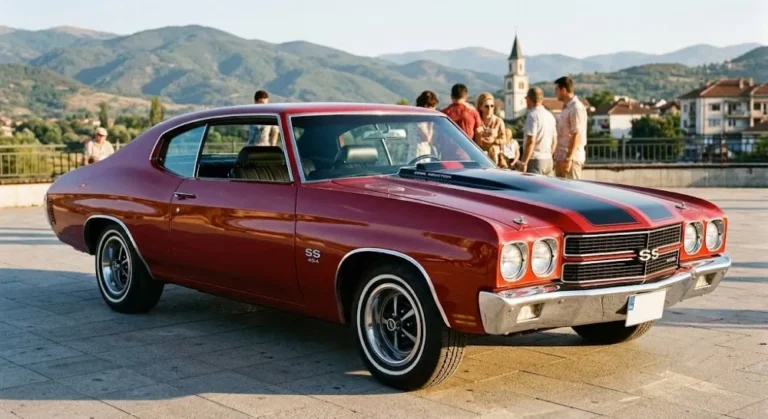
Trans Am Worldwide looked at the 1970 Chevrolet Chevelle SS 454 LS6 — the car that Chevrolet built 54 years ago with 450 horsepower, cowl induction, and a reputation as the King of the Muscle Cars — and decided to build the version that modern technology makes possible. The result is the 2024 Chevelle 70/SS: a full carbon fiber body on a sixth-generation Camaro platform, available in three trims with engines starting at 450 horsepower and topping out at 1,500 horsepower from a twin-turbocharged 454 cubic-inch LS6X. The most exclusive version is limited to 25 units worldwide. It starts at over $150,000. And it is one of the most significant American muscle car revival projects in history.
Quick Facts – 2024 Chevelle 70/SS
— Builder: Trans Am Worldwide (TAW) — Florida-based specialty builder
— Co-Founder: Tod Warmack
— Platform: Sixth-generation Chevrolet Camaro — same base as TAW’s Pontiac Trans Am Outlaw
— Body: Full carbon fiber — all trim levels
— Hood: Iconic cowl induction hood — standard across all trims
— Graphics: Rally stripes — standard across all trims
— Roof Options: Convertible (soft-top) and hardtop
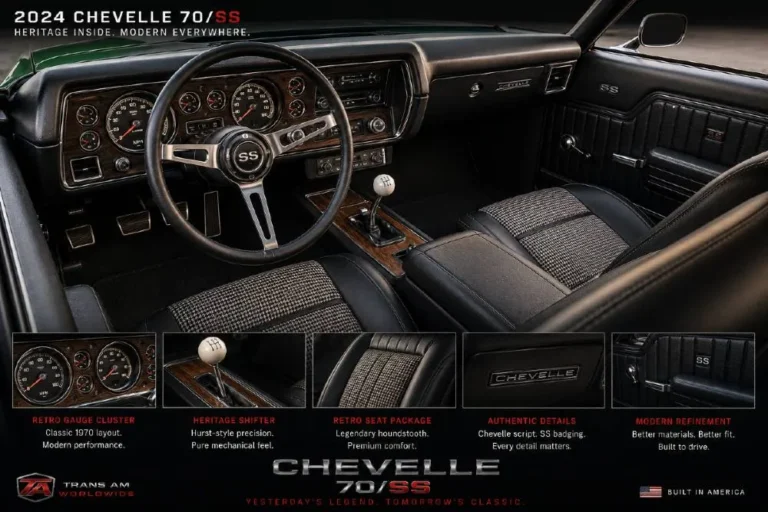
— Interior: Retro seat package, refaced gauges, heritage shifter, retro gauge cluster
Three Trim Levels:
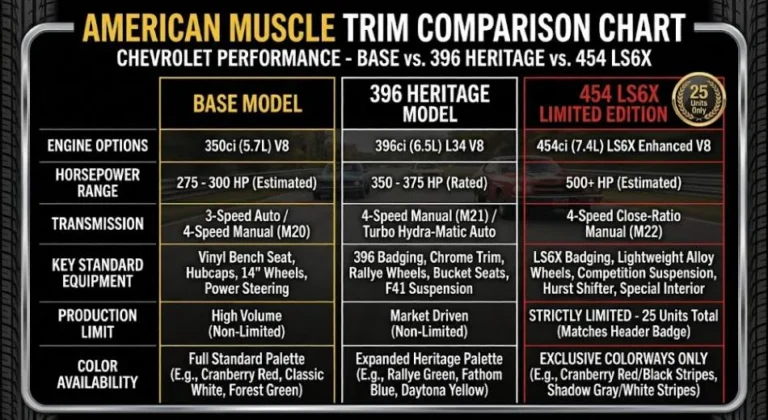
— Base Model: LT1 6.2L V8 — 450 HP naturally aspirated / 675 HP supercharged optional
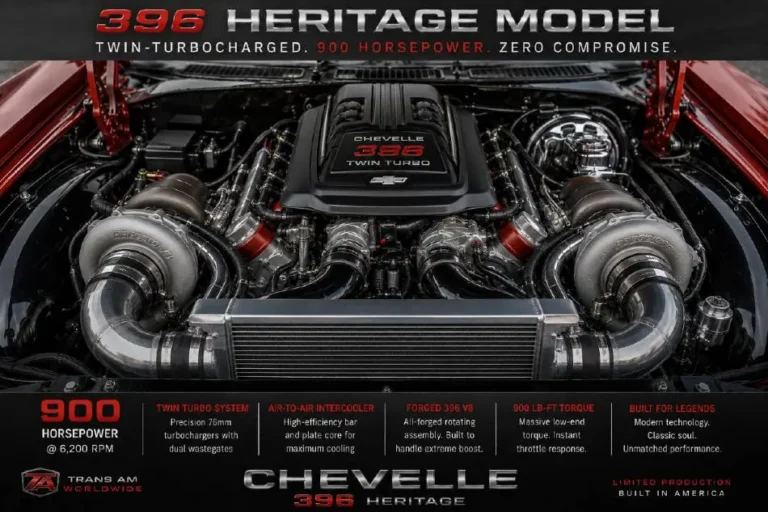
— 396 Heritage Model: 396ci LT V8 — 800 HP supercharged / 900 HP twin-turbo
— 454 LS6X Limited Edition: 454ci LS6X — 900 HP / 1,000 HP / 1,500 HP rear-wheel (25 units only)
— Transmission Options: Hurst short ratio manual / automatic with heritage shifter
— Heritage Model Manual: Mantic triple-disc clutch standard on manual variants
— 454 LS6X Features: Headers with 3.0-inch full exhaust, drag pack (1,500 HP model only)
— 454 LS6X Suspension: Upgraded suspension, upgraded axles, rear differential, oversized brakes
— Color Options: 20 standard colors on Base and Heritage / unlimited custom colors on LS6X
— Wheel Options: Mach V or traditional rally wheels
— Starting Price: Over $150,000
— 454 LS6X Limited Edition: 25 units total worldwide — most exclusive version
— Original Inspiration: 1970 Chevrolet Chevelle SS 454 LS6 — 450 HP factory rating
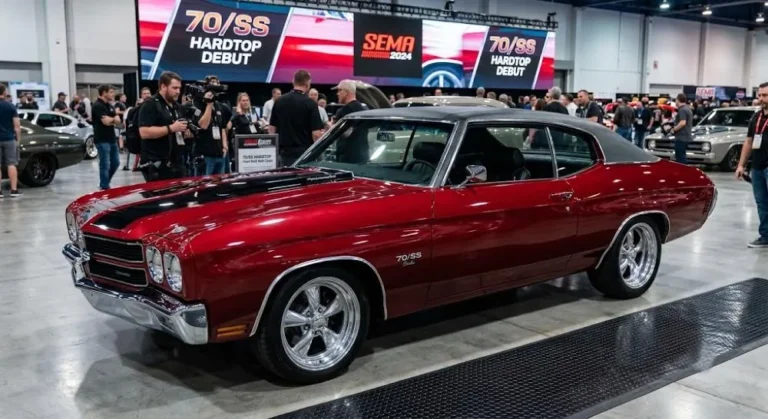
— SEMA 2024: Hardtop version debuted alongside updates including chrome bumper option
Sources: Trans Am Worldwide official site, LSX Magazine, Top Speed, Hot Cars,
Overview – When General Motors Would Not, Trans Am Worldwide Did
The 1970 Chevrolet Chevelle SS 454 LS6 was, by general consensus, one of the two or three greatest American muscle cars ever produced. With 450 factory-rated horsepower from a 454 cubic-inch big-block V8, the SS 454 LS6 ran the quarter mile in the low 13-second range and delivered an experience that contemporary road testers at Car and Driver and Motor Trend described in terms that remain relevant today. The 1970 second-generation Chevelle was defined as America’s Most Popular Mid-Size Car, and the SS 454 is arguably known as the King of the Muscle Cars.
The Chevelle nameplate disappeared from Chevrolet showrooms after 1977. For 45 years, the specific combination of what the Chevelle represented — an affordable, rear-wheel-drive performance machine with available big-block power, distinctive body proportions, and the cowl induction hood that communicated exactly what was underneath it — existed only in the memories of drivers who lived through the muscle car era and the collector values of surviving examples.
Trans Am Worldwide is the Florida-based specialty builder responsible for reviving iconic classics of the muscle car era into present-day interpretations. Their previous work — the TAW Pontiac Trans Am Outlaw — demonstrated both the ambition and the execution capability that the Chevelle project would require. Co-founder Tod Warmack and the Trans Am Worldwide team built a car that does not simply evoke the 1970 Chevelle — it is built to be what the 1970 Chevelle would be if constructed today with the materials, engineering, and power output that the original’s era could not provide.
The 2024 Chevelle 70/SS is a reimagined version of the iconic 1970 Chevy Chevelle SS, combining retro styling with modern twists and powerful engines. The lineup includes three trims with different options for colors, wheels, powertrains, and performance packages, offering exclusivity and customization. The starting price of over $150,000 is not a compromise purchase — it is the price of a hand-built specialty vehicle with a carbon fiber body, a Camaro-derived performance platform, and engine options that make the original’s 450 horsepower look conservative.
The 70/SS pays specific tribute to the 1970 Chevelle SS 454 LS6, but the Chevelle story that makes that nameplate so powerful began years earlier — our complete guide to the 69 Chevelle covers the model year that many enthusiasts consider the design peak of the Chevelle generation, the COPO 427 ordering program, and the specific competitive context in which the 1970 SS 454 LS6 arrived as the definitive expression of everything the nameplate had been building toward.
This guide covers everything — the three trim levels, the six available engine configurations, the shared architecture that makes the performance possible, the interior approach that captures nostalgia without sacrificing modernity, and the 454 LS6X Limited Edition that represents the most extreme expression of what Trans Am Worldwide intended to build when they decided to bring the Chevelle back.
All specifications cited in this article — including the Base Model’s 450 HP and 675 HP options, the 396 Heritage Model’s 800 HP and 900 HP options, the 454 LS6X’s 900 HP, 1,000 HP, and 1,500 HP rear-wheel options, the 25-unit production limit, and the standard equipment list for each trim — are sourced directly from the Trans Am Worldwide official Chevelle 70/SS specifications page, the manufacturer’s primary product reference.
Section 1 – The Foundation
Why The Sixth-Generation Camaro Platform Was The Right Choice
Every significant question about the 2024 Chevelle 70/SS’s capability, reliability, and performance potential starts with the same answer: the sixth-generation Chevrolet Camaro. Trans Am Worldwide used the Camaro platform as the engineering foundation for their reimagined Trans Am Outlaw, and the same decision underpins the Chevelle 70/SS.
The sixth-generation Camaro’s platform is one of the most capable rear-wheel-drive sports car architectures General Motors has produced. Its rear-wheel-drive configuration is the essential starting point for any credible muscle car — a front-wheel-drive or all-wheel-drive platform would fundamentally compromise the 1970 Chevelle’s specific character regardless of how well the body recreation captured the original’s proportions. The Camaro platform’s suspension geometry, structural rigidity, and drivetrain architecture provide the foundation that a 1,500-horsepower rear-wheel-drive vehicle requires.
Building on an existing production platform rather than a bespoke tube-frame or custom chassis means the 70/SS benefits from the engineering investment General Motors has already made in the Camaro’s handling balance, brake sizing, and structural integrity. Trans Am Worldwide then modifies and upgrades this foundation for the specific demands of their higher-power configurations — particularly the 454 LS6X Limited Edition’s 1,500 horsepower, which requires the upgraded suspension, upgraded axles, rear differential, and oversized brakes that are standard on the top-specification model.
The full carbon fiber body is the most immediately distinctive choice Trans Am Worldwide made for the 70/SS. Every iteration of the TAW 70/SS consists of a fully carbon fiber body, which helps keep weight down without sacrificing strength or paintwork finish. Carbon fiber’s strength-to-weight advantage over conventional steel panels reduces the overall vehicle weight meaningfully — critical for performance on a platform that carries engines producing up to 1,500 horsepower. Plastic panels are inherently weaker in collisions and can sometimes lead to sub-par paint finishes in comparison — the carbon fiber choice produces both the weight reduction and the surface quality that the 70/SS’s premium price position requires.
The iconic cowl induction hood is standard across all three trim levels. On the original 1970 Chevelle SS, the cowl induction hood was the specific visual declaration that identified a car equipped with the most performance-oriented engine options — it was the hood that communicated, from a distance, that this was not a standard Chevelle but the SS version with the available big-block. Trans Am Worldwide’s replication of this specific detail is not merely aesthetic. It connects every 70/SS to the specific visual heritage of the most significant 1970 Chevelle SS configuration.
The sixth-generation Camaro platform that underpins the 70/SS has a well-documented reliability profile from its production years. Our complete guide to common issues that kill American cars covers the LT1 engine’s known characteristics, the GM 10-speed transmission’s documented shudder issue, and the specific maintenance patterns that affect long-term durability on this platform — essential context for any buyer investing $150,000 in a vehicle built on this foundation.
Section 2 – The Base Model
450 Horsepower — The Number That Mirrors The Original
The base model 70/SS comes stock with the same power (450 HP) as the 1970 LS6 454 Chevelle did. Trans Am Worldwide understood that matching the original’s peak factory output as the starting point for the revival was both historically appropriate and strategically correct — the base 70/SS replicates the performance that made the 1970 SS 454 LS6 legendary, and then provides the upgrade path for buyers who want to go further.
The engine producing that 450 horsepower is the naturally aspirated 6.2-liter LT1 V8 — the same basic engine architecture that powers the Chevrolet Camaro SS. In the Base Model 70/SS configuration, this engine produces the specific horsepower figure that mirrors the original without requiring forced induction, maintaining the natural breathing character that enthusiasts associate with the big-block muscle car era.
For buyers who want substantially more capability than the naturally aspirated configuration provides, the supercharger option raises output to 675 horsepower — a 50 percent increase over the base configuration. This supercharged upgrade transforms the base 70/SS from a historically faithful performance recreation into a genuine modern performance vehicle capable of embarrassing sports cars that cost significantly more.
The base model’s standard equipment list establishes the 70/SS’s foundational specification regardless of trim: the full carbon fiber body, the cowl induction hood, rally stripes, and a redesigned interior reminiscent of the 1970 Chevelle Super Sport. A retro seat package, refaced gauges, and choice of wheels along with 20 different color options are all standard. The retro gauge cluster package specifically is one of the base model’s most important interior choices — it reconciles the modern car’s digital underpinnings with the analog, driver-focused instrument presentation that the original Chevelle’s cabin provided.
Owners are given the choice of either a Hurst short ratio manual transmission or an automatic, which is then adorned with a heritage shifter, which ties in the whole retro look. The Hurst shifter reference is specifically meaningful — Hurst Performance was the shifter manufacturer whose products appeared in every significant muscle car application during the original Chevelle’s era, including the original SS 454. Including a Hurst unit in the 2024 base model connects the driving experience to the specific tactile heritage of the original cars.
Wheel options for the Base Model include either Mach V wheels or traditional rally wheels — the rally wheel option being a specific reproduction of the wheel design most associated with the original 1970 Chevelle SS’s standard appearance.
Section 3 – The 396 Heritage Model
From 450 To 900 Horsepower — Doubling The Original’s Output
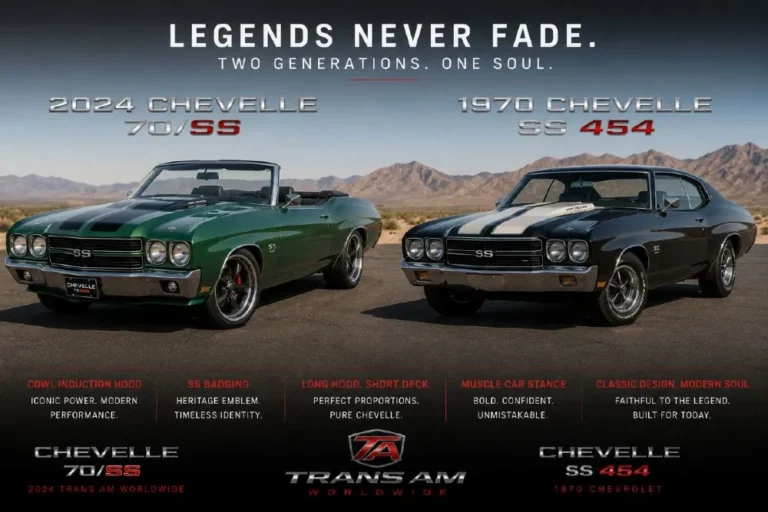
The 396 Heritage Model builds upon the basis of the entry-level model, and apart from what’s under the hood, very little has changed. They may look almost identical when parked next to one another, but if they were to fire up a drag strip together, it would be clear which was which.
The 396 Heritage Model’s name specifically references the other legendary 1970 Chevelle SS configuration — the SS 396. While the SS 454 receives more historical attention as the ultimate expression of the 1970 Chevelle, the SS 396 was the more widely sold performance variant, equipping a larger number of 1970 Chevelles with big-block performance at a lower price premium than the 454. The Heritage Model pays tribute to this configuration while dramatically exceeding its original output.
There is no naturally aspirated option in the Heritage Model — owners can only choose between a supercharged or twin-turbo 396 V8. The supercharged version produces 800 horsepower. The twin-turbocharged version produces 900 horsepower. To place those figures in context: the supercharged Heritage Model produces 800 horsepower, which represents nearly double the output of the original 1970 SS 396’s strongest factory configuration. That’s because this Heritage Model is a seriously potent muscle car, with double the power of an original Chevrolet Chevelle when spec’d with the twin-turbo engine.
The specific choice between supercharging and twin-turbo in the Heritage Model represents a meaningful character distinction rather than simply an output difference. The supercharged configuration delivers boost more immediately — the positive displacement supercharger produces pressure proportional to engine speed from idle without the brief spool-up period associated with turbochargers. The twin-turbo configuration ultimately produces more peak power but with a slightly different delivery character. Both produce more than enough power to make any comparison to the original 1970 SS 396 feel like an entirely different conversation.
The Heritage Model adds specific equipment over the Base Model to support its increased output. The manual transmission variant specifies the Mantic triple-disc clutch as standard — a purpose-built high-performance clutch assembly appropriate for the torque demands of a forced-induction 396. This is not a mild upgrade — the Mantic triple-disc is a competition-proven clutch system that handles power outputs well beyond what any conventional twin-disc unit manages reliably.
The 396 Heritage Model engine specification plaque is also standard — a documentation of the specific build included with the vehicle that places each Heritage Model in the specific context of the nameplate it honors.
Section 4 – The 454 LS6X Limited Edition
25 Units, 1,500 Horsepower, And The Most Exclusive Modern Muscle Car Built
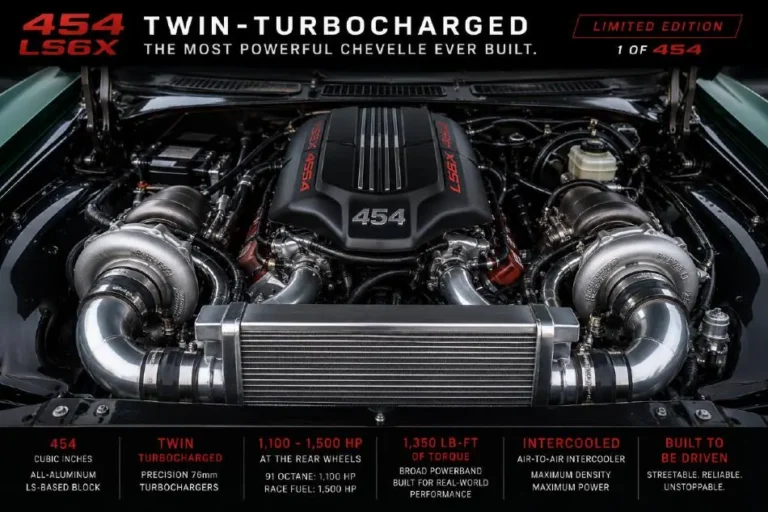
The 454 LS6X Limited Edition is the most extreme, most exclusive, and most direct tribute to the original 1970 Chevelle SS 454 LS6 in the entire Trans Am Worldwide 70/SS lineup. The LS6X is a one-of-a-kind endeavor, limited to only 25 units. With the current technology of the modern-day automotive platform, we are able to deliver reliable, dependable performance with three optional performance packages.
The name is the most direct possible connection to the original: LS6 was the specific engine designation for the 450-horsepower 454 cubic-inch big-block that made the 1970 Chevelle SS 454 LS6 the definitive King of the Muscle Cars. The X suffix communicates the modern engineering that extends well beyond the original’s capability while honoring its specific heritage.
The 454 LS6X Limited Edition is available with three power levels, all rated at the rear wheels — a more demanding measurement than crankshaft output since it accounts for drivetrain losses. The three options are 900 horsepower, 1,000 horsepower, and the ultimate expression of 1,500 horsepower. Using boost by speed, the delivery is both controllable and humbling. The boost-by-speed management system allows the 1,500-horsepower configuration to be driven on public roads at reasonable power levels and then unleash its full capability when conditions and driver inputs demand it — a calibration approach that separates a racetrack-only exercise from a genuinely usable daily driver.
The 1,500-horsepower configuration requires the drag pack, which is standard only on this configuration. The full carbon fiber body, cowl induction hood, painted graphics, upgraded suspension, upgraded axles, rear differential, and oversized brakes are all standard on the 1,500 model — a hardware package that reflects the engineering investment required to reliably channel 1,500 rear-wheel horsepower through a street-driven muscle car body.
The 454 LS6X Limited Edition includes headers with a 3.0-inch full exhaust system as standard equipment — a hardware specification chosen to support the massive flow requirements of a 1,500-horsepower twin-turbo application. A 3.0-inch full exhaust is not a mild-street exhaust system. It is a purpose-built performance exhaust that minimizes back pressure at the output levels this engine produces.
On color availability, the LS6X Limited Edition offers the broadest selection: it is available in any color, including the 20 standard colors or any custom color choice. For a 25-unit production run, unlimited custom color availability is the appropriate specification — each of the 25 buyers receives a vehicle that can be differentiated from every other LS6X in existence through their specific color selection.
The confirmation that the 70/SS can be ordered with a supercharged LT engine making 900 horsepower or a twin-turbo 454 cubic-inch LS6X producing 1,500 horsepower, alongside the manual transmission availability, is documented in the LSX Magazine 2024 Chevelle 70/SS return of an icon report — the primary specialist publication coverage of the vehicle’s announcement and one of the primary sources for this article.
Back in the day, the 1970 Chevelle 454 came in several flavors starting with an LS5 rated at 360 HP and the LS6 at 450 HP. The LS6X edition delivers 900 HP, 1,000 HP, or 1,500 HP — all rated at the rear wheels. The progression from the original’s 450 factory horsepower to the LS6X’s 1,500 rear-wheel horsepower over 54 years of engineering development is one of the most striking illustrations of how much performance capability has advanced since the muscle car era.
Section 5 – The Interior
How Trans Am Worldwide Captured 1970 Inside A Modern Car
The interior of the 2024 Chevelle 70/SS is where Trans Am Worldwide’s design philosophy faces its most complex challenge: how do you create a cabin that feels authentically connected to the 1970 Chevelle’s specific interior character while incorporating the technology and safety features that a 2024-built vehicle requires?
Make no mistake, the Chevelle 70/SS is a modern car and crammed full of new 21st-century features, but it’s clear to see some nostalgic muscle car charm has been captured inside. The team at TAW has done everything possible to provide an old-school feel in the cabin.
Tod Warmack’s specific statements about the SEMA 2024 hardtop debut, the leaked chrome bumper option, and the rolling-changes production philosophy — including his confirmation that some Chevelles in process are extremely unique and that the time from idea to public reveal can be a month or more — are all from the LSX Magazine leaked 2024 Chevelle 70/SS updates report.
The retro gauge cluster package is the interior element that most directly evokes the original Chevelle’s dashboard character. The 1970 Chevelle SS’s instrument cluster — with its circular speedometer and tachometer flanked by auxiliary gauges for oil pressure, water temperature, and fuel level — was one of the era’s most distinctive and most driver-focused instrument layouts. The TAW retro gauge cluster translates this specific layout into a modern context, using refaced instruments that maintain the visual language of the original while displaying accurate readings from the modern platform’s sensor systems.
The retro seat package provides seating that maintains the visual proportions and upholstery character of the original 1970 Chevelle SS bucket seats — the specific seat design that positioned driver and passenger for the Chevelle’s specific ergonomics — while incorporating modern safety construction and support quality.
The heritage shifter — available with both the manual and automatic transmission options — is the interior’s most tactile connection to the original. The Hurst short ratio manual with its heritage shifter provides the specific feel of a performance gear change that the original Chevelle’s four-speed M21 or M22 manual delivered. The automatic version’s heritage shifter maintains the visual and positional reference to the original’s console-mounted gear selector.
The convertible configuration — available alongside the hardtop that debuted at SEMA 2024 — allows the 70/SS’s interior to engage with the environment in the way that the original Chevelle SS convertibles of 1970 did. The soft-top version provides the most direct experiential connection to the original convertible, where the combination of V8 sound, open air, and the specific road presence of a muscle car body creates an experience that no closed-roof vehicle can replicate.
Section 6 – The 2024 Chevelle 70/SS VS The Original 1970 Chevelle SS
How The Tribute Compares To The Car That Inspired It
Understanding the 2024 Chevelle 70/SS requires understanding what made the original 1970 Chevelle SS 454 LS6 the car that Trans Am Worldwide chose to revive. The specific combination of design, performance, and cultural significance that the 1970 SS 454 LS6 represented is not replicated by any production vehicle available from any manufacturer today.
The 1970 Chevelle SS 454 LS6 did not exist in isolation — it competed directly with the 1970 Dodge Super Bee’s 440 Six Pack and 426 Hemi for the title of the definitive American muscle car of the era. Our complete guide to the 1970 Dodge Super Bee covers the Plymouth Road Runner’s Dodge counterpart and its own remarkable performance credentials, completing the picture of the specific competitive environment that made the Chevelle’s King of the Muscle Cars designation so meaningful
The 1970 Chevelle SS 454 LS6 produced 450 horsepower and 500 lb-ft of torque from a naturally aspirated 7.4-liter big-block V8 — figures that, in a vehicle weighing approximately 3,800 pounds, produced quarter-mile times in the low 13-second range and made the SS 454 LS6 one of the quickest production cars available at any price in 1970. In context, a 1970 Ferrari 365 GTB/4 Daytona produced 352 horsepower. The Chevelle LS6 outpowered the most exotic Italian supercar of its era while selling for a fraction of its cost.
The 1970 Chevelle SS’s specific design — the long hood, the fastback-influenced roofline, the wide rear haunches, the prominent SS badging, and the cowl induction hood — produced a car that communicated its performance identity completely without requiring the buyer to inspect the engine bay. The design was the performance statement.
The 2024 Chevelle 70/SS replicates this design language faithfully enough that the connection is immediate and unambiguous. Side by side, the 70/SS’s carbon fiber interpretation of the original’s proportions — the cowl induction hood, the body side lines, the rear treatment — acknowledges the original’s design rather than simply referencing it. Trans Am Worldwide’s designers understood that the 70/SS’s appeal depends entirely on its visual connection to the 1970 original, and they have delivered that connection with conviction.
The performance comparison is more complex. The original’s 450 HP LS6 was extraordinary in 1970. The 70/SS Base Model matches that number from a smaller engine using modern fuel injection and manufacturing precision. The 70/SS’s 1,500 HP LS6X represents what 54 years of engineering progress makes possible from the same cubic inch displacement — the same 454 cubic inches that produced 450 HP in 1970 now produces 1,500 rear-wheel horsepower with twin-turbocharger assistance. The original was the fastest car most American drivers had ever sat behind the wheel of. The LS6X would not be recognizable to them as belonging to the same category.
The 1970 Chevelle SS 454 LS6’s place as the King of the Muscle Cars becomes most meaningful in the context of Chevrolet’s complete performance car story — our complete guide to sports Chevy cars covers the full history from the 1953 Corvette through the ZR1X, showing where the original SS 454 LS6 and the 2024 70/SS tribute both sit in the longest continuous American performance car heritage.
Section 7 – Trans AM Worldwide And The Revival Philosophy
The Company That Keeps Building The Cars Detroit Stopped Making
Trans Am Worldwide is the Florida-based company responsible for reviving iconic classics of the muscle car era into present-day interpretations. Their approach is consistent across the Trans Am Outlaw and the Chevelle 70/SS: identify the American muscle cars that enthusiasts most consistently identify as the ones they wish were still being built, and build them with the technology of 2024.
Tod Warmack, Director and Co-Founder of Trans Am Worldwide, provides ongoing commentary on the 70/SS’s development that reflects the rolling-changes philosophy the company applies: they are always making changes and going back to the drawing board. The SEMA 2024 debut of the hardtop version — alongside the revelation of chrome bumper options for future builds — demonstrates that Trans Am Worldwide treats the 70/SS as a living product rather than a fixed-specification limited edition that is delivered and forgotten.
The chrome bumper option specifically references the original 1970 Chevelle SS’s standard chrome bumper specification — the bumper finish that contemporary Chevelle buyers received from the factory and that restored examples display as the historically correct finish. The chrome bumpers will obviously bring a whole other level to the new Chevelle’s modern muscle car magic. For buyers whose specific reference point is the chrome-bumpered original rather than the rubber-bumpered later muscle car era, this option provides the most complete visual connection to the 1970 car.
Trans Am Worldwide’s production model differs fundamentally from the large manufacturer approach. General Motors cannot justify the development cost of a new rear-wheel-drive muscle car platform for the volume that the current market would support. Trans Am Worldwide operates at a scale where 25 units is a viable production run and where individual buyer customization is not a logistical problem but a defining characteristic of the product. This is the specific market position that makes the 70/SS possible and that makes its existence meaningful — it is the car that the market wanted and that the market scale prevented any major manufacturer from building.
Some Chevelles that are in process are extremely unique. By the time we have the idea, to the time it hits the streets, it could be a month or more before the public actually sees it. This rolling development model means that the 70/SS will continue to evolve — each new build potentially offering configurations and options that the previous one did not.
FAQ
Q: What is the 2024 Chevelle 70/SS?
A: The 2024 Chevelle 70/SS is a modern muscle car revival produced by Trans Am Worldwide (TAW), a Florida-based specialty builder co-founded by Tod Warmack. It is based on the sixth-generation Chevrolet Camaro platform, uses a full carbon fiber body across all trim levels, and is available in three configurations — the Base Model, the 396 Heritage Model, and the 454 LS6X Limited Edition — with engines ranging from 450 horsepower to 1,500 rear-wheel horsepower. It pays tribute to the legendary 1970 Chevrolet Chevelle SS 454 LS6, known as the King of the Muscle Cars.
Q: How much does the 2024 Chevelle 70/SS cost?
A: The 2024 Chevelle 70/SS starts at over $150,000 for the Base Model. The 396 Heritage Model and 454 LS6X Limited Edition command higher prices reflecting their more powerful engines and exclusive equipment. The 454 LS6X Limited Edition is the most exclusive at only 25 units worldwide. Trans Am Worldwide builds these vehicles to order with extensive customization options that affect final pricing.
Q: What are the three trim levels of the 2024 Chevelle 70/SS?
A: The three trim levels are: the Base Model using a naturally aspirated LT1 6.2L V8 producing 450 horsepower (or 675 HP supercharged); the 396 Heritage Model using a 396 cubic-inch LT V8 producing 800 HP supercharged or 900 HP twin-turbo; and the 454 LS6X Limited Edition using a 454 cubic-inch twin-turbo LS6X producing 900 HP, 1,000 HP, or 1,500 HP at the rear wheels — the top configuration limited to 25 units worldwide and including a drag pack, upgraded axles, rear differential, and oversized brakes as standard.
Q: What platform is the 2024 Chevelle 70/SS based on?
A: The 2024 Chevelle 70/SS is based on the sixth-generation Chevrolet Camaro platform. Trans Am Worldwide chose this platform for the same reasons they used it for the Trans Am Outlaw — it provides a modern, capable rear-wheel-drive foundation with engineering already optimized for high-power applications. The full carbon fiber body, cowl induction hood, heritage interior, rally stripes, and custom graphics then transform the Camaro architecture into a 1970 Chevelle SS tribute.
Q: How many 454 LS6X Limited Edition Chevelle 70/SS units are being made?
A: The 454 LS6X Limited Edition is limited to only 25 units worldwide — making it one of the most exclusive modern American muscle car productions available. Each of the 25 units is available in any color including custom colors beyond the 20 standard options. The LS6X nameplate pays direct tribute to the original 1970 SS 454 LS6 designation, and Trans Am Worldwide makes the vehicles available in 900 HP, 1,000 HP, and 1,500 HP configurations at the rear wheels.
Q: Is the 2024 Chevelle 70/SS a real Chevrolet?
A: No. The 2024 Chevelle 70/SS is produced by Trans Am Worldwide, not by General Motors or Chevrolet. General Motors does not manufacture or endorse the vehicle. Trans Am Worldwide is an independent specialty builder that creates its own interpretations of classic American muscle car designs using modern components. The 70/SS is not sold through Chevrolet dealerships and carries no GM factory warranty. It is a coach-built specialty vehicle similar to other specialty builders that have historically created tribute vehicles based on classic American nameplates.
The Bottom Line
The 2024 Chevelle 70/SS exists because Trans Am Worldwide asked the specific question that the major manufacturers have stopped asking: what if? What if the 1970 Chevelle SS 454 LS6 — the King of the Muscle Cars, the car that produced 450 horsepower in a package that ordinary American buyers could drive to work on Monday and to the drag strip on Saturday — what if that car were built today with everything modern technology offers?
The answer is a carbon fiber body on a sixth-generation Camaro platform, three trim levels, six engine configurations, 1,500 horsepower available at the rear wheels in the most extreme version, 25 total units of that version, a Hurst shifter, a cowl induction hood, retro gauges, rally stripes in 20 standard colors, and a starting price north of $150,000.
The 1970 Chevelle SS’s appeal was specifically its accessibility — extraordinary performance at a price that working-class American buyers could reach. At over $150,000, the 2024 70/SS occupies a completely different market position. For buyers who want the Chevelle’s philosophy — maximum V8 performance in an American body — at prices closer to the original’s spirit, our guide to the best sports cars under $10,000 covers the used muscle car alternatives including the Pontiac GTO and Chevrolet Camaro Z28 that carry the same DNA at accessible prices.
It is not a Chevrolet. It is not sold at a Chevrolet dealer. It does not come with a Chevrolet warranty. What it is, more completely than anything General Motors has offered since 1977, is a Chevelle. The proportions are right. The hood is right. The attitude is right. The horsepower is more right than the original could have imagined.
Tod Warmack and Trans Am Worldwide understood something specific when they decided to build this car: the market for a genuine 1970 Chevelle SS tribute has not gone away in 45 years. It has been waiting. The Chevelle 70/SS is what it was waiting for.
Editorial Note
This article was written and reviewed in April 2026. All specifications, trim details, production limits, and direct quotes are sourced from the following primary sources: Trans Am Worldwide’s official current models page at transamworldwide.com (December 2, 2025) — primary source for all three trim level specifications including the Base Model 450 HP and 675 HP supercharged options, the 396 Heritage Model 800 HP and 900 HP options, the 454 LS6X 900 HP / 1,000 HP / 1,500 HP options, the 25-unit LS6X production limit, the Mantic triple-disc clutch on manual Heritage Models, the boost-by-speed management description, the 3.0-inch full exhaust system specification, and the drag pack inclusion on the 1,500 HP model;
LSX Magazine’s “Return of an Icon — The 2024 Chevelle 70/SS Is Here” and “Leaked: 2024 Update On The 2024 Chevelle 70/SS” (September 2025) — primary source for the “return of a legend” editorial framing, the Tod Warmack quotes about SEMA 2024 hardtop debut and chrome bumper options, the “rolling changes” production philosophy, and the context of the Chevrolet Camaro discontinuation;
TopSpeed’s “2024 Chevelle 70/SS: Everything Reported So Far” (January 2024) — primary source for the three trim level names and structure, the 20-color standard palette, the “America’s Most Popular Mid-Size Car” original designation, the 25-unit LS6X limit confirmation, and the starting price above $150,000; and HotCars’ “2024 Chevelle 70/SS: Every Trim Compared” (December 2023) — primary source for the full carbon fiber body justification, the “double the power” Heritage Model characterization, the Hurst shifter description, the heritage shifter automatic description, and the sixth-generation Camaro platform identification. All performance figures are as published by Trans Am Worldwide and sourced publications — independent road test data is not available as of the editorial date for this production run.