Last Updated: March 11, 2026 | Read Time: 7 minutes |
The definitive first-generation muscle car. Maximum performance, minimal compromise.
375 HP (L89 396) | 243,085 Built in 1969 | $75,000 Average Value (2026)
Contents
Quick Facts
| Production Year | 1969 (Final First-Gen Year) |
| Total Built | 243,085 Camaros / 34,932 SS Models |
| Base Price (1969) | $2,726 Coupe / $2,881 Convertible |
| Current Value (2026) | $35,000–$150,000+ |
| 0-60 MPH | 5.5–6.3 Seconds |
| Quarter Mile | 13.0–14.5 Sec @ 100-108 MPH |
Why 69 Is Special
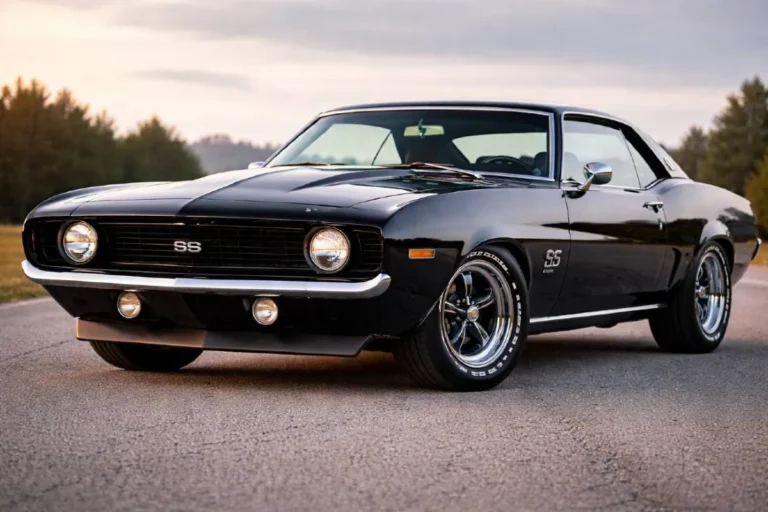
The 69 Camaro SS represents the peak of first-generation development. Chevrolet launched the Camaro in September 1966 as a 1967 model to combat Ford’s Mustang, which had been stealing sales since April 1964. The first two years established the platform. By 1969, three years of refinement produced what many consider the definitive first-gen Camaro.
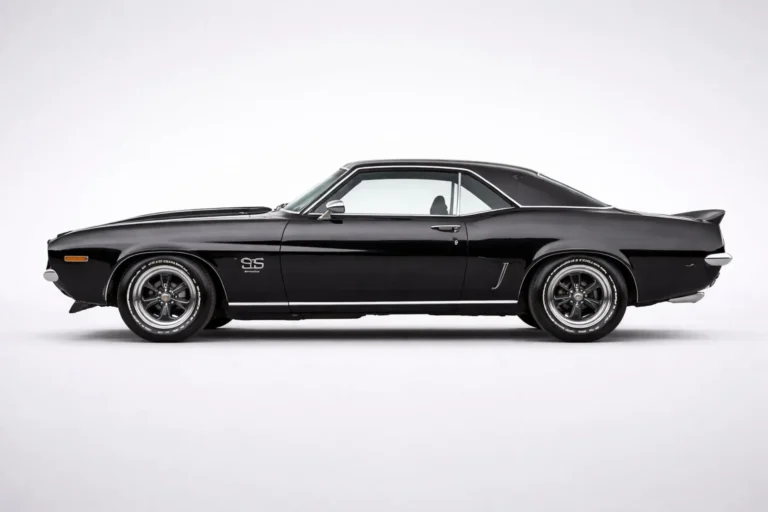
Nearly everything changed for 1969. Chevrolet redesigned the sheetmetal almost entirely—only the hood, trunk lid, and roof carried over from 1968. The grille became more aggressive with a deeper V-shape. Door skins received new character lines. Rear quarter panels grew more pronounced. The result: a car that looked lower, wider, and meaner than its predecessors.
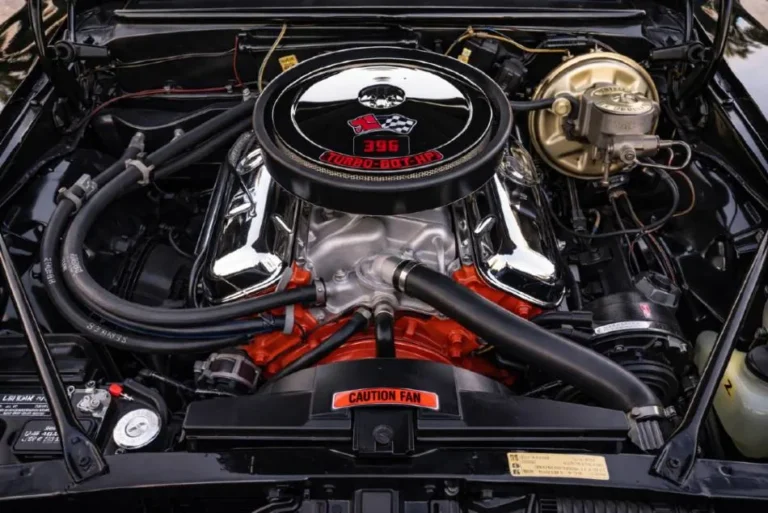
Engine options expanded. The SS 350 remained the base performance choice. The 396 big-block came in three power levels: 325 HP, 350 HP, and the rare 375 HP L89 with aluminum heads. Special COPO (Central Office Production Order) models could be equipped with 427 cubic-inch engines, though Chevrolet never officially advertised this option. Savvy performance dealers like Fred Gibb Chevrolet in Illinois used the COPO system to order Camaros with engines unavailable through standard channels.
Performance improved across the board. The SS package now included staggered rear shock absorbers to reduce wheel hop during hard acceleration. Weight distribution measured 51/49 front-to-rear—near perfect for a front-engine, rear-drive performance car. Optional four-wheel disc brakes (RPO JL8) used four-piston calipers similar to Corvette units, providing stopping power that matched the engine’s output.
Then Chevrolet extended the model year into November 1969. Manufacturing delays pushed the second-generation launch from September to February 1970, giving first-gen sales one final run. Dealers kept selling 1969 models while competitors had moved to 1970 lineups. Total 1969 production hit 243,085 units—the highest single-year output the platform would ever see.
What makes 1969 special isn’t nostalgia. It’s the combination of timing, engineering, and design. High-compression engines remained legal. Emissions regulations hadn’t arrived—those would come in 1971, killing horsepower ratings across Detroit. Insurance companies hadn’t yet established surcharges for muscle cars—that would happen in 1970-1971, effectively ending the era. The 1969 SS captured American muscle at its unfiltered peak.
The market reflects this. Clean 1969 SS models consistently outsell comparable 1967-1968 examples. The styling aged better. The engineering was more mature. Production numbers created just enough scarcity to drive values without making the cars impossibly rare. For collectors seeking the best first-gen 1969 Camaro, is the answer.
Engine Options
The SS package offered three V8 configurations. Your choice determined the car’s character—and its value today.
350 V8 (Base SS Engine) 300 HP
| Displacement | 350 cu in (5.7L) |
| Torque | 380 lb-ft |
| 0-60 MPH | 6.3 seconds |
| Quarter Mile | 14.5 sec @ 100 mph |
| Value Impact | Base pricing |
396 V8 (Popular Choice) 325 HP
| Displacement | 396 cu in (6.5L) |
| Torque | 410 lb-ft |
| 0-60 MPH | 5.8 seconds |
| Quarter Mile | 14.1 sec @ 103 mph |
| Value Impact | +$5,000–$8,000 |
L89 396 V8 (Rare/ 311 BUILT) 375 HP
| Displacement | 396 cu in (6.5L) |
| Special | Aluminum Heads |
| 0-60 MPH | 5.5 seconds |
| Quarter Mile | 13.0 sec @ 108.6 mph |
| Value Impact | +$30,000–$60,000 |
The L89 option cost $710.95 in 1969—nearly $6,000 in today’s money and a significant premium over the base SS price. Aluminum cylinder heads saved 75 pounds from the nose, improving weight distribution and handling. More importantly, the aluminum construction allowed better heat dissipation and improved breathing at high RPM. The L89 could sustain maximum power longer than iron-head 396s.
Only 311 buyers checked the L89 box. Most customers couldn’t justify the cost premium for 50 additional horsepower. Performance magazine tests showed the difference: the 325 HP 396 ran the quarter mile in roughly 14.1 seconds at 103 mph. The 375 HP L89 knocked that down to 13.0 seconds at 108.6 mph—a half-second improvement. On the street, that translated to clear dominance.
Today, documented L89 cars command the highest prices in the first-gen market. Finding an authentic L89 requires careful verification. The engine suffix code must match (e.g., JH for L89). The cowl tag should show the RPO code. Original documentation—Protect-O-Plate, build sheet, dealer invoice—proves authenticity. Without it, values drop significantly.
Transmission choices mattered almost as much as engine selection. The base three-speed manual was adequate for street duty but nothing special. The Muncie four-speed came in three versions: M20 wide-ratio for general use, M21 close-ratio for performance, and M22 “Rock Crusher” heavy-duty for serious acceleration. The M22 earned its nickname from straight-cut gears that produced a distinct whine under load. Today, original M22 transmissions add $8,000-$15,000 to a car’s value.
Automatic transmission buyers got the Turbo Hydra-Matic—TH350 for small-blocks, TH400 for big-blocks. Both were bulletproof. The TH400 handled 396 torque without complaint. Properly set up with a shift kit and higher stall converter, a TH400-equipped 396 could run within two-tenths of a four-speed car in the quarter mile. Street drivability was superior—no clutch, no missed shifts, just smooth acceleration.
Trim Packages Explained
Understanding SS, RS, and Z/28 differences is critical for buyers. These weren’t just badges—they represented distinct engineering approaches.
SS Package (Super Sport)
Performance-focused. Added $296.00 to the base price.
– Choice of 350 or 396 V8 engines
– Heavy-duty suspension components
– Power front disc brakes
– 14×7-inch wheels
– SS emblems and hood stripes
RS Package (Rally Sport)
Appearance-focused. Added $131.65 to the base price.
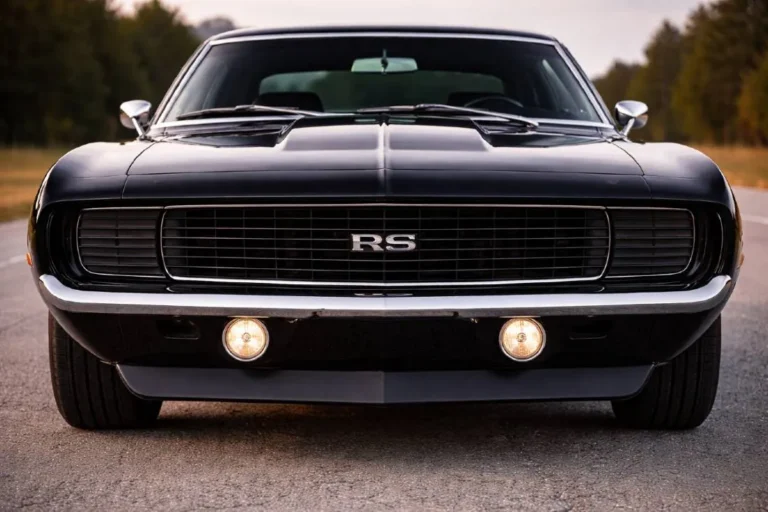
– Hidden headlights (vacuum-operated)
– Special grille and exterior trim
– Backup lights repositioned below bumper
– RS emblems
– Bright wheel opening trim
RS/SS Combination
Most desirable. Combined both packages for $427.65.
– Hidden headlights plus performance engine
– All visual and mechanical upgrades
– Limited production numbers
– Premium collector value today
– 1969 Indy Pace Car was RS/SS 396
Z/28 (Not an SS)
Trans-Am homologation special. Separate from SS.
– 302 cubic-inch V8 (290 HP rated)
– Handling-focused suspension
– 15×7 wheels vs. SS’s 14-inch
– Could NOT order with SS package
– Higher collector value than most SS models
What They’re Worth
The 69 Camaro SS remains one of the most liquid segments in the classic car market. Values held strong and continue climbing, particularly for documented, numbers-matching examples.
Current Market Values
| Condition | 350 SS | 396 SS | L89 396 SS |
| Driver Quality | $25K–$35K | $30K–$45K | $50K–$70K |
| Good Condition | $40K–$55K | $55K–$75K | $85K–$120K |
| Show Quality | $60K–$80K | $80K–$110K | $130K–$180K |
| Concours/Documented | $75K–$95K | $100K–$140K | $150K–$250K+ |
Premium Features Add Value
| RS/SS Combination | +$10,000–$20,000 |
| Convertible | +$15,000–$25,000 |
| 4-Speed Manual | +$5,000–$10,000 |
| M22 “Rock Crusher” Trans | +$8,000–$15,000 |
| Documented History | +$10,000–$50,000 |
Investment Potential
The numbers tell a clear story. Values have appreciated consistently for 25 years.
Historical Appreciation
| 2000 | $18,000 average |
| 2010 | $35,000 (+94%) |
| 2020 | $68,000 (+94%) |
| 2025 | $75,000 (+10%) |
| Average Annual Return | 7–9% (outperforms S&P 500) |
Best investment configurations: L89 396 models (rarest, highest appreciation), RS/SS 396 convertibles (style plus performance), documented Z/28s (racing heritage), and clean, numbers-matching 396 SS coupes (affordable entry point with strong appreciation).
Five-Year Outlook (2025-2030)
| L89 models | Expected +25-40% |
| RS/SS combinations | Expected +15-25% |
| Clean 396 SS coupes | Expected +10-20% |
The 60th anniversary in 2027 should drive additional interest. Gen X buyers entering peak earning years will fuel demand as they pursue childhood dream cars.
What Ownership Actually Costs
Budget realistically. Assuming 2,000 miles annually, expect $3,050–$7,100 in fixed costs:
Annual Costs (2,000 miles/year)
| Classic Car Insurance | $800–$1,500 |
| Fuel (10 mpg average) | $500–$800 |
| Maintenance & Oil Changes | $500–$1,000 |
| Registration | $50–$200 |
| Storage | $1,200–$3,600 |
| Total Annual | $3,050–$7,100 |
That’s just the baseline. Set aside $2,000–$5,000 annually for unexpected repairs. Carburetors fail. Differentials leak. Electrical gremlins appear. Parts availability is excellent—Classic Industries, Year One, and Rick’s Camaro stock nearly everything—but labor isn’t cheap. Professional mechanics familiar with first-gen Camaros charge $100–$150 per hour.
Common Repair Costs
| Carburetor rebuild | $200–$400 |
| Brake system refresh | $800–$1,500 |
| Suspension bushings | $600–$1,200 |
| Water pump replacement | $150–$300 |
| Rear main seal | $400–$800 |
Insurance options: Hagerty Classic Car Insurance, Grundy Insurance, American Collectors Insurance, State Farm classic car program.
Restoration vs. Restomod
Original restoration maximizes investment value but limits drivability. Professional frame-off restoration costs $60,000–$150,000 and takes 1-3 years. The process strips the car to bare metal, replaces rusted components, rebuilds the engine and transmission to factory specifications, and refinishes every surface to showroom condition.
You get period-correct everything: original engine specs with factory carburetor setup, bias-ply tires (though most concours judges accept radials), drum brakes in the rear, points ignition, and factory exhaust manifolds. The result: maximum collectibility, show-car quality that can win concours events, and best resale value. Numbers-matching, fully documented restorations command premium prices.
The downside: vintage performance, vintage reliability, and vintage safety features. A stock 396 SS runs low-14-second quarter miles—quick for 1969 but slow by modern standards. The points ignition requires regular maintenance. Carburetors need periodic adjustment and don’t handle modern ethanol fuel well. Drum brakes work adequately but can’t match modern disc systems. Air conditioning, if equipped, struggles in today’s traffic.
Original restorations make sense for investors, collectors seeking show-car trophies, and purists who value historical accuracy. If you plan to drive occasionally and display frequently, this is your path. Expect to trailer the car to events rather than drive it long distances.
RESTOMOD prioritizes usability over authenticity. Budget $50,000–$120,000 for comprehensive modernization depending on the starting condition and chosen upgrades. The goal: maintain classic appearance while upgrading mechanical systems to modern standards.
Popular engine swaps center on GM’s LS series. The LS3 (430 HP stock, 525+ HP with mild mods) drops in with adapter mounts and headers. Combine it with a modern six-speed manual (Tremec TKO or T56) or electronically controlled automatic (4L60E or 4L80E). Fuel injection eliminates carburetor hassles, improves fuel economy 30-40%, and delivers instant starts in any weather.
Wilwood four-wheel disc brake kits ($2,500-$5,000) transform stopping power. Larger rotors and multi-piston calipers provide modern braking performance while maintaining classic appearance. Coilover suspension systems from Detroit Speed, Hotchkis, or QA1 ($3,000-$10,000) improve handling dramatically while lowering the car 1-2 inches for better stance.
Modern air conditioning actually works. Vintage Air and Classic Auto Air offer complete systems ($2,500-$4,000 installed) that cool effectively even in stop-and-go traffic. Power rack-and-pinion steering ($1,500-$3,000) reduces effort and improves response compared to recirculating ball systems. Modern audio systems integrate Bluetooth connectivity while hiding behind period-correct faceplates.
The advantages: drive-anywhere reliability, modern performance (0-60 in 4 seconds possible with serious builds), better safety from improved brakes and handling, efficient A/C that actually cools the interior, and 18-22 mpg highway fuel economy with modern EFI. Restomod Camaros function as genuine daily drivers.
The disadvantages: reduced collectibility and decreased resale value compared to original examples, purist disapproval at car shows (though attitudes are changing), difficulty reversing modifications if you change your mind, and dependence on modern electronics that require specific expertise to repair.
Restomods suit enthusiasts who want to drive regularly, those who demand modern reliability and performance, owners in hot climates requiring effective air conditioning, and younger buyers more comfortable with modern technology than carburetor tuning.
MILD UPGRADES (Best Compromise): Keep the car mostly original but add electronic ignition that maintains the visual appearance of points, an aluminum radiator hidden behind the original shroud for better cooling, an electric fuel pump concealed in the tank, disc brake conversion on the front using period-correct appearance, and modern polyurethane suspension bushings for improved handling. Cost: $15,000–$30,000 above purchase price.
This approach preserves collectibility while improving reliability. The car looks original, functions better than new, and remains simple to maintain. It’s the best compromise for drivers who want classic appearance with improved dependability.
How To Buy Smart
Verify authenticity first. Many base Camaros wear SS badges. The conversion costs maybe $2,000 in parts—SS emblems, hood stripes, wheels. Sellers hope buyers won’t check carefully. Don’t be that buyer.
Start with the VIN. The 13th digit reveals the original engine: 5 indicates 396 cubic inches, 4 indicates 350 (though 4 could also be a base 350, not SS). The VIN alone doesn’t confirm SS status—you need supporting evidence.
The cowl tag provides critical information. Located on the driver-side firewall, it shows the style code (12X37 for coupe, 12X67 for convertible), trim codes for interior, paint codes for exterior color, and build date showing month and week of assembly. Cross-reference everything. A December build date on a 1969 model? Possible—the model year extended into November. A June 1968 build date? That’s a 1968 car with fake 1969 trim.
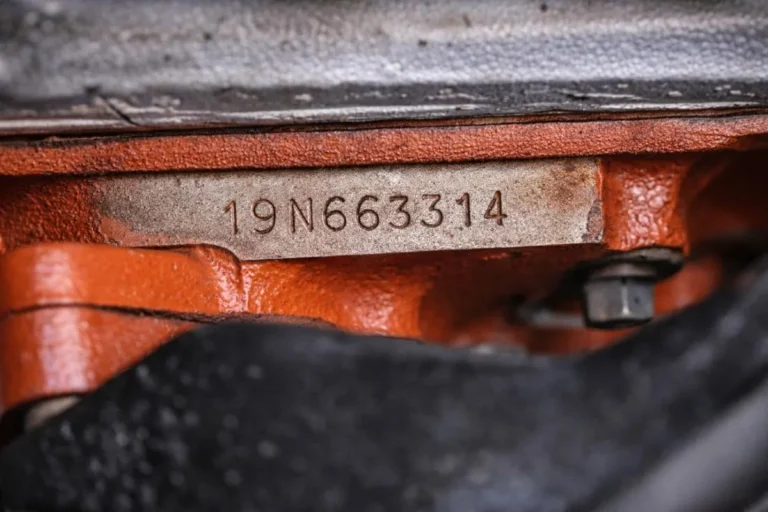
Engine block stamps matter most. On small-blocks, find the code on the front passenger side of the block, above the timing cover. On big-blocks, it’s stamped on the front pad. The suffix code identifies the exact engine: JL for 350/300HP, JH for L89 396/375HP, etc. Match it to the VIN. If they don’t align, the engine’s been swapped. That doesn’t make it a bad car, but it’s not numbers-matching, and values drop 20-30%.
Look for SS-specific hardware. Original SS cars came with 14×7-inch wheels—wider than base models. The mounting studs differ. Even if someone changed the wheels, evidence remains in the wheel wells. Heavy-duty rear leaf springs sit higher than standard springs. Front disc brakes used larger calipers than base brakes. The power brake booster mounts differently. These details can’t be faked without significant work.
RUST KILLS VALUE. First-gen Camaros rust in predictable places. Floor pans rot first, especially on cars driven in northern climates. Road salt accelerates corrosion. Lift the carpet. Check under the seats. Look for holes, patches, or replacement panels. Floor pan replacement costs $3,000-$8,000 in parts and labor—assuming the frame rails underneath are solid.
Frame rails corrode from the inside out. Surface rust isn’t the problem. Structural degradation is. Tap the frame with a screwdriver handle. Solid metal rings. Rotten metal thuds or flakes. If the frame rails need replacement, you’re looking at $10,000-$20,000 in professional repair. Many shops won’t attempt it.
Rear quarter panels rust through from wheel well moisture and road debris. Repairing them properly requires cutting out the damaged section and welding in replacement panels. The work costs $5,000-$10,000 per side. Cheap repairs use body filler and fiberglass. Bring a magnet. Body filler doesn’t attract magnets. Original steel does. If the magnet won’t stick to the lower quarter panels, you’re looking at hidden damage.
Trunk floors deteriorate from water infiltration through old weatherstripping. The trunk pan sits below the rear window—any leak channels water directly into the trunk. Check the spare tire well. Pull back the mat. Look for rust bubbles, holes, or poorly executed repairs. Trunk floor replacement costs $1,500-$4,000 but often indicates bigger problems. If the trunk pan rotted, what else has rust eaten?
The cowl area presents expensive repair challenges. Water flows from the windshield into cowl drains, then out through exit points in the body. If those drains clog, water sits in the cowl plenum, rusting from the inside. External evidence shows up late. By the time you see cowl rust bubbling through paint, significant damage has occurred. Repair costs run $2,000-$5,000 and require removing the windshield, cutting out rusted metal, and welding in patches.
MECHANICAL INSPECTION reveals the car’s true condition. Start the engine cold. Watch for blue smoke (burning oil from worn rings or valve guides), white smoke (coolant leak from head gasket failure), or black smoke (rich fuel mixture from carburetor or ignition problems). Listen for knocking from worn bearings—rod knock sounds like a sharp tapping that increases with RPM. Main bearing knock is a deeper rumble. Either one indicates expensive engine work ahead.
Check oil leaks. Valve cover gaskets seep on most old cars—that’s a $50-$150 fix. Rear main seal leaks cost $400-$800 because the transmission must come out. Oil pan leaks suggest stripped bolt threads or warped flanges. Small leaks are manageable. Large leaks indicate neglect or serious problems.
Test the transmission thoroughly. Manual transmissions should engage gears smoothly without grinding. Clutch pedal travel should be consistent. Slipping on acceleration means clutch replacement soon ($600-$1,200). Automatic transmissions should shift crisply without flare or slip. Delayed engagement, harsh shifts, or no movement in gear signals transmission trouble. Rebuilds cost $1,500-$3,000.
Suspension and steering components wear over time. Drive the car over bumps. Clunking indicates worn bushings or failed ball joints. Check steering play—more than an inch of wheel movement before the wheels respond suggests worn steering gear or linkage. Front end rebuilds with all new components run $1,200-$2,500.
Brakes matter more than most buyers realize. Original power disc/drum combinations work adequately when properly maintained. But 55-year-old brake systems rarely function optimally. Pedal feel should be firm. Stopping should be straight without pulling. Brake fade on repeated stops indicates overheating—common with old fluid or worn drums. Budget $800-$1,500 for complete brake system refresh.
DOCUMENTATION separates good deals from great ones. The original title proves ownership history. Clear title, no liens, no salvage history. Anything less creates complications. Protect-O-Plate warranty cards list factory options, dealer information, and original owner details. Build sheets—large paper documents showing every option ordered—rarely survive but are invaluable when found. Previous registration documents establish the car’s history and confirm the VIN hasn’t been altered.
Restoration documentation adds value when professional work was performed. Quality shops photograph every stage, document part numbers, and provide receipts. A well-documented restoration proves the work was done correctly. Without documentation, you’re trusting the seller’s word.
PRICE NEGOTIATION requires research and evidence. Study completed auctions on Bring a Trailer, Mecum, Barrett-Jackson, and Hemmings. Find three to five comparable sales from the past six months—same year, same engine, similar condition. Average those sales prices. Adjust for regional differences (cars sell for more in California and Florida than in the Midwest). Factor in needed repairs based on your inspection.
Make your offer with supporting evidence. Show the seller your research. Point out repair needs and their costs. A reasonable seller will negotiate. An unreasonable seller was overpriced anyway. Know your maximum price before you start negotiating. Emotion destroys deals. If the numbers don’t work, walk away.
Professional pre-purchase inspection costs $300-$500 and can save $20,000. Qualified inspectors know where to look and what to check. They’ll verify authenticity, assess rust damage, test mechanical systems, and provide written reports. Some inspectors specialize in first-gen Camaros—find them through local car clubs or national organizations like the Camaro Club International.
The best deals aren’t always the cheapest cars. A $40,000 driver-quality car in solid condition beats a $20,000 project needing $60,000 in work. Buy the best example you can afford. You’ll spend less overall and enjoy the car sooner.
FAQ
Q: How much is a 69 Camaro SS worth?
A: Values range from $35,000 for driver-quality to $150,000+ for concours L89 models. Clean 396 SS coupes sell for $55,000–$75,000. Numbers-matching RS/SS convertibles command $100,000–$140,000. Condition, documentation, and originality drive final prices.
Q: What engine came in the 69 Camaro SS?
A: Three V8 options: 350 cubic-inch (300 HP), 396 cubic-inch (325 HP standard or 350 HP optional), and the rare L89 396 with aluminum heads (375 HP). Only 311 L89 models were built, making them the most valuable SS configuration today.
Q: Is a 69 Camaro SS a good investment?
A: Yes. Historic appreciation averages 7-9% annually, outperforming many traditional investments. Values rose from $18,000 in 2000 to $75,000 in 2025. L89 and RS/SS models show strongest growth. Buy numbers-matching examples with documentation for best investment potential.
Q: What’s the difference between SS and RS?
A: SS was the performance package with upgraded engines (350 or 396 V8) and heavy-duty suspension. RS was appearance-focused with hidden headlights and special trim. You could order both as RS/SS—combining performance and style in the most desirable configuration.
Q: How much does it cost to own a 69 Camaro SS?
A: Annual costs run $3,050–$7,100 for 2,000 miles/year: insurance ($800–$1,500), fuel ($500–$800), maintenance ($500–$1,000), registration ($50–$200), plus storage if needed. Budget an additional $2,000–$5,000 annually for unexpected repairs.
Q: Should I restore or restomod a 69 Camaro?
A: Restore for investment value (costs $60,000–$150,000, maximizes collectibility). Restomod for drivability with modern LS engines, brakes, and A/C (costs $50,000–$120,000, maximizes usability). Original restoration preserves value; restomod improves daily driving experience.
Q: How do I verify a real 69 Camaro SS?
A: Check VIN 13th digit (5=396, 4=350), cowl tag codes on the firewall, engine block stamps, and SS-specific features like 14×7 wheels and front disc brakes. Many clones exist. Get professional pre-purchase inspection ($300–$500) to verify authenticity and avoid costly mistakes.
Q: What are common rust problems?
A: Floor pans ($3,000–$8,000 repair), frame rails ($10,000–$20,000), rear quarters ($5,000–$10,000 per side), trunk floor ($1,500–$4,000), and cowl area ($2,000–$5,000). Northern cars with salt exposure show worst rust. Use magnets to detect body filler. Inspect thoroughly before buying.
Conclusion
The 1969 Camaro SS captured American muscle at its peak. High-compression engines, no emissions restrictions, affordable performance. That moment didn’t last. By 1971, compression ratios dropped. Insurance rates soared. The muscle car era ended almost as quickly as it began.
What remains is a finite number of first-gen Camaros, decreasing each year through accidents, rust, and poor restorations. Clean, documented examples command premium prices because they’re genuinely rare. The market recognizes this. Values continue climbing. The 60th anniversary in 2027 will accelerate interest further.
Buy the best example you can afford. Budget for ownership costs. Verify authenticity. Inspect for rust. Document everything. Whether you restore to original specifications or build a modern restomod, the 69 Camaro SS remains one of the most rewarding classics to own.
Sources: Hagerty, Mecum, Barrett-Jackson, and Bring a Trailer data.


0 Comments