The Chevrolet Impala, often simply called the ” Chevy Impala ” stands as one of the most enduring symbols of American automotive engineering. First introduced in 1958 as a premium trim on the Bel Air, it quickly evolved into Chevrolet’s flagship full-size sedan, blending style, performance, comfort, and affordability. Over its 10 generations spanning more than six decades, the Impala has adapted to shifting consumer preferences, fuel crises, emissions regulations, and technological advancements while maintaining its core identity as a reliable, spacious vehicle for families, commuters, enthusiasts, and even law enforcement.
With no new models in production since 2020, the Impala remains highly sought after in the used car market. Its resale value holds strong, with average prices around $12,332 for recent models, making it an attractive option for budget-conscious buyers seeking a blend of classic charm and modern reliability. Whether you’re searching for “best Chevy Impala years to buy,” “Chevy Impala specs by generation,” or “how much does a 1967 Chevy Impala cost in 2025,” this comprehensive guide delivers in-depth insights. We’ll cover the Impala’s rich history, detailed generation breakdowns, performance specifications, buying tips, ownership costs, common problems, maintenance advice, cultural significance, collector value, and comparisons to competitors like the Ford Crown Victoria and Dodge Charger.
This article is designed to be your ultimate resource. By the end, you’ll understand why the Impala continues to captivate as an American icon, even in an era dominated by SUVs and electric vehicles.
How we researched this guide. This article was compiled from manufacturer specifications, industry-leading valuation guides (Hagerty, KBB), safety and recall records (NHTSA), long-term owner surveys (Consumer Reports, J.D. Power), and recent auction results (Barrett-Jackson, Hemmings). Where precise values vary by option and condition, we show ranges and note the most common examples.
Contents
The Birth And Evolution Of The Chevy Impala: A Historical Overview
The Chevy Impala’s story begins in the late 1950s, a golden age of American automotive design characterized by bold styling, powerful V8 engines, and chrome accents. Named after the African antelope for its grace and speed, the Impala debuted in 1958 as a top-tier version of the Chevrolet Bel Air. Its low-slung profile, dramatic tailfins, and triple-taillight design immediately set it apart, appealing to post-war families craving luxury without the premium price tag.
Sales soared, with over 180,000 units sold in its first year, prompting Chevrolet to make it a standalone model in 1959. Through the 1960s, the Impala dominated as America’s best-selling car, often outselling competitors by wide margins. The 1970s brought challenges like the oil embargo, leading to downsizing and efficiency focus. Production paused from 1986 to 1993, with the Chevrolet Caprice filling the gap, before a revival in 1994 as a performance-oriented SS model.
The 2000s shifted to front-wheel drive for better fuel economy, and the final generation (2014-2020) incorporated modern tech like infotainment systems and advanced safety features. Production ended in 2020 due to declining sedan sales, but in 2025, rumors of a potential revival persist, though Chevrolet has confirmed no 2025 Impala models. Today, the Impala’s legacy lives on in collector circles, pop culture, and the used market, where models from the 2010s offer excellent value with average resale prices ranging from $10,000 to $20,000 depending on condition and mileage.
Generation-By-Generation Breakdown: From Tailfins To Modern Sedans
The Chevy Impala’s 10 generations reflect broader automotive trends, from muscle-car excess to fuel-efficient designs. Below, we detail each, including key features, specs, and why certain years stand out for buyers in 2025. Note: There was no official generation from 1986-1993; the nameplate was dormant while the Caprice served similar roles.
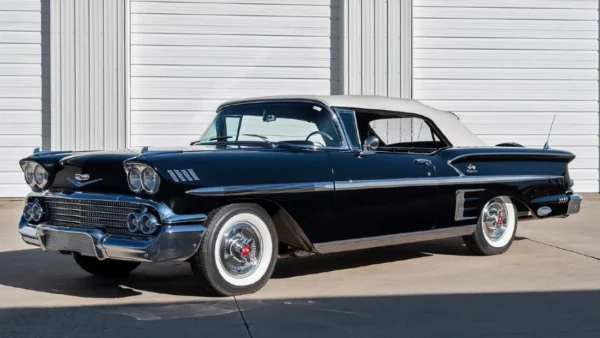
1st Generation (1958): The Iconic Debut
The 1958 Impala introduced Chevrolet’s vision of affordable luxury. As a Bel Air trim, it featured a 112-inch wheelbase, bold tailfins, and chrome galore. Engine options included a 283-cubic-inch V8 producing up to 250 horsepower. Collectible today, a well-restored 1958 convertible can fetch $50,000-$100,000 in 2025 auctions.
Key Features:
Dramatic styling with triple taillights that became a signature.
Spacious interior seating six comfortably.
Performance: 0-60 mph in about 9 seconds for V8 models.
In 2025, these are rare finds, prized for their historical value. Common issues include rust in frames and electrical gremlins from aging wiring.
2nd Generation (1959-1960): Refinement And Popularity Surge
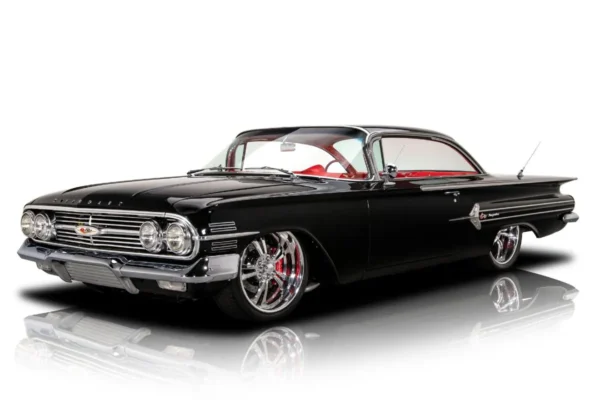
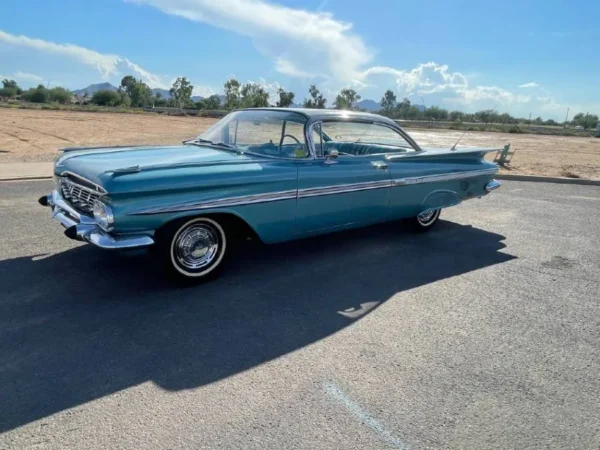
Becoming a standalone model in 1959, this generation toned down fins for a sleeker look. The 348-cubic-inch “W-head” V8 offered up to 335 horsepower, making it a performer. Sales hit nearly 500,000 in 1960 alone.
Highlights:
Introduction of the Impala SS precursor with sporty options.
Fuel economy: Around 12-15 MPG.
Body styles: Sedan, coupe, convertible, station wagon.
Best for collectors seeking originality; avoid modified examples without documentation. In 2025, prices range from $20,000 for sedans to $60,000 for convertibles.
3rd Generation (1961-1964): The Golden Era Of Design And Power
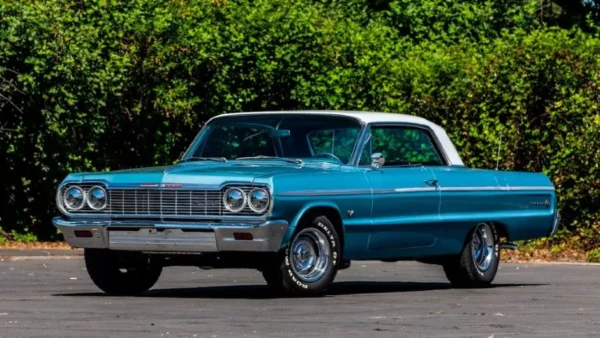
This era refined the Impala into a cultural staple. The 1961 model featured a “bubbletop” roof, while 1964 introduced the legendary 409 V8, immortalized in the Beach Boys’ song “409.” Horsepower reached 425 in Super Sport trims.
Key Specs:
Wheelbase: 119 inches.
Performance: 409 V8 achieved 0-60 in under 7 seconds.
Cultural Tie: Central to lowrider culture in California.
In 2025, 1964 models are highly valuable, often $30,000-$80,000. Common problems: Carburetor issues and rust in quarter panels.
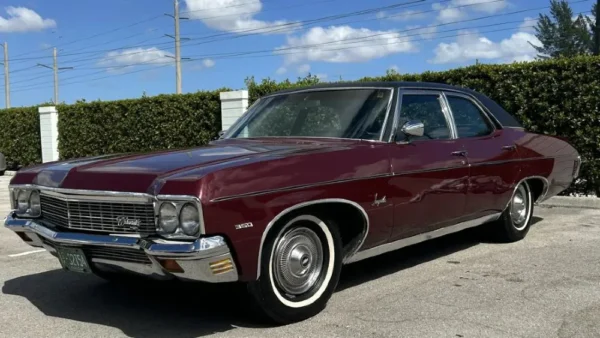
4th Generation (1965-1970): Muscle Car Dominance
Growing larger, this generation embraced muscle with big-block 396 and 427 V8s. The 1967 Impala, famously featured in the TV show Supernatural as “Baby,” symbolizes this era’s blend of power and style.
Features:
Expanded interiors for family use.
Safety additions like energy-absorbing steering columns.
Fuel Economy: 10-14 MPG for V8s.
Best years: 1965-1967 for performance enthusiasts. Resale in 2025: $15,000-$50,000. Issues: Overheating in big-blocks and suspension wear.
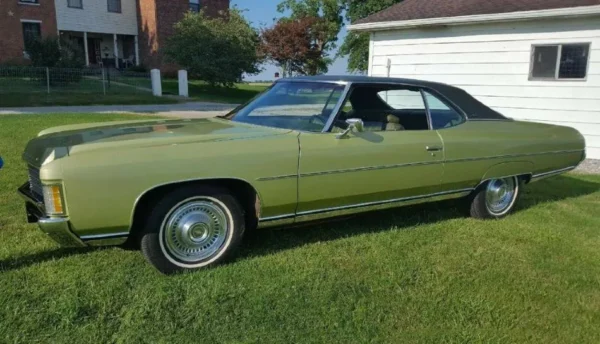
5th Generation (1971-1976): The Land Yacht Phase
Nicknamed “land yachts” for their massive size (up to 224 inches long), these prioritized comfort amid the fuel crisis. The 454 V8 delivered 425 horsepower early on, but emissions choked power later.
Highlights:
Soft suspension for highway cruising.
Options: Convertible until 1975.
Economy: 8-12 MPG.
In 2025, undervalued at $10,000-$25,000. Problems: Fuel system clogs and frame rust.
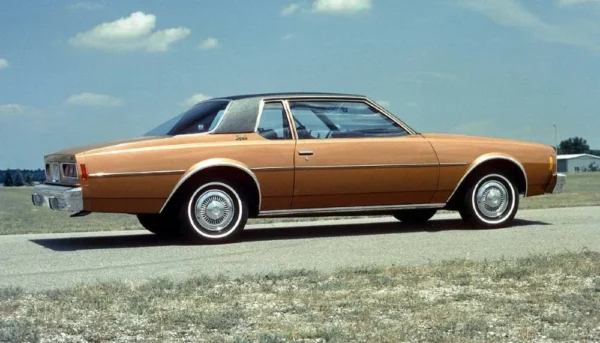
6th Generation (1977-1985): Downsizing For Efficiency
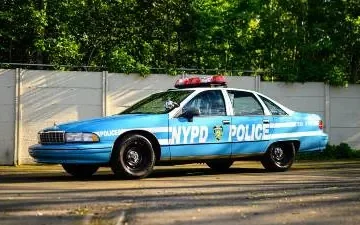
Downsized by 10 inches for better MPG, this era focused on reliability with V6 and V8 options. Widely used in fleets and police.
Key Features:
Improved handling; 20-25 MPG with V6.
Boxy design for practicality.
Best for daily drivers; 1980-1985 models reliable. 2025 prices: $5,000-$15,000. Issues: Transmission failures in early years.
(Note: No 1986-1993 models; production hiatus.)
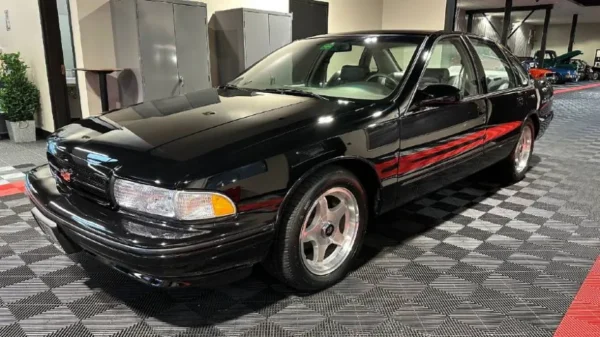
7th Generation (1994-1996): Performance Revival With LT1
Revived as a rear-drive SS with Corvette-sourced LT1 5.7L V8 (260 HP), this short run appealed to enthusiasts.
Specs:
0-60: ~7 seconds.
Limited production: ~70,000 units.
Collector favorites; $15,000-$30,000 in 2025. Problems: Optispark distributor failures.
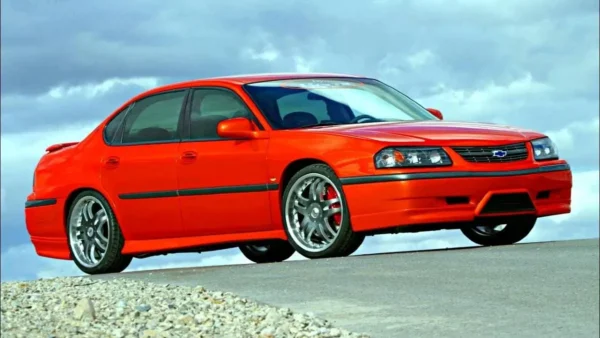
8th Generation (2000-2005): Front-Wheel Drive Affordability
Shifting to FWD, emphasized economy with 3.8L V6 (200 HP). Reliable for families.
Features:
MPG: 20-30.
Spacious trunk (18.6 cu ft).
Good buys: 2004-2005. 2025 resale: $3,000-$8,000. Common issues: Intake manifold gaskets.
9th Generation (2006-2013): Modern Muscle Return
SS trim with 5.3L V8 (303 HP); standard models reliable.
Highlights:
Advanced suspension.
MPG: 18-27.
Avoid 2006-2008 for engine problems; prefer 2010+. 2025 prices: $5,000-$12,000. Issues: Oil consumption, water pump failures.
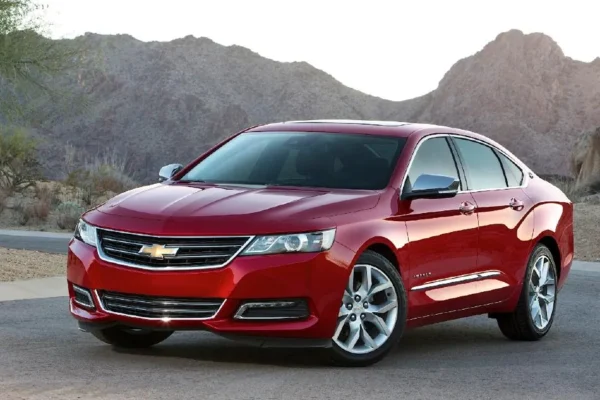
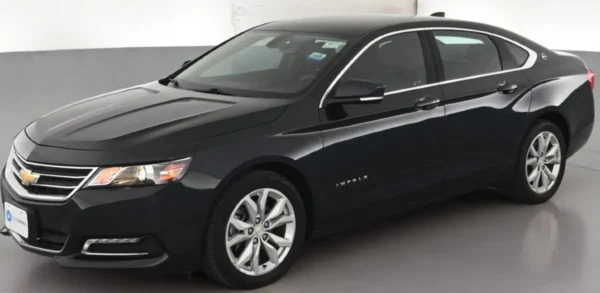
10th Generation (2014-2020): The Pinnacle Of Refinement
Sleek design, 3.6L V6 (305 HP), tech like Apple CarPlay. Top reliability scores from Consumer Reports.
Key Specs:
MPG: 19-28.
Safety: 5-star NHTSA rating.
Best years: 2015-2020. 2025 resale: $10,000-$20,000. Issues: Accordion boot splits, minor electrical glitches.
Engine And Performance Specifications: A Comprehensive Table
Generation | Engine Options | Horsepower/Torque | Drivetrain | 0-60 mph (sec) | MPG (City/Hwy) | Notes |
|---|---|---|---|---|---|---|
1st (1958) | 283-348 V8 | 185-280 HP / 290-355 lb-ft | RWD | 8-10 | 12-16 | Debut powerplants; tailfin era. |
2nd-3rd (1959-1964) | 283-409 V8 | 195-425 HP / 300-425 lb-ft | RWD | 6-9 | 11-15 | Peak muscle; 409 legendary. |
4th (1965-1970) | 327-427 V8 | 250-425 HP / 350-460 lb-ft | RWD | 6-8 | 10-14 | Big-block dominance. |
5th (1971-1976) | 350-454 V8 | 165-425 HP / 300-500 lb-ft | RWD | 7-10 | 8-12 | Emissions reduced power. |
6th (1977-1985) | 3.8L V6, 5.0L V8 | 110-170 HP / 200-300 lb-ft | RWD | 9-12 | 18-25 | Efficiency focus. |
7th (1994-1996) | LT1 5.7L V8 | 260 HP / 330 lb-ft | RWD | ~7 | 17-25 | Corvette-derived. |
8th (2000-2005) | 3.4L V6, 3.8L V8 | 180-240 HP / 205-280 lb-ft | FWD | 7-9 | 20-30 | Reliable daily driver. |
9th (2006-2013) | 3.5L V6, 5.3L V8 | 211-303 HP / 230-323 lb-ft | FWD | 6-8 | 18-27 | SS revival. |
10th (2014-2020) | 2.5L I4, 3.6L V6 | 196-305 HP / 191-264 lb-ft | FWD | 6-7 | 19-28 | Modern efficiency. |
This table highlights evolution from raw power to balanced performance, aiding searches like “Chevy Impala engine specs by year.”
Buying Guide: How To Choose The Best Chevy Impala In 2025
When buying a used Chevy Impala, prioritize reliability and value. Best years: 2015-2020 for modern features and low issues; avoid 2006-2008 due to engine problems. For classics (pre-1977), focus on rust-free examples.
Steps for Inspection:
1. Check maintenance records for regular oil changes.
2. Test drive: Listen for transmission shifts, suspension noises.
3. Inspect underbody for rust (classics) or leaks (moderns).
4. Use VIN decoders for recall history.
5. Budget: Add $1,000-2,000 for potential repairs.
Long-tail tip: Search “best used Chevy Impala under $15,000 in 2025” for deals around $10,000-$15,000.
Ownership Costs And Maintenance: What To Expect In 2025
Ownership remains affordable. Annual maintenance: $450-$650 for moderns, $800-$1,500 for classics. Insurance: $1,200/year average. Fuel: $2,000/year at 15,000 miles (22 MPG).
Category | Classic (1958-1985) | Modern (2000-2020) |
|---|---|---|
Maintenance | $800-1,500/yr (rust repairs) | $450-650/yr (routine) |
Insurance | Moderate (classic policies) | $1,000-1,500/yr |
Fuel | 8-15 MPG ($3,000+/yr) | 20-28 MPG ($1,500-2,000/yr) |
Resale | $10,000-100,000 | $5,000-20,000 |
Longevity | 100,000+ with care | 200,000-300,000 miles |
Common Problems By Generation And How To Fix Them
No car is perfect; here’s a breakdown:
– Early Generations (1958-1970): Rust, carburetor clogs. Fix: Rust-proofing ($500), rebuild carb ($300).
– 1971-1985: Frame rot, emissions failures. Solution: Undercoating, tune-ups.
– 1994-1996: Optispark issues. Replace ($400).
– 2000-2005: Intake gaskets leak. Repair: $800-1,200.
– 2006-2013: Oil consumption, EVAP solenoid. Fixes: Ring replacement ($2,000), solenoid swap ($150).
– 2014-2020: Boot splits, steering noises. Easy fixes: $100-300.
Overall, RepairPal rates Impalas 4/5 for reliability.
Cultural Significance: The Impala In Movies, Music, And Pop Culture
The Impala’s impact extends beyond roads. In music, the 1964 model is a rap staple, referenced in songs like Dr. Dre’s “Still D.R.E.” as a lowrider symbol of success. West Coast lowrider culture elevated it, with hydraulics and custom paint. In media, the 1967 Impala in Supernatural became a character itself, representing adventure. Films like American Graffiti and Boyz n the Hood featured it as a cultural touchstone. Its role in hip-hop and R&B underscores themes of independence and style.
Collector Insights: Value And Preservation In 2025
Classics like 1958-1964 models appreciate 5-10% annually. Preserve with garage storage, original parts. Auctions via Hemmings or Barrett-Jackson yield top dollar.
Chevy Impala vs Competitors: How It Stacks Up
Vs. Ford Crown Victoria: Impala offers better fuel economy (20-28 MPG vs. 15-23), but Crown Vic’s RWD suits police pursuits.
Vs. Dodge Charger: Charger has more power (up to 707 HP in SRT), but Impala is smoother for daily driving (19/30 MPG vs. 19/28).
Vs. Ford Taurus: Similar reliability, but Impala edges in ride comfort.
Frequently Asked Questions (FAQs)
1. Q: What are the best Chevy Impala years to buy in 2025? A: 2015-2020 for reliability and features.
2. Q: How much is a used Chevy Impala worth in 2025? A: $5,000-$20,000 average.
3. Q: Are Chevy Impalas reliable? A: Yes, especially post-2014 models last 200,000+ miles.
4. Q: What common problems does the Chevy Impala have? A: Gasket failures in older gens; minor in new.
5. Q: Is there a 2025 Chevy Impala? A: No, production ended in 2020.
Conclusion: Why The Chevy Impala Remains An Enduring American Icon
From its 1958 debut to its 2020 farewell, the Chevy Impala embodies American ingenuity—adaptable, reliable, and iconic. In 2025, it offers unmatched value for used buyers, blending history with practicality. Whether restoring a classic or driving a modern one, the Impala delivers.
Source : MotorTrend, Wikipedia, Car and Driver, Hagerty, KBB, NHTSA, Consumer Reports, J.D. Power, Barrett-Jackson, Hemmings.

0 Comments