Publication Information Published: November 08, 2022 Last Updated: January 29, 2026
Why is my car overheating is a question that concerns all drivers. Engine overheating occurs when the vehicle’s cooling system fails to dissipate excess heat generated by the engine. This condition can lead to severe damage to components such as the cylinder head, pistons, and gaskets, resulting in high repair costs. Common causes include issues within the cooling system and external stressors. Prompt identification and resolution are essential to maintain vehicle performance and longevity.
Key Takeaways
– Engine overheating results from cooling system failures, including low coolant levels, faulty thermostats, malfunctioning radiators, broken water pumps, fan malfunctions, leaking hoses, head gasket failures, and external factors such as hot weather or heavy loads.
– Early signs include a rising temperature gauge, steam from the hood, burning smells, dashboard warning lights, and reduced engine power.
– Immediate actions: Turn off the AC and activate the heater, pull over safely and shut off the engine, check and add coolant if needed, and restart cautiously while monitoring temperature.
– Prohibited actions: Avoid panicking, continuing to drive, opening the hood immediately, or ignoring the issue.
– Prevention strategies: Perform regular coolant checks, inspect hoses and belts, clean the radiator, monitor thermostat and water pump, and avoid vehicle overloading.
– Repair costs in 2026 vary: Coolant refill ($50–$150), thermostat replacement ($150–$300), radiator repair or replacement ($300–$1,850), water pump replacement ($300–$750), head gasket repair ($1,500–$3,000+).
Causes Of Car Overheating
The engine produces heat during operation, and the cooling system—comprising coolant, thermostat, radiator, water pump, fans, and hoses—manages this heat. Overheating happens when any component fails or when external conditions overwhelm the system. The following list details primary causes with explicit connections to system functionality:
1. Low Coolant Levels: Coolant absorbs and transfers heat from the engine to the radiator. Low levels, often due to leaks or evaporation, reduce heat dissipation capacity, directly leading to elevated temperatures.
2. Faulty Thermostat: This valve controls coolant flow. A stuck-closed thermostat blocks circulation, preventing heat transfer and causing rapid overheating.
3. Malfunctioning Radiator: The radiator cools coolant via airflow. Clogs from dirt, debris, or corrosion, or physical damage, impair heat exchange, resulting in inefficient cooling.
4. Broken Water Pump: Responsible for circulating coolant through the engine and radiator, a failed pump—due to leaks, worn bearings, or damaged impellers—halts flow, allowing heat to accumulate.
5. Fan Issues: Cooling fans enhance airflow over the radiator, especially at low speeds. Malfunctions in the motor, blades, or relay reduce cooling efficiency during idle or traffic.
6. Leaking or Damaged Hoses: Hoses transport coolant; cracks or loose connections cause leaks, depleting coolant and disrupting system pressure, which exacerbates overheating.
7. Head Gasket Failure: The head gasket seals the engine block and cylinder head. Failure allows combustion gases to enter the cooling system, increasing pressure and temperature, often leading to further damage.
8. External Factors: High ambient temperatures increase baseline heat load on the system. Towing heavy loads or carrying excess weight elevates engine stress, generating more heat than the system can handle under normal conditions.
Signs Of Engine Overheating
Recognizing early indicators of overheating enables timely intervention, preventing escalation to major engine damage. These signs directly relate to cooling system failures and should prompt immediate inspection by a mechanic. Key symptoms include:
1. Temperature Gauge Rising: The dashboard gauge needle entering the red zone signals excessive engine heat.
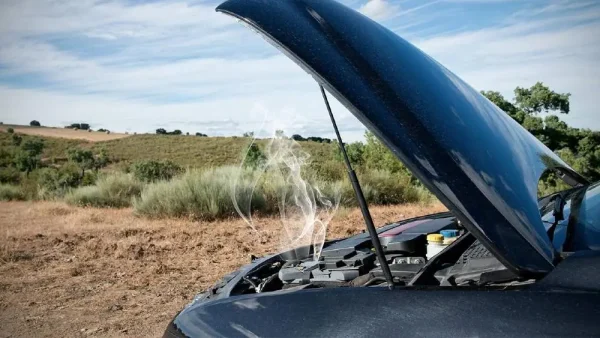
2. Steam from the Hood: Visible steam indicates coolant boiling and potential leaks in the system.
3. Burning Smell: Heat can burn oil, rubber components, or coolant, producing noticeable odors from degrading materials.
4. Warning Lights: Modern vehicles feature dashboard lights that activate when temperature sensors detect overheating.
5. Loss of Engine Power: The engine may reduce performance in “limp mode” to mitigate damage from sustained high temperatures.
Quick Diagnosis Guide
| Symptom | Most Likely Cause |
| Overheats in traffic only | Cooling fan or relay failure |
| Overheats at highway speed | Radiator blockage or low coolant |
| Heater blows cold | Low coolant or air trapped |
| Steam + coolant loss | Hose leak or head gasket |
| Sudden overheating | Thermostat stuck closed |
Actions To Take When The Engine Overheats
Responding to overheating requires a systematic protocol to minimize damage to engine components and ensure occupant safety. These steps reduce heat load, allow cooling, and facilitate safe transport to a repair facility:
1. Turn Off the AC and Turn On the Heater: Deactivate the air conditioner to lessen engine strain. Set the heater to maximum to transfer heat from the engine to the cabin, aiding temporary cooling until a safe stop.
2. Find a Safe Place to Stop the Car: Pull over in a secure location, turn off the engine, and allow at least 20 minutes for cooling while observing the temperature gauge. If temperature remains elevated, summon towing services to transport the vehicle to a service station.
3. Check the Coolant and Add If Necessary: Examine the coolant reservoir level per the owner’s manual. Replenish with the manufacturer-recommended coolant if low. This addresses depletion but not underlying issues like clogged hoses, broken water pumps, or faulty radiator fans.
4. Restart the Engine: If towing is unavailable, restart and drive slowly to a service station, continuously monitoring temperature. Stop immediately if overheating recurs to prevent further damage.

Actions To Avoid When The Engine Overheats
Certain behaviors during an overheating event can worsen damage to the engine or cause personal injury. These prohibitions explicitly link to risks in the cooling system and emphasize safety:
1. Don’t Panic: Maintain composure to execute safe maneuvers, avoiding hazards like crossing traffic or abrupt braking while pulling over.
2. Don’t Continue Driving: Cease operation to prevent extensive damage, as prolonged driving under heat stress can warp components despite temporary engine functionality.
3. Don’t Open the Hood Immediately: Wait at least 20 minutes for cooling to avoid burns from pressurized steam or smoke escaping the engine compartment.
4. Don’t Let the Problem Go Unsolved: Address root causes beyond temporary fixes like adding coolant. Consult a professional mechanic for diagnosis and repair to prevent recurrence.
Prevention Of Engine Overheating
Preventive maintenance targets the cooling system’s key components to sustain optimal performance and avoid overheating. Regular inspections and adherence to manufacturer guidelines reduce failure risks:
1. Regular Coolant Checks: Verify coolant levels and quality routinely, replacing per the vehicle’s maintenance schedule to ensure effective heat transfer.
2. Inspect Hoses and Belts: Examine for wear, cracks, or leaks, replacing faulty parts to maintain system integrity.
3. Keep the Radiator Clean: Clear debris, dirt, and corrosion to preserve heat dissipation efficiency.
4. Monitor the Thermostat and Water Pump: Schedule inspections, particularly for high-mileage vehicles, to detect early wear.
5. Avoid Overloading the Vehicle: Limit excess weight or towing to prevent additional strain on the engine and cooling system.
Costs Of Repairs For Overheating In 2026
Repair expenses for overheating depend on the specific component failure and vehicle type. Costs include parts and labor, with averages based on U.S. market data. Addressing issues early can limit expenses:
1. Coolant Refill: $50–$150
2. Thermostat Replacement: $150–$300
3. Radiator Repair or Replacement: $300–$1,850
4. Water Pump Replacement: $300–$750
5. Head Gasket Repair: $1,500–$3,000+

Conclusion
Engine overheating signals underlying cooling system issues that, if unaddressed, lead to significant repairs. By identifying causes, recognizing signs, following response protocols, and implementing prevention, vehicle owners can enhance reliability and reduce costs. Regular maintenance aligns with 2026 automotive standards for optimal performance.
FAQS – Why Is My Car Overheating?
Q: Why does my car overheat suddenly?
A: Sudden overheating is usually caused by a thermostat failure, coolant loss, water pump failure, or cooling fan malfunction.
Q: Can I drive a car that is overheating?
A: No. Driving an overheating vehicle can warp engine components and cause catastrophic engine failure within minutes.
Q: Does low coolant always mean a leak?
A: Not always, but coolant loss typically indicates a leak, evaporation from overheating, or improper maintenance.
A: How long can an engine run while overheating?
B: Most engines begin sustaining damage within 5–10 minutes of severe overheating.
A: Can overheating permanently damage my engine?
B: Yes. Repeated overheating can cause warped heads, blown head gaskets, piston damage, and bearing failure.
A: Is overheating more common in summer?
B: Yes. High ambient temperatures increase baseline heat load and cooling system demand.
A: Does turning on the heater really help?
B: Yes. It temporarily transfers engine heat into the cabin, reducing engine
Sources:
ASE (National Institute for Automotive Service Excellence) – Cooling system diagnostics
AAA Automotive Repair Studies – Overheating causes & prevention
OEM Service Manuals (Ford, GM) – Cooling system operation
RepairPal Cost Database 2026 – Repair cost estimates


0 Comments