Last Updated: March 09 2026 | Read Time: 11 minutes
From a $300 rattle-can respray to a $20,000 showroom-quality custom finish — here’s how much does it cost to paint a car right now, why prices keep climbing, and the six questions to ask before you hand over a single dollar.
2026 Car Paint Job Prices
– Touch-Up (spot repair, single scratch): $50 – $1,000
– Single Panel Repaint: $200 – $1,500
– Basic Full-Body Respray: $300 – $1,500
– Mid-Grade Full-Body Paint Job: $1,500 – $5,000
– Premium / High-Quality Full-Body: $5,000 – $10,000
– Show-Quality / Custom Paint: $10,000 – $20,000+
– DIY Full-Body Paint: $100 – $1,500 (materials only)
– Paint Correction (not a repaint): $500 – $1,500
– Re-Clear Coat Only: $200 – $1,500
– Paint Protection Film (PPF) Added: $1,000 – $8,000 extra
– 2026 Key Stat: Paint and material costs rose 7.4% in 2025 alone, and are up 22%+ since 2022 (KBB, Hagerty, CCC Industry Analytics)
Sources: Kelley Blue Book, CARFAX, AAA Automotive, Hagerty, CCC Industry Analytics, Repairer Driven News, Collision Repair Magazine
The Honest Truth About Car Paint Prices In 2026
If someone quotes you $299 to paint your whole car and you’re standing in front of a legitimate body shop, one of two things is true: either that shop is using bargain-bin materials with a spray gun pointed at your car for twenty minutes, or you misheard the number. A full-body professional paint job is one of the most labor-intensive, skill-dependent, and materially complex services the automotive world offers. And in 2026, it costs more than it ever has in American automotive history.
Paint and material costs have increased 22% since the first quarter of 2022, according to data from CCC Industry Analytics and confirmed by Hagerty’s own material damage specialists. A 7.4% increase in paint and materials costs was recorded in 2025 alone, driven by inflation, EPA compliance requirements for low-VOC waterborne paint systems, supply chain pressures on imported organic pigment compounds, and the consolidation of the paint supply industry — a market that once had twelve or more major global suppliers and is now contracting rapidly, which reduces competition and puts upward pressure on pricing.
What all of that means for you as a car owner is simple: the quotes you may have gotten five years ago are no longer relevant benchmarks. A paint job that cost $3,000 in 2020 may cost $3,800 to $4,200 for the same work in 2026. A high-quality job that ran $6,000 a few years back could easily reach $8,000 or more today.
None of this means you can’t get a good paint job for a reasonable price. It means you need to understand exactly what drives the cost — so you can ask the right questions, read a quote intelligently, and make a decision that you won’t regret two years from now when the paint starts peeling or the color match looks wrong in sunlight.
This guide covers all of it — every price tier explained honestly, every factor that moves the needle, what it takes and how long it takes at each level, when to use insurance versus pay out of pocket, how to evaluate a shop before you commit, and what the DIY route really costs when you factor in everything.

What You Actually Get At Each Price Level In 2026
Before any other conversation happens, you need to understand one fundamental truth about car painting: you get exactly what you pay for. This is one of the few automotive services where the correlation between price and quality is almost perfectly linear. The cheapest option is not a hidden gem. The most expensive option is not necessarily excessive. The price tells you something real about what’s happening to your car.
Here is an honest breakdown of every tier.
Basic Paint Job — $300 To $1,500
This is the entry level. At $300 to $1,000, you are typically walking into a high-volume, no-frills shop — the kind that advertises with signage out front rather than word-of-mouth reputation. At $1,000 to $1,500, you start to find more credible shops offering genuine budget resprays with marginally better materials.
What you get: A single-stage synthetic enamel paint applied over minimal surface preparation. The prep work is the biggest omission at this tier. Most basic shops will sand lightly and shoot paint without stripping the car down to bare metal, without addressing rust, and without painting areas that aren’t immediately visible — door jambs, the inside of the trunk lid, the underside of the hood. Those areas keep their original color. On a car where the repaint color matches the original, that’s often not obvious. On a color change, the mismatched areas will be visible to anyone who looks.
Warranty at this level: Most basic-tier shops offer warranties of one year or less. Some offer none in writing. The paint may begin chipping, fading, or developing orange-peel texture within 18 to 24 months of application.
Who this is right for: An older vehicle — ten-plus years, high mileage — that you want to look presentable for daily driving rather than resale or show purposes. If the car is worth $5,000 and you’re spending $1,200 to make it look acceptable for another few years of service, that’s a defensible economic decision.
Who this is wrong for: Anyone who cares about resale value. Anyone painting a car that’s worth more than $8,000. Anyone who expects the paint to last more than two or three years.
Mid-Grade Paint Job — $1,500 To $5,000
This is where the majority of everyday car painting decisions land, and it’s the tier that offers the best genuine value for most American car owners in 2026. CARFAX body shop research puts the realistic starting point for a quality full repaint with a real warranty at $3,500 — and that number holds up in current market conditions.
What you get: Proper surface preparation — sanding, degreasing, rust treatment on affected areas, and in many shops, primer application before the color coat. Higher-quality basecoat paint is applied in multiple coats, followed by a clear coat that protects the color and provides the gloss finish. Mid-grade shops paint door jambs, the trunk opening, and sometimes the underside of the hood — depending on the specific shop and how the job is quoted.
The paint itself at this level is typically a basecoat/clearcoat system rather than single-stage enamel. This is the standard system used on virtually every vehicle manufactured in America since the late 1980s — a color layer with a separate clear protective layer on top. It looks better, resists UV fading better, and lasts significantly longer than single-stage enamel.
Timeline: Three to five days at the shop, though some jobs in this range can take up to a week when proper cure time is factored in.
Warranty at this level: Most mid-grade shops offer two to five year warranties on parts and labor. Some extend to the lifetime of the vehicle for original owners.
Who this is right for: Any vehicle with meaningful remaining value — $8,000 and up — where you want the paint to last five or more years, look genuinely good, and potentially support a future resale. A ten-year-old sedan with faded paint that you plan to keep for another five years. A truck or SUV you’ve repaired after a collision and want to look right.
Premium / High-Quality Paint Job — $5,000 To $10,000
At this level, you are paying for expertise, time, and materials that genuinely produce a different outcome. A premium paint job starts with a full assessment of the vehicle’s existing surface condition — every scratch, every rust spot, every paint imperfection is documented and addressed before color is applied. Local independent body shops that specialize in high-quality work average $65 to $95 per hour in labor. Certified PPG or Axalta collision centers — shops that meet manufacturer standards and conduct mandatory technician recertification — charge $115 to $145 per hour.
What you get: Extensive preparation including chemical stripping or full mechanical sanding to bare metal on damaged areas, professional rust treatment and primer application, premium metallic or pearl paint systems applied in multiple coats with proper flash time between each coat, a multi-stage urethane or waterborne clear coat, and final polishing to remove any dust nibs or surface imperfections from the booth environment. Some premium shops include paintless dent repair on minor blemishes as part of the prep process.
The color options expand significantly at this level. Metallic paints — which use aluminum or other metallic flakes suspended in the color coat to create sparkle and depth — are available across all tiers, but they’re properly applied only at this level. Pearl paints, which use ceramic or mica crystals for a shimmering depth that shifts under different lighting angles, are similarly available but require precise spray technique and correct flash times to look right. Both cost more in materials than solid colors.
Timeline: One to two weeks for a proper premium job. Rushing a premium paint job defeats the purpose.
Warranty at this level: Most reputable premium shops offer lifetime warranties for original owners and multi-year transferable warranties that can be documented for resale.
Show-Quality And Custom Paint — $10,000 To $20,000 And Beyond
This is the territory of professional car builds, restoration projects, custom vehicles, and anyone for whom the paint is the centerpiece of the vehicle rather than just its protective finish. At this level, the sky is legitimately the limit — documented show-quality respray jobs on high-value vehicles and collector cars regularly reach $15,000 to $20,000, and custom one-off designs with candy paint, metalflake, airbrushed murals, or multi-stage color-shift finishes can go considerably higher. For a documented collector vehicle — think a restored 1969 Camaro SS — a $10,000 to $15,000 show-quality paint job is not an extravagance. It’s a value-preserving investment in a car whose market price depends heavily on finish quality.
What you get: The full spectrum of premium preparation, plus advanced color options and finishing techniques that are simply not available or executable at lower price points. Candy colors — translucent pigments that require a white base coat and multiple color coats for correct depth — cost more in materials and require significantly more skill and time than conventional paints. Chameleon or color-shift paints, which change apparent color under different lighting angles, represent some of the most technically demanding work in the auto painting world. Custom graphics, pinstriping, flames, murals, and two-tone or three-tone designs all add to the cost proportionally to their complexity.
One gallon of high-quality premium paint from a leading supplier can cost $700 to $1,000. A large SUV or pickup truck needs approximately 1.5 gallons to cover properly. Before labor, booth costs, primer, clear coat, and finishing, material costs alone can easily exceed $3,000 on a premium or custom job. Custom paint at this level is territory reserved for collector vehicles, restorations, and purpose-built machines — the kind of truck you’d find in a build like the F-150 Shelby Super Snake Sport, where the finish is part of the identity of the vehicle.

The 9 Factors That Determine Your Final Quote
Understanding these variables lets you predict your quote before you walk into a shop, and more importantly, lets you evaluate whether the quote you receive is reasonable.
Vehicle Size
More surface area equals more paint and more labor time. There’s no shortcut around this. A compact sedan like a Toyota Camry equivalent requires approximately one gallon of paint. A full-size SUV like a Chevrolet Suburban requires 1.5 gallons or more. A full-size pickup truck with a bed to paint can require up to two gallons for proper coverage. At $700 to $1,000 per gallon for premium paint, plus the proportionally longer labor time, the cost difference between painting a subcompact and a full-size truck at the same quality level can easily reach $2,000 to $3,500.
Surface Condition
This is the variable that most commonly blows up a budget. A vehicle with clean, solid paint that has simply faded is an efficient job to prepare — light sanding, degreasing, and shoot. A vehicle with significant rust at the rocker panels, door bottoms, or wheel arches requires metalwork, rust treatment, filler, and primer before a single drop of color goes on. That preparation can add hundreds or thousands to the final bill, and in severe cases, the body repair cost outpaces the paint cost.
A realistic and honest body shop will assess your vehicle’s surface condition before quoting. Be deeply skeptical of any shop that gives you a firm price without physically looking at the car. According to repair industry data, preparation work regularly accounts for more than half the total cost of a professional repaint on vehicles with significant surface issues.
Paint Type And Color
Paint type affects both material cost and application complexity. Single-stage synthetic enamel — the budget option — is the least expensive and easiest to apply but the least durable. Basecoat/clearcoat is the industry standard for modern vehicles. Metallic paints add cost because of their metallic flake content and the skill required to orient the flakes consistently across all panels. Pearl paints are more expensive still. Custom and specialty colors — particularly colors used exclusively by premium automakers like certain Mercedes-Benz blues or Ferrari reds — are significantly more expensive to source and sometimes require mixing to match.
Color also affects price from a coverage standpoint. Bright red is notoriously difficult to cover because the pigment is less opaque than darker colors, requiring additional coats for proper coverage. Yellow and orange present similar challenges. Black covers well but shows every imperfection in the surface beneath it. White and gray are consistently the most efficient and therefore least expensive colors to apply.
Changing vs. Matching The Original Color
Repainting in the exact original color is significantly less expensive than changing to a new color. When you stay with the original color, the shop only needs to paint the exterior surfaces — door jambs, trunk openings, and interior surfaces of hood panels don’t need to match because they’ll be the same color anyway.
When you change the color, everything that can be seen when any panel is open needs to be painted to match. That includes all door jambs, the trunk interior, the underside of the hood and trunk lid, and in some cases door hinge areas. All of that adds labor time and material cost. Count on paying an additional $500 to $1,500 on top of the standard repaint cost for a complete color change, depending on vehicle size and the thoroughness of the shop.
Labor Rate And Shop Type
This is where geography and shop certification create significant price variation. Rural shops in lower cost-of-living areas average $65 to $75 per hour for refinish labor. Urban shops and those in high-cost states like California, New York, and Washington typically run $85 to $125 per hour. Certified collision centers with manufacturer approval from PPG, Axalta, or BASF — the three dominant automotive paint system companies — charge $115 to $145 per hour and require documented technician recertification. Franchise chains like Maaco offer standardized pricing that can be significantly lower than independent shops, with the corresponding trade-off in material quality and preparation depth.
Rust And Body Repairs
If the vehicle needs rust repair, dents addressed, or damaged panels replaced before painting, those costs layer on top of the paint job itself. Significant structural rust can cost thousands of dollars to properly address. Paintless dent repair for minor dings — where the surface paint is intact and only the metal has been pushed — typically costs $50 to $500 and is sometimes bundled into the prep phase of a mid-grade or premium paint job. Larger dents requiring filler, block sanding, and primer are billed separately.
Additional Finishes And Protective Coatings
Once the paint is applied, what goes on top significantly affects the total investment. A standard clear coat is included in any mid-grade or better paint job. Beyond that, several options add cost but also add genuine protection and longevity.
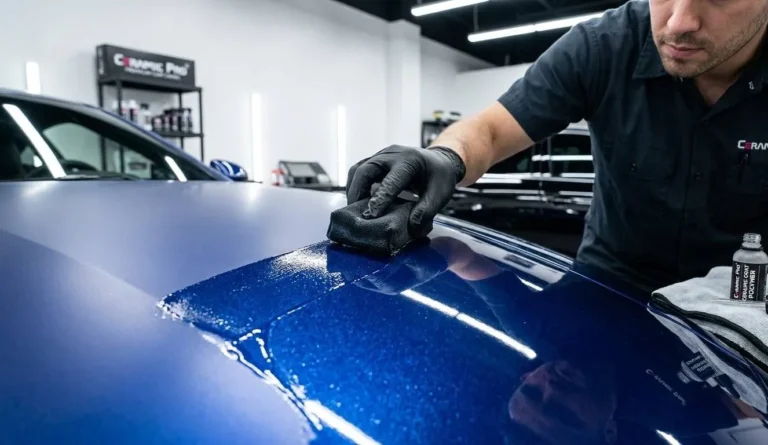
Ceramic coating — a liquid polymer applied over the clear coat that chemically bonds to the surface — provides far superior UV protection and scratch resistance compared to wax, and lasts two to five years per application. A professional ceramic coating applied at the time of a new paint job typically adds $500 to $2,500 depending on the product tier and vehicle size.
Paint Protection Film (PPF) is a nearly invisible thermoplastic polyurethane film applied over the painted surfaces, primarily the front-facing panels that take the most stone chip and road debris damage. PPF is self-healing at minor scratch depth when exposed to heat, and lasts up to ten years. Applied professionally at the time of a new paint job, PPF adds $1,000 to $8,000 depending on how much of the vehicle is covered.
Number Of Panels Needing Paint
Not every paint job is a full-body respray. If your car was dinged in a parking lot and the damage is limited to one door, you’re paying for one panel repainted and blended into the adjacent panels — not a full car. Single panel repaints typically run $200 to $1,500 depending on panel size, color complexity, and blend requirements. Blending — where the new paint is feathered into the surrounding original paint to make the repair invisible — adds labor time but is essential for a result that doesn’t show a line between new and old paint in direct sunlight.
Timeline
The longer a shop takes with your car, the more hands-on time is going into the work — and hands-on time is what you’re paying for with paint quality. Basic jobs take one to two days. Mid-grade jobs take three to five days. Premium and custom jobs take one to two weeks or more. Any shop promising to paint your entire car in a day for mid-grade money is either skipping prep steps or doing the minimum at every stage.

Is Repainting Your Car Actually Worth It?
The decision to repaint isn’t purely about what it costs. It’s about whether the investment makes sense for your specific situation.Here are the scenarios where repainting is a clear yes, a qualified yes, and a likely no.
Clear Yes: Collision Repair With Insurance Coverage
If your vehicle was damaged in a covered accident and your insurer is paying for the repair, the paint work is included in the claim. Before filing a paint-related claim, understand how much car insurance costs in the USA in 2026 — because filing for a repair below your deductible almost always costs you more in long-term premium increases than the repair itself. This is not a discretionary purchase — it’s part of restoring your vehicle to pre-accident condition. In this scenario, the most important thing you can do is choose a reputable certified shop rather than defaulting to the cheapest option on your insurer’s preferred list.
Also important: if repair costs are below your deductible, paying out of pocket and keeping the claim off your record is usually the smarter financial move for your long-term insurance rates.
Clear Yes: Protecting The Metal Underneath
Paint is not decoration. It is the primary protective barrier between your vehicle’s steel body panels and the oxygen, moisture, salt, and organic acid (from bird droppings and tree sap) that cause rust. Once the clear coat breaks down and the color coat begins to crack or peel, the underlying metal is exposed and corrosion begins. Repainting at this stage is not optional from a preservation standpoint — it’s necessary to prevent structural damage that will cost far more to address later.
Qualified Yes: Improving Resale Value
A fresh, correct-color paint job can increase a vehicle’s perceived value and in some cases its actual market value. However — and this is a point that most people don’t fully appreciate — you rarely recoup the full cost of a premium paint job in the resale price. A $5,000 paint job on a $12,000 vehicle might increase its sale price by $1,500 to $2,500. The math works better in reverse: poor paint condition can suppress resale value by $2,000 to $4,000, so sometimes spending $2,500 on a mid-grade respray to achieve a $3,000 to $4,000 price improvement is economically sound. It depends on the vehicle’s value, condition, and your local market.
Likely No: Cosmetic Upgrade On A High-Mileage Beater
If a vehicle is worth $3,000 and you’re considering a $4,000 paint job because you like how it looks, the economics don’t work. A mid-grade paint job that costs more than half the vehicle’s market value rarely makes financial sense unless there’s a strong sentimental or personal reason for the investment. If you’re buying an older vehicle for a new driver, spend your budget on reliability and safety instead — our guide to the best first cars for teenagers in 2026 shows you exactly what $20,000 to $30,000 buys in terms of modern safety technology versus an older car with a fresh paint job

What DIY Car Painting Actually Costs — And What It Doesn’t Include
The honest DIY car paint cost breakdown for a full-body job with reasonably good materials runs from $200 to $1,500 in supplies — which sounds compelling until you understand what professional shops have that you don’t.
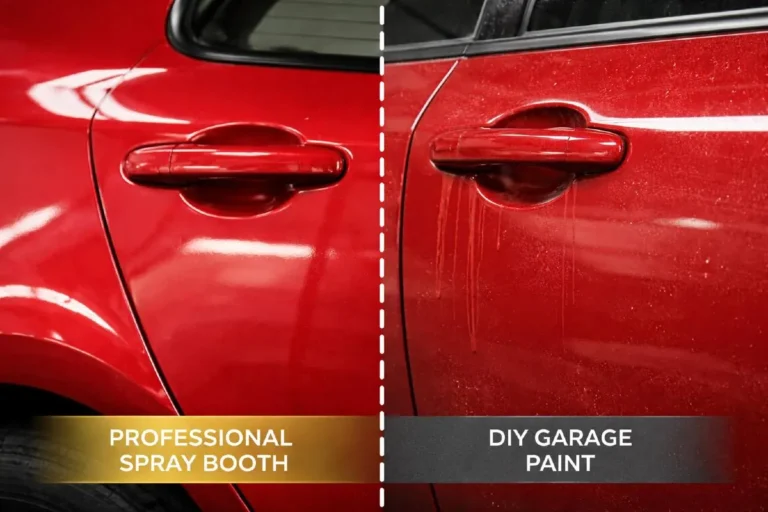
A reputable professional shop operates in a climate-controlled spray booth that maintains precise temperature and humidity — conditions critical for proper paint adhesion and curing. Dust, lint, and airborne particles in an uncontrolled environment contaminate wet paint and create texture defects that are visible and often uncorrectable without repraying. A professional spray gun and air system costs several thousand dollars. Technicians with genuine refinish expertise have typically accumulated years of specialized training.
The DIY route produces acceptable results in a narrow set of scenarios: a beater that you’re keeping for personal use with no concern for appearance quality, spot touch-ups on minor chips and scratches, or rattlecan touch-ups on areas that are rarely visible. For any job where appearance and longevity matter, the professional result justifies the cost — consistently.
One data point worth knowing: 68% of non-certified shop repaints required correction work within 18 months, according to 2026 industry analysis, due to improper curing, inadequate rust inhibition, or material substitutions that compromised film integrity. The savings from choosing a budget shop over a certified one can evaporate quickly when rework costs are factored in.
When A Full Paint Job Is Overkill — And What To Do Instead
A full repaint is not always the right answer, and understanding the alternatives can save you significant money.
Paint Correction
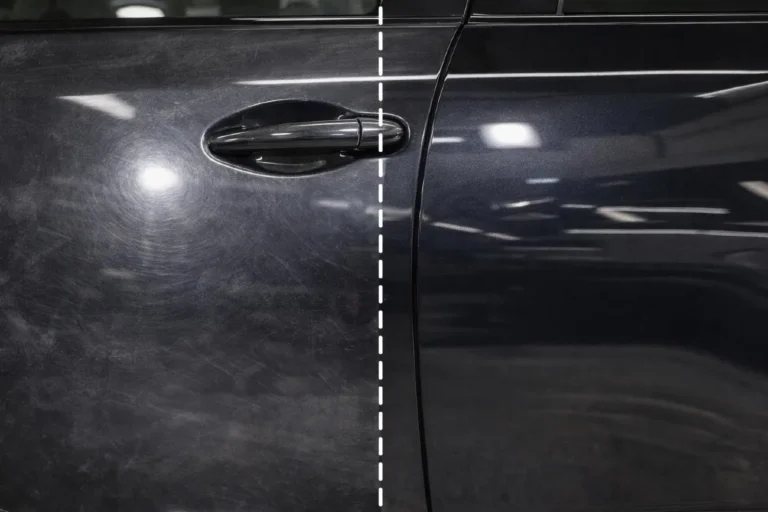
Paint correction is not a repaint. It’s a surface restoration process that removes swirl marks, light scratches, oxidation, and contamination from the clear coat using machine polishing, compounding, and buffing pads. When the underlying paint and clear coat are structurally sound but the surface has lost its gloss through washing wear, UV oxidation, or minor scratching, paint correction can restore 80 to 90% of a new-paint appearance at a fraction of the cost of a respray.
A single-stage paint correction — polishing to remove light swirls and restore gloss — costs $500 to $800 for most vehicles. A two-stage correction addressing deeper defects runs $1,000 to $1,500. These are not permanent solutions — they remove a small amount of clear coat material in the process of correction, and can only be repeated a limited number of times before the clear coat becomes too thin. But for a vehicle with fundamentally sound paint that looks dull, paint correction is often the right answer in 2026 before committing to a full respray.
Re-Clear Coating
If the color coat beneath your car’s clear coat is still in good condition but the clear coat itself has begun to peel, crack, or develop a chalky appearance — a common failure mode on vehicles ten to twenty years old, particularly on horizontal surfaces — re-clear coating can restore the appearance without the cost of a full color repaint. A professional re-clear coat application costs $200 to $1,500 depending on how much of the vehicle needs treatment. This is significantly less than a full repaint and produces excellent results when the color coat is genuinely still intact and properly bonded to the primer.
Single-Panel Or Spot Repair
If the damage to your car’s paint is limited to one or two panels — a scraped bumper, a keyed door, a dented fender — single-panel repainting with professional blending is almost always less expensive and equally effective compared to a full-body respray. Spot repairs for a single scratch or chip run $50 to $1,000 depending on size and depth. A single panel repainted and blended professionally costs $200 to $1,500. A full respray because one door was damaged is almost never necessary or economically rational.
Six Questions To Ask Before You Commit
The difference between a paint job you’ll be happy with in five years and one you’ll be frustrated with in eighteen months often comes down to shop selection. Here’s exactly what to verify before signing any estimate.
Question 1: Are you certified by a paint manufacturer?
Shops that hold current certification from PPG, Axalta, or BASF — the three major professional automotive paint system companies — have met documented standards for technician training, equipment, and process. Ask to see the certification documentation. It should be current, not from five years ago.
Question 2: What does your prep process include?
The prep work is where quality paint jobs are won or lost. A reputable shop will describe a specific process: surface cleaning and degreasing, sanding or stripping, rust treatment if needed, primer application, and sanding between coats. A shop that says “we sand it and shoot it” without specifics is describing minimal preparation.
Question 3: What paint system do you use?
The answer should name a specific professional automotive paint brand — PPG, Axalta automotive coatings, BASF Glasurit, Sherwin-Williams Automotive, or equivalent. “Brand X premium paint” or a vague answer about “quality materials” is not sufficient.
Question 4: What does the warranty cover and for how long?
Get the warranty terms in writing. Understand specifically whether it covers fading, peeling, chipping, and adhesion failure — and whether it’s transferable to a new owner or void on resale.
Question 5: Can I see examples of recent completed work?
Any shop with a genuine track record should be able to show you photos of completed jobs similar to the work you’re requesting. Look for color match consistency across panels, absence of orange-peel texture, and clean body lines where the paint meets trim.
Question 6: What is the timeline, and what happens if you find additional issues during prep?
A professional shop will give you a realistic timeline and describe the process for communicating additional scope — rust discovered under a panel, for example — before proceeding. A shop that commits to a price without seeing the vehicle and then hits you with surprise add-ons is a shop to avoid.
The Three Forces Pushing Paint Costs Higher
Understanding why paint costs have increased so dramatically helps you plan realistically for future maintenance rather than being caught off guard.
EPA Compliance And Waterborne Paint Systems
The U.S. Environmental Protection Agency’s increasingly strict regulations on volatile organic compound (VOC) emissions have pushed the professional refinishing industry toward waterborne paint systems — formulations that replace the solvent carriers in traditional paints with water, dramatically reducing VOC emissions. Waterborne systems are genuinely better for the environment and produce excellent results in properly equipped shops. They also require different — and more expensive — spray guns, booth conditions, and application techniques. The equipment investment, ongoing compliance costs, and specialized training required to use waterborne systems correctly are a real cost driver that shows up in every quote.
Industry Consolidation In The Paint Supply Market
According to Collision Repair Magazine’s 2026 analysis, the global automotive paint supply market — which once supported twelve or more major suppliers — is consolidating rapidly through acquisitions and mergers. Fewer competing suppliers means reduced pricing competition, which means the toners, clears, reducers, and color-matching products that body shops depend on become progressively more expensive. This is a structural market trend, not a cyclical one, and it is expected to continue putting upward pressure on paint material costs through the remainder of the decade.
Skilled Labor Shortage
The demand for certified automotive refinish technicians significantly outpaces supply. The collision repair industry has faced a documented technician shortage for years, and the increasingly sophisticated paint systems — particularly on modern EVs and luxury vehicles with complex multi-stage finishes — require ever-higher levels of training and expertise. Skilled technicians who can properly execute a premium metallic or pearl paint match on a complex modern vehicle can command high wages, and those wages are reflected directly in labor rates that are rising faster than general inflation.
FAQ – How Much Does It Cost To Paint A Car In 2026?
In 2026, a full-body professional paint job ranges from $300 to $1,500 for a basic single-stage respray, $1,500 to $5,000 for a mid-grade quality job with proper preparation and a clear coat, $5,000 to $10,000 for a premium job with extensive prep and high-quality paint, and $10,000 to $20,000 or more for show-quality or custom work. A realistic budget for a quality paint job with a multi-year warranty on a standard sedan is $3,500 to $5,000, according to body shop industry data.
Q: How long does a car paint job take?
A: Timeline depends on the quality level. A basic paint job takes one to two days. A mid-grade job takes three to five days. A premium or custom job takes one to two weeks — sometimes longer for complex custom work. Shops that promise faster timelines at mid-grade prices are typically cutting preparation steps.
Q: Is it worth repainting a car before selling it?
A: It depends on the vehicle’s value and the current paint condition. If the paint is severely faded, peeling, or damaged, a mid-grade respray can improve resale value by more than its cost in some cases. However, you rarely recoup the full cost of a premium paint job through resale price improvement. Before committing to a full repaint for sale purposes, get a paint correction estimate — it can restore significant gloss and appearance at a fraction of a full respray cost.
Q: How much does it cost to repaint a single car panel?
A: A single panel repainted and professionally blended into adjacent panels typically costs $200 to $1,500, depending on panel size, paint type, and blend requirements. Spot repairs for a single scratch or chip run $50 to $1,000 depending on depth and size.
Q: Does changing your car’s color cost more?
A: Yes — always. Changing color requires painting all visible surfaces including door jambs, trunk openings, and the underside of the hood to achieve a consistent result. A complete color change adds approximately $500 to $1,500 to the cost of a standard same-color respray, depending on vehicle size.
Q: How much has car painting cost increased recently?
A: Paint and material costs have risen 22% since the first quarter of 2022 and increased a further 7.4% in 2025 alone, according to data from CCC Industry Analytics and KBB. EPA compliance requirements, skilled technician shortages, and supply industry consolidation are the primary drivers. These pressures are expected to continue into 2026 and beyond.
Q: What is paint correction and how is it different from a paint job?
A: Paint correction is a surface restoration process that uses machine polishing and compounding to remove swirl marks, light scratches, and oxidation from the existing clear coat — without applying new paint. It costs $500 to $1,500 and is the right solution when the underlying paint is structurally sound but has lost its gloss and clarity. A paint job replaces the existing color and clear coat with new material. They are not interchangeable services.
Q: Should I paint my car myself or use a professional?
A: For full-body resprays where appearance and longevity matter, a professional shop consistently delivers far superior results to DIY attempts. Professionals have climate-controlled spray booths, commercial spray equipment, and specialized training that cannot be replicated in a garage setting. DIY is reasonable only for touch-ups on minor chips and scratches, or for beater vehicles where appearance quality is not a concern.
Conclusion
Car painting in 2026 is more expensive than it has ever been — and the structural forces driving those costs higher are not going away anytime soon. Paint materials up 22% since 2022. Waterborne EPA-compliant systems requiring more expensive equipment and training. A skilled technician shortage that gives refinish professionals real pricing power. Supply industry consolidation reducing competition among material suppliers.
None of that means you can’t get a genuinely good paint job for a reasonable price. It means you need to go in with accurate expectations, understand what the price tiers actually buy you, and choose your shop with the same diligence you’d bring to any other significant financial decision.
The single most expensive mistake you can make in the car painting world is paying $1,200 for a job that needs to be redone in eighteen months — because redoing it costs just as much the second time, and now you’ve paid twice. The body shops that quote $3,500 and back it with a five-year warranty are not overcharging you. They are giving you a price that reflects the actual cost of doing the job correctly, once, with materials and workmanship that last.
Get at least three quotes. Ask the six questions at every shop. Verify certifications. Read the warranty before you sign. And remember: no matter who paints your car, the prep work is where quality is made or destroyed — and prep work is what most of the cheap quotes are cutting.
Editorial Note
This article was written and reviewed in March 2026. All pricing data is sourced from Kelley Blue Book, CARFAX, AAA Automotive, Hagerty Media, CCC Industry Analytics, Repairer Driven News, and Collision Repair Magazine, with additional pricing data from regional body shop surveys current as of early 2026. All prices are U.S. market estimates and will vary by region, shop, vehicle condition, and specific job scope. This article does not constitute automotive repair advice for any specific vehicle or situation. Always obtain multiple written quotes from licensed and insured repair facilities before authorizing any work.

0 Comments