Last Updated: April 25, 2026 | Read Time: 12 minutes
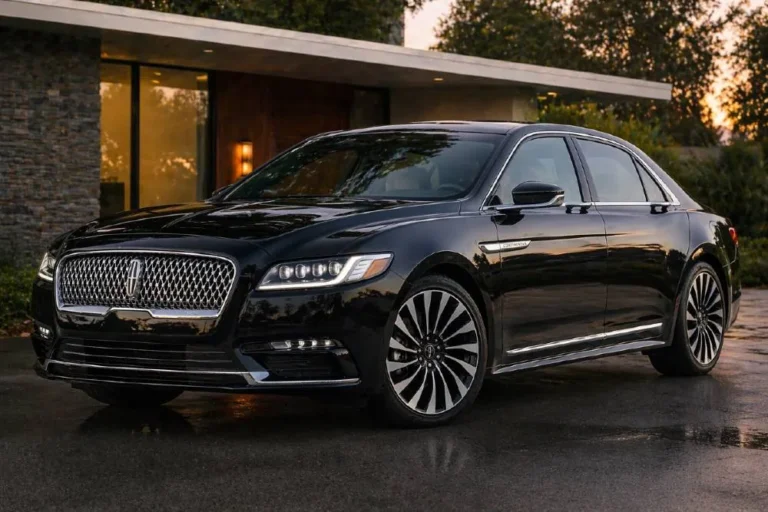
It was built on the same platform as the Ford Fusion. It faced Cadillac, BMW, and Mercedes-Benz with a six-speed automatic transmission. Its entry-level trim competed — awkwardly — with loaded Honda Accords. And yet, in its highest configuration, the 2019 Lincoln Continental Black Label delivered 400 horsepower from a twin-turbocharged V6, 30-way adjustable massaging front seats, Alcantara headliner, and Bridge of Weir Scottish leather — before the 80th Anniversary Coach Door Edition added six inches of wheelbase, rear-hinged doors, and a price north of $100,000. Only 80 were built. All 80 sold out.
At A Glance – Lincoln Continental 2019 Key Facts
– Production Plant: Flat Rock Assembly Plant, Flat Rock, Michigan (alongside the Ford Mustang)
– Platform: Ford CD4 (shared with Lincoln MKZ and Ford Fusion, longer wheelbase)
– Body Style: Four-door full-size luxury sedan
– Trims: Premiere, Select, Reserve, Black Label
– Engine Option 1: 3.7-liter V6 naturally aspirated — 305 hp / 280 lb-ft
– Engine Option 2: 2.7-liter twin-turbocharged V6 — 335 hp / 380 lb-ft
– Engine Option 3: 3.0-liter twin-turbocharged V6 — 400 hp / 400 lb-ft
– Transmission: 6-speed automatic (all trims)
– Drivetrain: FWD standard, AWD available ($2,000) on all except Black Label (AWD standard)
– 0–60 mph: 6.4 sec (3.7L) / 5.9 sec (2.7L turbo) / 5.5 sec (3.0L turbo)
– Fuel Economy (2.7L): 18 mpg city / 27 mpg highway / 21 mpg combined (EPA best of lineup)
– Seating: 5 passengers standard
– Starting MSRP 2019: $46,145 (Premiere, including $995 destination)
– Black Label MSRP: $70,045 (FWD) / $72,045 (AWD)
– Key 2019 Update: Lincoln Co-Pilot360 safety suite standard on all trims
– Special Edition: 80th Anniversary Coach Door Edition — 80 units only, north of $100,000
– Coach Door Stretch: 6 inches added to wheelbase at Cabot Coach Builders, Marlborough MA
– Competitors: Cadillac XTS, Volvo S90, Genesis G80, Cadillac CT6
– Used Value Range: Approximately $18,000–$35,000 (standard trims, condition dependent)
– Coach Door Edition Value: Collector territory — above original MSRP for pristine examples
Sources: Edmunds, Car and Driver, Cars.com, CarsDirect, The Car Connection, Carscoops
Overview – The Lincoln That Was Better Than Its Reputation Suggested
The 2019 Lincoln Continental has a reputation problem. Not a problem with the car itself — the car is genuinely good, and in certain configurations genuinely exceptional — but a problem with how it was positioned in a market that had very clear expectations about what a full-size luxury sedan should be and how it should compete.
The Continental was priced below the German flagship sedans — the BMW 7 Series, the Mercedes S-Class, the Audi A8. It was built on a platform shared with the Ford Fusion. It used a six-speed automatic transmission when its competitors were offering eight, nine, and ten-speed units. And its entry-level Premiere trim, at $46,145, competed not against the Germans but against well-equipped midsize luxury sedans and, if we’re being honest, against very well-equipped non-luxury sedans from Honda and Toyota.
These are real limitations. They are also not the complete story.
The complete story includes the 3.0-liter twin-turbocharged V6 that produces 400 horsepower and 400 lb-ft of torque in a package that Lincoln’s chief engineers tuned specifically for this car, paired with a torque-vectoring AWD system that makes it feel genuinely composed on the move. It includes the 30-way adjustable front seats that every publication that tested the car mentioned because they are among the most accommodating production seats in any vehicle at any price.
It includes the cabin insulation that makes the interior one of the quietest environments in any sedan sold in 2019. It includes a rear seat that offers more legroom than most direct competitors. And it includes the 80th Anniversary Coach Door Edition — one of the most dramatic and most historically resonant special editions any American luxury brand has produced in the last two decades.
The 2019 Continental deserves a more complete assessment than its market positioning often allowed. This guide provides it.
Section 1 – The History Behind The Name
From Edsel Ford’s Personal Car To The 80th Anniversary
The Lincoln Continental nameplate has a history that makes it one of the few American car names that carries genuine historical weight — not just brand heritage, but a specific story connected to specific people and specific design decisions that changed what American luxury cars looked like.
The Continental’s story begins in 1939 with Edsel Ford, the son of Henry Ford and president of Ford Motor Company at the time. Edsel requested a custom-built personal vehicle for his vacation — a one-off car that would be distinctly more refined than anything in Ford’s production lineup and competitive with European luxury cars that Edsel admired. The resulting car was so well received that Ford put it into limited production, and the Continental nameplate was born.
The Continental’s origin as a personal vehicle for Edsel Ford — the son of Henry Ford and president of the company — places it in a specific tradition of American automotive prestige that connects to the broader history of power and vehicles in America, a tradition we cover completely in our guide to cars owned by US presidents, where the Lincoln nameplate appears repeatedly across multiple administrations.
The car that established the Continental’s design legacy came in 1961, when Ford’s Lincoln division produced a sedan with a specific and immediately distinctive feature: center-opening rear doors — what the press called “suicide doors” — that opened from the center of the car outward, allowing rear passengers to exit without ducking under a door frame that swung forward. The 1961 Continental is consistently cited by automotive historians as one of the most beautifully designed American cars of the postwar era. Its clean lines, minimal chrome, and the dramatic visual statement of those center-opening doors made it an instant classic and a car that appears on nearly every “greatest American car designs” list ever compiled.
The Continental nameplate went through multiple generations, reached its baroque peak in the mid-1970s with enormous, chrome-laden vehicles that represented a very different design philosophy than the 1961 original, and was eventually replaced by the Lincoln Town Car as the brand’s flagship sedan. The 10th-generation Continental — the one reviewed here — was introduced for the 2017 model year as Lincoln’s attempt to reclaim the nameplate’s prestige positioning.
For 2019, Lincoln celebrated the Continental’s 80th anniversary with both the standard model updates that applied to the entire lineup and a specific special edition that brought back the 1961 Continental’s most famous feature: the center-opening rear doors. The 80th Anniversary Coach Door Edition directly referenced the car’s most celebrated design moment and limited production to exactly 80 units — one for each year of the nameplate’s existence. The alignment of the production number with the anniversary year is the kind of detail that collectors and historians appreciate, and it is the kind of detail that all 80 owners paid careful attention to when signing their purchase agreements.
Section 2 – The Engines
Three V6s Covering Every Need From Adequate To Exceptional
The 3.7-Liter Naturally Aspirated V6 — 305 HP
The base engine in the 2019 Continental is a 3.7-liter V6 producing 305 horsepower and 280 lb-ft of torque, connected to the six-speed automatic transmission and available in either front-wheel drive or, for $2,000 more, all-wheel drive. The 3.7-liter provides the entry-level Continental — the Premiere trim — with its motivation, and it does the job without distinction.
The naturally aspirated V6 is competent rather than exciting. It moves the Continental’s approximately 4,400-pound body from rest to 60 mph in 6.4 seconds — adequate for a large sedan, uninspiring against the competition, and perfectly acceptable for the buyer who prioritizes the Continental’s ride quality, interior comfort, and feature content over performance. In its preferred operating environment — smooth highway cruising — the 3.7-liter’s broad torque delivery makes it feel more capable than the spec sheet suggests.
The honest assessment: the 3.7-liter is not the reason to buy a 2019 Continental. The car’s genuine strengths — its interior quality, its rear-seat space, its cabin insulation — are available in the Premiere trim with this engine, and for buyers who simply want the Continental experience at its most accessible price point, the 3.7-liter delivers it. But anyone who wants to understand what the Continental is actually capable of needs to experience the turbocharged options.
The 2.7-Liter Twin-Turbocharged V6 — 335 HP
The 2.7-liter twin-turbocharged V6, producing 335 horsepower and 380 lb-ft of torque, is the middle engine in the Continental lineup and the most fuel-efficient of the three options. The EPA rates it at 18 mpg city, 27 mpg highway, and 21 mpg combined — the best numbers in the Continental lineup, though still not competitive with European alternatives of similar displacement.
The 2.7-liter’s turbocharged character delivers torque more immediately than the naturally aspirated 3.7, making the Continental feel more effortlessly capable in everyday driving. The 0-to-60 time of 5.9 seconds represents a meaningful improvement over the base engine and puts the Continental in genuinely competitive territory for luxury sedans in this price range. The 2.7-liter is available on the Select and Reserve trims, making it the logical choice for buyers who want more than the base engine provides without committing to the top-tier 3.0-liter.
The 2.7-liter is borrowed from the Ford Edge Sport — a shared powertrain that works well here but represents the kind of platform-sharing that Continental buyers who care about exclusivity notice. In isolation, the engine is excellent. In the context of a car positioned against European luxury sedans, the parts-bin association is a point that critics consistently raise.
The 3.0-Liter Twin-Turbocharged V6 — 400 HP
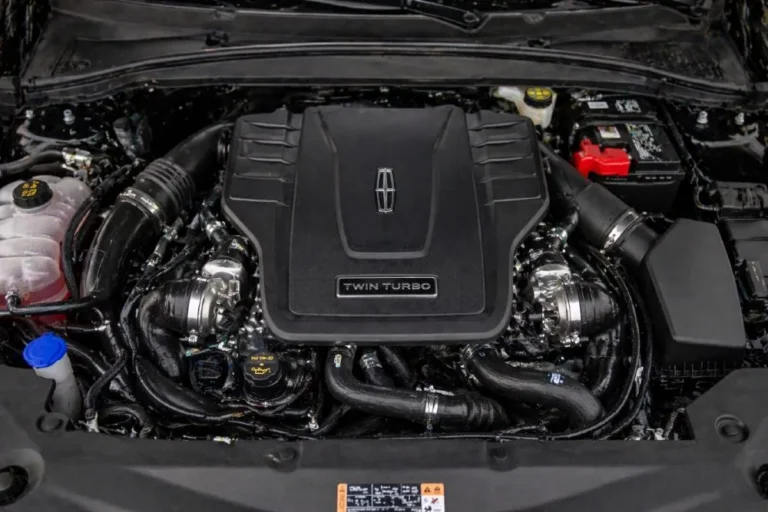
The 3.0-liter twin-turbocharged V6 is the engine that changes the discussion. Producing 400 horsepower and 400 lb-ft of torque — and available only with all-wheel drive in the Continental’s torque-vectoring system — this engine transforms the Continental from a comfortable luxury sedan into a vehicle that is genuinely, surprisingly fast.
The Continental reaches 60 mph in 5.5 seconds with the 3.0-liter. That number is competitive with anything in the segment at the Continental’s price point and better than several European alternatives that cost significantly more. The torque-vectoring AWD system that is required with this engine applies power to the rear wheels during cornering, reducing understeer and improving the Continental’s handling dynamics substantially compared to the front-wheel-drive configurations.
Beyond the raw performance numbers, the 3.0-liter’s character makes it the correct choice for anyone who wants to understand what the Continental can actually do. The turbocharger’s anti-lag tuning provides responsive power delivery across the rev range, the torque arrives early and stays present through the entire powerband, and the overall sensation is one of effortless, authoritative acceleration rather than the strained urgency that lesser engines produce when pushed.
The 3.0-liter is optional on the Reserve and standard on the 80th Anniversary Coach Door Edition. It is optional — not standard — on the Black Label, which is one of the more counterintuitive specification details of the 2019 Continental lineup.
The one legitimate criticism that applies to all three engines equally: the six-speed automatic transmission. In 2019, with most competitors offering eight, nine, and even ten-speed automatics, the Continental’s six-speed feels dated in its shift cadence and is particularly noticeable when the 3.0-liter’s power demands faster, more decisive gear changes. This is the Continental’s single most significant mechanical limitation and the one that most frequently appears in professional reviews as a point of genuine concern.
400 horsepower in a full-size luxury sedan — the same headline number that appears in discussions of dedicated American performance cars — positions the Continental’s top engine in company that surprises most buyers who think of Lincoln as a comfort brand. For the full context of what 400 horsepower means in American performance car terms, our comparison of the Corvette ZR1 and Camaro ZL1 covers the performance hierarchy from the accessible to the extraordinary.
Section 3 – The Trim Levels
Four Configurations From Accessible To Extraordinary
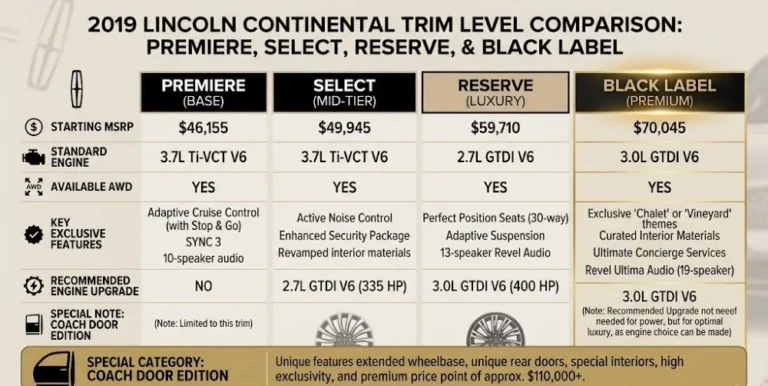
Premiere — $46,145 Starting
The Premiere is the entry-level Continental, and it is better equipped than the price and trim designation suggest. Standard features include adaptive bi-function HID headlights with LED daytime running lights, power-folding and heated side mirrors, active grille shutters, rain-sensing windshield wipers, an 8-inch Sync 3 touchscreen with Apple CarPlay and Android Auto, a 10-speaker audio system with satellite radio, wood interior trim, leather-wrapped steering wheel and shift knob, dual-zone automatic climate control with rear air vents, power-adjustable heated front seats with driver memory settings, keyless entry and ignition, remote start, ambient lighting, a power-adjustable steering column, and an adaptive suspension.
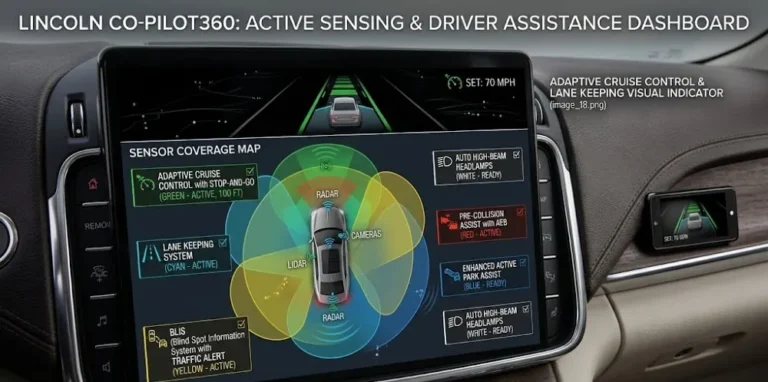
For 2019, the Premiere also received Lincoln’s Co-Pilot360 safety suite as standard equipment — a significant upgrade from previous model years. Co-Pilot360 includes automatic emergency braking, forward collision warning, blind-spot monitoring with rear cross-traffic alert, automatic high beams, lane keeping assist, and a rearview camera. Adaptive cruise control is included on every 2019 Continental regardless of trim.
The Premiere’s limitation is the simulated leather upholstery — leatherette rather than the genuine Bridge of Weir leather available on higher trims — and the absence of the more advanced features that appear on the Select and above. For buyers who want the Continental’s size, ride quality, and rear-seat space with a reasonable total investment, the Premiere delivers genuine value.
Select — Approximately $49,945
The Select adds genuine leather upholstery — specifically Bridge of Weir leather, a Scottish manufacturer whose hide quality is a selling point that Lincoln specifically mentions in its marketing materials — alongside turn signals integrated into the side mirrors, security approach lighting, and access to the 2.7-liter twin-turbo engine option. The 30-way power adjustable front seats with thigh extension become available on the Select, and these seats are worth specific attention.
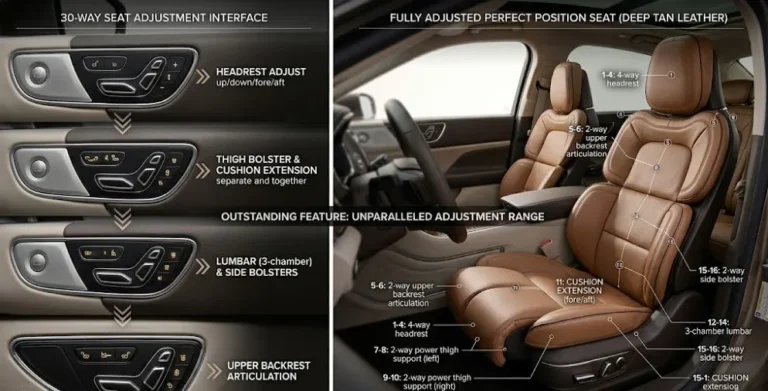
The 30-way adjustable Continental seats are among the most discussed features in any professional review of the car. The adjustability range — covering lumbar, bolster, thigh extension, cushion angle, headrest, heating, cooling, and massage functions — is genuinely extraordinary for a production sedan at this price point. Finding a comfortable long-distance driving position in these seats is not a compromise process. It is a configuration exercise, and the correct setting for each driver can be found and memorized by the seat’s memory function.
Reserve — Approximately $59,710
The Reserve is the trim that most professional reviewers recommend as the sweet spot of the Continental lineup. It adds a head-up display, active parking assist with park-out assist, a surround-view camera system, a power-retractable steering column, and the Revel premium audio system — a brand partnership that produces genuinely excellent sound quality that holds up against dedicated audiophile setups in competing luxury sedans. The 2.7-liter twin-turbo engine becomes standard on the Reserve, with the 3.0-liter available as an option.
Going with the Continental Reserve means the car is powered by the 2.7-liter twin-turbo V6, or performance can be taken to the next level with the twin-turbocharged 3.0-liter. The Reserve’s combination of genuine luxury features, the Bridge of Weir leather, the Revel audio system, and access to the 3.0-liter engine makes it the configuration in which the 2019 Continental best justifies its price against its competition.
Black Label — $70,045 Starting
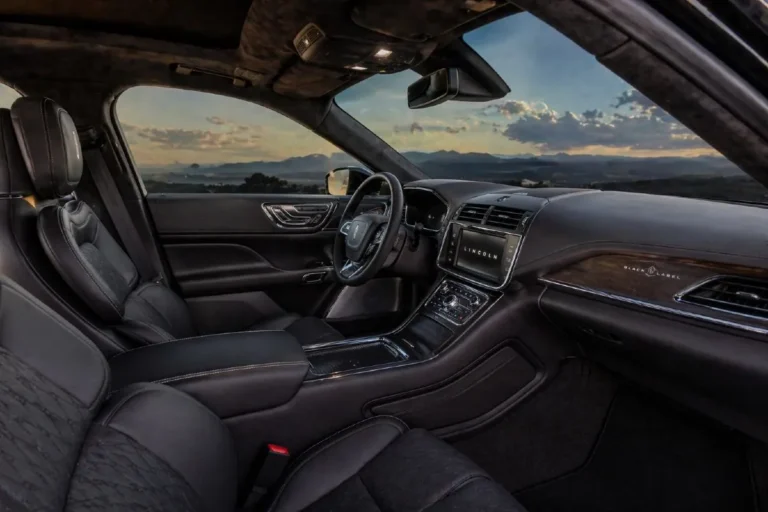
The Black Label is the Continental’s statement trim — the version that removes the uncertainty about whether Lincoln is serious about luxury and replaces it with three specific interior design themes, each developed with the care and specificity of a custom furniture program. The three themes for 2019 are Chalet, Rhapsody, and Thoroughbred, each providing a complete interior environment rather than a menu of individual options.
The Chalet Theme uses Silverwood appliqués, Alpine and Espresso leather, Alpine Venetian Leather specialty seats, an Alpine Alcantara headliner, and Espresso with Alcantara carpet and floor mats. The Rhapsody Theme uses aluminized fiberglass mesh appliqués, a Rhapsody Blue leather interior, Rhapsody Blue Venetian leather specialty seats, a Rhapsody Blue Alcantara headliner, and matching Alcantara carpet. The Thoroughbred Theme uses Chilean Maple appliqués, a Jet Black and Belmont leather interior, Jet Black Venetian Leather seats, a Jet Black Alcantara headliner, and matching carpet.
The Alcantara headliner that appears on the Black Label is a specific detail that deserves recognition. Most production vehicles — including most luxury vehicles — use a simple fabric or synthetic material on the headliner because it is invisible in normal driving and nobody expects otherwise. The Continental’s Black Label Alcantara headliner is the kind of material investment that a small number of buyers notice and appreciate deeply, and that communicates a design philosophy focused on the complete sensory environment of the cabin rather than just the visible surfaces.
All-wheel drive is standard on the Black Label. The 2.7-liter twin-turbo engine is standard, with the 3.0-liter available as an upgrade. Black Label trim also includes membership in Lincoln’s lifestyle service program — which covers scheduled maintenance at Lincoln dealerships with a dedicated personal service experience.
Section 4 – The 80Th Anniversary Coach Door Edition
The Most Significant American Luxury Special Edition Of 2019
The 2019 Lincoln Continental 80th Anniversary Coach Door Edition is not a standard production variant with a badge upgrade. It is a genuinely custom vehicle that begins as a Continental Black Label at the Flat Rock, Michigan assembly plant and is then shipped to Cabot Coach Builders in Massachusetts for a conversion that involves structural modification, custom engineering, and hand-fitted interior work.
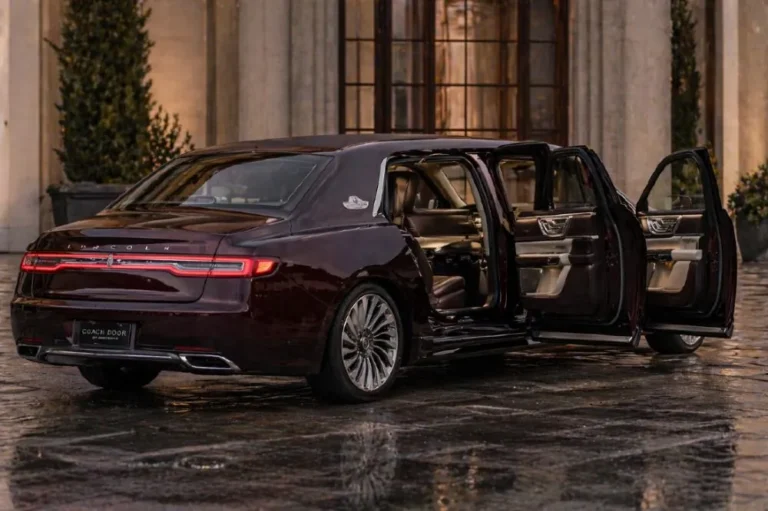
The most dramatic conversion is the 6-inch wheelbase stretch — all of it in the rear passenger compartment. The roof, rear doors, and rear windows are all lengthened in this conversion, and the greennhouse takes on a decidedly more formal, square appearance that references the classic long-wheelbase limousines of the Continental’s design heritage. The elongated rear section creates best-in-class legroom in the rear compartment.
The rear doors are completely re-engineered as rear-hinged panels — the coach doors, also called suicide doors, that open from the center of the car outward in the manner of the iconic 1961 Continental. The new rear doors use the same e-latching system as the regular Continental, but they swing open 90 degrees from the rear, providing an exceptionally wide and unobstructed entry to the rear compartment. The Continental Coach Door allows backseat passengers to open the doors independently of the fronts — an important safety and convenience distinction from the rear-hinged doors on extended-cab pickup trucks. The doors are electronically controlled to open only when the car is in park.
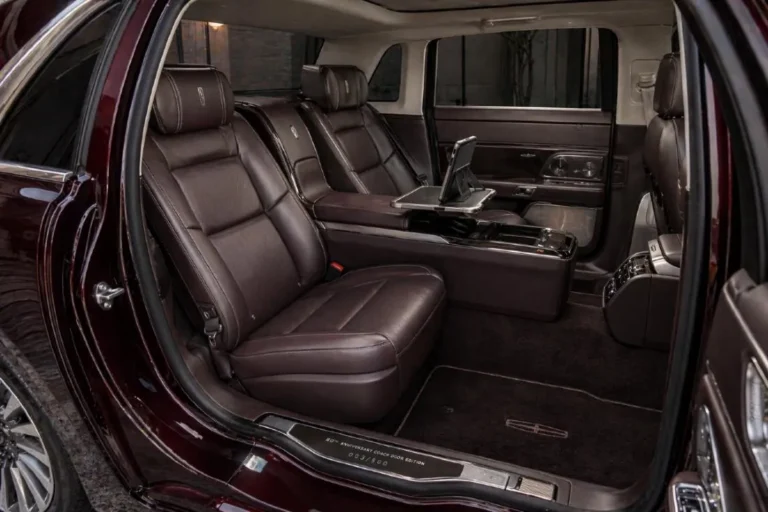
Beyond the coach doors and the wheelbase extension, the interior receives specific Coach Door Edition appointments: an elegantly crafted pass-through rear seat console with a stowable tray table incorporating a tablet holder and a wireless charging pad, individual rear bucket seats rather than a bench, special door sill plates with the car’s production number engraved, Bridge of Weir Scottish leather hand-fitted by Cabot Coach Builders’ craftsmen, and a custom numbered interior plaque.
Power comes from the 3.0-liter twin-turbo V6 exclusively — 400 horsepower and 400 lb-ft of torque with the torque-vectoring AWD system and the three driver-selectable modes. Given that most buyers of the Coach Door Edition are acquiring a vehicle for rear-seat experience rather than driving dynamics, the Normal and Comfort modes will be the most frequently employed settings.
Exactly 80 units of the 2019 80th Anniversary Coach Door Edition were built, numbered sequentially from 1 to 80. Each car’s number is documented on the interior plaque and the door sill plates. Car number 1 was purchased by Bert Boeckmann, the long-time owner of Galpin Ford in Los Angeles — a collector whose acquisition of the first Coach Door Edition at an anniversary celebration underscored the car’s connection to Ford institutional history. The price was north of $100,000 per unit, with all 80 sold out before delivery began in June 2019.
The Coach Door Edition was continued for 2020 in a 150-unit production run — slightly larger than the 2019 edition but still genuinely limited — confirming that Lincoln’s market research showed genuine demand for the format beyond the anniversary celebration.
Coach Door Edition examples trading at or above their original $100,000-plus purchase price require agreed-value collector car insurance rather than standard auto coverage — finding the right insurer for a vehicle in this specific category is a specific exercise. Our guide to the cheapest car insurance companies in 2026 covers the full insurance market including the specialist providers who handle collector and high-value vehicles.
Section 5 – The Interior
Where The Continental Makes Its Strongest Case
The 2019 Continental’s interior is the car’s most consistent strength across professional reviews, owner testimonials, and competitive assessments. It is the part of the car that best justifies the Lincoln nameplate’s luxury positioning and the part that most clearly distinguishes the Continental from the Ford-platform heritage underneath.
The cabin is genuinely quiet. Lincoln’s Active Noise Control system — available on Black Label and as an option on other trims — uses microphones to sample the sound environment inside the cabin and generates opposing sound waves through the speaker system to cancel the most intrusive frequencies. The result, combined with the Continental’s substantial sound deadening, is one of the quietest production sedan interiors available in this price range. At highway speeds, the cabin isolation is a specific and noticeable quality that owners consistently identify as one of their favorite aspects of the car.
The rear seat deserves specific attention because it is one of the Continental’s clearest competitive advantages. The Continental’s rear passenger compartment offers more legroom than most direct competitors — a consequence of the longer wheelbase relative to the CD4 platform’s standard dimensions. Rear passengers in the standard-wheelbase Continental can sit comfortably without compromising the front seat positions. In the Coach Door Edition’s 6-inch-stretched configuration, the rear compartment achieves a genuine limousine-quality space.
The infotainment system uses Ford’s Sync 3 interface on an 8-inch touchscreen, providing Apple CarPlay and Android Auto integration alongside Lincoln’s own navigation and entertainment applications. Sync 3 is genuinely good — responsive, logically organized, and effectively integrated with both smartphone platforms. The Revel premium audio system on Reserve and Black Label trims uses specific speaker placement and crossover calibration that produces excellent sound quality in the Continental’s cabin geometry. The system was positively reviewed by publications that test audio quality specifically, not just those that mention it in passing.
The 30-way adjustable front seats — available on Select and above — are the feature most consistently cited as exceptional. The combination of adjustability range, heating, cooling, and massage functions, all controlled through an intuitive interface, produces a front-seat environment that accommodates genuinely diverse body types and driving preferences. Edmunds’ long-term test team, which drove a Continental for over 14,000 miles, were unanimous in their praise for these seats.
The ambient lighting system — adjustable to multiple colors with consistent illumination throughout the cabin — creates an evening driving atmosphere that has no functional value and considerable experiential value. It is the kind of feature that appears in every Lincoln marketing material and that owners mention when they describe what the car feels like to live with.
Where the interior draws criticism is the instrument cluster design and some of the switchgear. Edmunds noted the cabin design as a rehash of past glories that can look and function awkwardly — specifically, the combination of high-gloss surfaces and the specific layout of the center stack creates a visual richness that some find successful and others find excessive. The digital gauge cluster option is a genuinely modern addition, but its execution in 2019 was not universally praised.
Section 6 – Driving The 2019 Continental
The Honest Assessment Of How It Feels On The Road
The 2019 Continental’s driving character is best understood by being honest about what it was designed to do and what it was not. It was designed to provide effortless, comfortable, quiet transportation in a full-size sedan body with genuine luxury appointments. It was not designed to compete with the BMW 7 Series on a winding road.
In its intended operating environment — highway cruising, urban commuting, and occasional enthusiastic acceleration — the Continental Reserve with the 3.0-liter twin-turbo and AWD is very good. The turbocharged engine’s broad torque delivery makes effortless progress feel natural. The adaptive suspension — standard on all Continentals — absorbs road surfaces with a compliance that the German competition frequently sacrifices in pursuit of sportier dynamics. Drive Control’s three settings (Comfort, Normal, Sport) alter the suspension and steering response in ways that are immediately perceptible — Comfort mode makes the car feel like a proper luxury vehicle, Sport mode introduces a firmness that improves body control at the cost of the ride quality that is the Continental’s primary strength.
The steering is where the Continental most clearly reveals its priorities. The Car Connection described it accurately: the steering is not as light as most luxury sedans, which is nice, but it offers little to no feedback, draining any confidence a driver might have about pushing this stately cruiser to its limits. This is a car with a specific point of view about what steering should be for — it is for placing the car where the driver wants it to go, not for communicating what the road surface is doing underneath the front tires. BMW drivers will find this frustrating. Lincoln’s target buyers will find it perfectly appropriate.
The 3.0-liter’s AWD configuration handles the understeer that characterizes the front-wheel-drive versions. In FWD configuration, the Continental shows the handling limitation of its platform when pushed into corners with enthusiasm. The AWD torque-vectoring system meaningfully reduces this limitation — not to the point of matching a rear-biased BMW, but to the point of providing stable, composed, confidence-inspiring dynamics for a vehicle of this size and weight.
Braking is adequate throughout the range. The Continental stops competently and predictably. Brake feel is progressive and easy to modulate at the speeds at which this car is most frequently driven.
Fuel economy is the least impressive aspect of the 2019 Continental’s performance profile. The 3.0-liter’s combined EPA rating is not published because Ford specifically noted that fuel economy with this engine would vary by driving conditions. The 2.7-liter’s best-in-lineup rating of 21 mpg combined is genuinely modest for a turbocharged V6 in 2019. None of the Continental’s engine options offer competitive fuel economy by the standards of the segment.
Section 7 – Safety
Lincoln Co-Pilot360 — Full Suite Standard On All 2019 Trims
The 2019 model year’s most significant upgrade to the Continental’s value proposition is the standardization of Lincoln’s Co-Pilot360 safety suite across the entire lineup — a change that brought features previously available only as options to the base Premiere trim as standard equipment.
Major news for the 2019 Continental is the addition of Lincoln Co-Pilot360 as standard. The safety suite includes automatic emergency braking, forward collision warning, blind-spot monitoring, rear cross-traffic alert, automatic high beams, lane keeping assist, and a rearview camera. Adaptive cruise control is also included on every trim.
For buyers who are evaluating a used 2019 Continental in the current market, this standardization is significant: every 2019 Continental, regardless of trim level or options, has the complete active safety suite. A 2018 or earlier Continental may or may not have these features depending on how it was optioned.
Additional safety features available on higher trims include active parking assist, a surround-view camera system on the Reserve and Black Label, and the Lincoln Drive Control adaptive suspension tuning that contributes to emergency maneuver stability. Structural passive safety through the CD4 platform provides competitive crash protection, and Lincoln’s airbag placement strategy covers the standard zones for a vehicle of this class.
Section 8 – The Used Car Market
What A 2019 Lincoln Continental Is Worth Today
The 2019 Lincoln Continental occupies a specific position used luxury sedan market that rewards buyers who are willing to look past the nameplate’s positioning challenges and focus on what the car actually delivers at its current price points.
Standard Trim Values
Driver-quality, higher-mileage examples in the Premiere and Select configurations are available in the $18,000 to $25,000 range — pricing that represents a significant discount from original MSRP and delivers a genuinely comfortable, well-equipped luxury sedan at a price that competes with mainstream mid-size alternatives. At this price level, the Continental’s interior quality, rear-seat space, and feature content represent compelling value.
Reserve trim examples in good condition — particularly those with the 2.7-liter or 3.0-liter engine and AWD — are typically priced in the $25,000 to $35,000 range. The Reserve’s combination of the Revel audio system, the full luxury feature set, and the turbocharged engine options makes this the most practical used Continental purchase for buyers who want the car’s genuine strengths without the Black Label premium.
Black Label examples carry a premium above equivalent Reserve configurations, reflecting their unique interior appointments and the all-wheel-drive standard specification. Well-preserved Black Label examples in the $30,000 to $40,000 range offer some of the most distinctive luxury sedan interiors available in this price bracket.
Coach Door Edition Values
The 80th Anniversary Coach Door Edition is a different conversation entirely. With only 80 units produced, individually numbered, and sold out at launch for north of $100,000, these cars occupy collector territory rather than the general used car market. Documented examples in low-mileage, unmodified condition regularly trade at values that meet or exceed their original purchase price — a trajectory that reflects the combination of extreme rarity, historical significance, and the specific appeal of coach doors on a modern American luxury sedan.
For buyers interested in the Coach Door Edition specifically, the small number of units means that market comparables are genuinely limited. Each sale establishes a reference point for the next, and the trajectory has been consistently supportive of values above original MSRP for pristine examples.
What to Look For When Buying
The 2019 Continental’s most critical maintenance items on higher-mileage examples are the turbocharged engine’s intercooler and boost system components — specific to the 2.7-liter and 3.0-liter configurations — and the six-speed automatic transmission’s fluid condition and shift quality. The Continental’s adaptive suspension system requires inspection on higher-mileage examples, as the adaptive dampers can develop issues that create inconsistent ride quality.
The Co-Pilot360 active safety systems should be confirmed to operate correctly — sensor calibration and radar systems on six-year-old vehicles can develop issues from minor front-end damage or sensor obstruction that the vehicle’s history may not fully document. Request a demonstration of the adaptive cruise control and automatic emergency braking before finalizing any purchase.
A Reserve trim Continental with the 3.0-liter twin-turbo at $30,000 to $35,000 is an exceptional value proposition — but insurance on a luxury sedan with a high-performance engine specification is a meaningful ownership cost that belongs in any honest purchase calculation. Our complete guide to car insurance cost in the USA in 2026 covers how engine power, vehicle value, and luxury classification affect what you pay.
FAQ
Q: What engines does the 2019 Lincoln Continental have?
A: The 2019 Lincoln Continental offers three engine options. The base engine is a 3.7-liter naturally aspirated V6 producing 305 horsepower and 280 lb-ft of torque, standard on Premiere and Select trims. The middle option is a 2.7-liter twin-turbocharged V6 producing 335 horsepower and 380 lb-ft of torque. The top engine is a 3.0-liter twin-turbocharged V6 producing 400 horsepower and 400 lb-ft of torque, optional on Reserve and Black Label, standard on the Coach Door Edition. All engines use a six-speed automatic transmission.
Q: How fast is the 2019 Lincoln Continental?
A: The 2019 Lincoln Continental accelerates from 0 to 60 mph in 6.4 seconds with the base 3.7-liter V6, 5.9 seconds with the 2.7-liter twin-turbo, and 5.5 seconds with the 3.0-liter twin-turbo. The 3.0-liter configuration with AWD is genuinely competitive with many European luxury sedans in real-world acceleration, and the torque-vectoring AWD system meaningfully improves its cornering composure compared to the front-wheel-drive configurations.
Q: What is the 2019 Lincoln Continental Coach Door Edition?
A: The 2019 Lincoln Continental 80th Anniversary Coach Door Edition is a limited production special variant — just 80 units built — that adds rear-hinged “coach doors” and a 6-inch wheelbase extension to the Continental Black Label. It was produced to celebrate the 80th anniversary of the Continental nameplate and references the iconic center-opening doors of the 1961 Lincoln Continental. Each car was converted by Cabot Coach Builders in Massachusetts from a standard Continental Black Label, individually numbered, and priced north of $100,000. All 80 units sold out before deliveries began in June 2019.
Q: What trims are available on the 2019 Lincoln Continental?
A: The 2019 Continental comes in four trim levels: Premiere ($46,145), Select (approximately $49,945), Reserve (approximately $59,710), and Black Label ($70,045). Each trim is available in front-wheel drive, with all-wheel drive available as a $2,000 option on Premiere, Select, and Reserve. The Black Label includes AWD as standard. The 80th Anniversary Coach Door Edition is a separate limited-production special built on the Black Label specification.
Q: How does the 2019 Lincoln Continental compare to the Cadillac CT6?
A: The 2019 Lincoln Continental and Cadillac CT6 are closely matched competitors. The CT6 offers more engine options including a 500-horsepower twin-turbo V6 at the top of its range, a more refined transmission in some configurations, and slightly better overall handling dynamics. The Continental counters with a comparable 400-horsepower top engine option, the 30-way adjustable seats that most reviewers prefer over the CT6’s seating, and the Black Label interior themes that provide a more distinctive luxury experience than the CT6’s premium trims. The CT6’s starting price is approximately $4,000 higher. Both fall short of the benchmark set by the Germans in terms of driving dynamics, but the Continental edges the CT6 in rear-seat comfort and interior character.
Q: Is the 2019 Lincoln Continental a good used car buy in 2026?
A: The 2019 Lincoln Continental in Reserve or Black Label configuration with the turbocharged engine is a compelling used luxury car purchase in 2026. The combination of genuine luxury appointments, a quiet and well-insulated cabin, 30-way adjustable massaging seats, 400 horsepower in the top configuration, and significantly reduced prices from original MSRP makes it excellent value for the buyer who evaluates what the car actually delivers rather than its original market positioning. The standard Co-Pilot360 safety suite on all 2019 models is a significant advantage over pre-2019 Continental examples. The six-speed automatic transmission remains the car’s most dated specification in the context of 2026 used car evaluation, and buyers should assess its shift quality carefully on any example under consideration.
The Bottom Line
The 2019 Lincoln Continental was a complicated car to evaluate in 2019 because it was genuinely excellent at specific things — rear-seat comfort, cabin quietness, turbocharged engine performance, interior luxury on higher trims — while being genuinely limited at others — the six-speed transmission, the FWD-biased platform, the entry-level pricing that worked against its luxury positioning.
Those calculations have shifted. A Reserve trim Continental with the 3.0-liter twin-turbo and AWD, available in the $28,000 to $35,000 range, delivers an interior experience and a performance capability that its current price does not suggest. The 30-way seats, the Revel audio, the Alcantara headliner of the Black Label, the 5.5-second 0-to-60 of the top engine — these are not characteristics of a budget used car. They are characteristics of a specific, deliberately designed American luxury sedan that has depreciated because the mainstream market moved on.
The 80th Anniversary Coach Door Edition never needed that reconsideration. Eighty people bought it before it arrived, paid over $100,000, and got exactly what they paid for: the most historically resonant, most exclusive, and most genuinely dramatic American luxury sedan production in at least a decade. Those 80 cars are exactly as significant as they were in 2019. Probably more so.
Editorial Note
This article was written and reviewed in April 2026. All specifications are sourced from Edmunds, Cars.com, CarsDirect, The Car Connection, and CarBuzz documentation for the 2019 model year. The Coach Door Edition production figure of 80 units, the Cabot Coach Builders conversion process, the north-of-$100,000 pricing, and the June 2019 delivery start date are all confirmed through multiple primary sources. Engine performance figures (0-60 times) are sourced from CarHP.com cross-referenced with Edmunds testing. Original MSRP figures include destination charge. Used market values are editorial estimates based on observed market conditions as of April 2026 and will vary by specific vehicle condition, mileage, and location.



0 Comments