Last Updated: March 22 2026 | Read Time: 9 minutes
A viral poster convinced millions of people a sequel was coming. It wasn’t. But the story behind that reaction — and the full history of one of the greatest car movies ever made — is worth telling properly.
Gone In 60 Seconds Quick Facts
– Original Film: Gone in 60 Seconds (1974) — directed by H.B. Halicki
– Remake: Gone in 60 Seconds (2000) — directed by Dominic Sena, produced by Jerry Bruckheimer
– 2000 Film Cast: Nicolas Cage, Angelina Jolie, Giovanni Ribisi, Robert Duvall, Vinnie Jones, Delroy Lindo, Chi McBride, Will Patton, Christopher Eccleston
– 2000 Film Budget: $90 million
– 2000 Film Box Office: $237 million worldwide
– 1974 Film Budget: $150,000
– 1974 Film Box Office: $40 million
– Cars Stolen in 2000 Film: 50
– Eleanor: 1967 Shelby GT500 (2000 film); 1971 Ford Mustang restyled to 1973 spec (1974 film)
– Eleanor Replicas Built for 2000 Film: 12 (5 destroyed; Nicolas Cage and Jerry Bruckheimer kept one each)
– Confirmed Sequel Status: None. No confirmed sequel exists.
– Viral Fake Poster: “Gone in 60 Nanoseconds” — confirmed fake by Snopes, October 2024
Sources: Wikipedia, IMDb, Snopes, Silodrome, The Sun, Facts.net, Sportskeeda
Before Anything Else, Here Is The Truth About The Sequel
In October 2024, a movie poster went viral on social media. The image claimed that Nicolas Cage was returning as Memphis Raines in a sequel called “Gone in 60 Nanoseconds,” set to hit theaters in May 2025. Within days, tens of thousands of reactions appeared on Facebook alone. Fans wrote that they “can’t wait.” Others said it was their favorite film and they would “definitely be queuing to see this at the cinema.” The post spread across Reddit, Twitter, and film forums with the speed that only genuinely exciting news can generate.
There was one problem. It was completely fake.
The post was made by a Facebook page called YODA BBY ABY, which states at the top of its page that all its content is “100% satire and fake news.” Snopes investigated and confirmed the poster was fan-made. Neither Nicolas Cage nor Angelina Jolie confirmed anything. No studio announced anything. As of the investigation, there were no concrete plans for any sequel to Gone in 60 Seconds anywhere in the film industry.
And yet the reaction itself told a story worth paying attention to. Tens of thousands of people reacted with genuine excitement to the idea of a sequel. Not polite interest. Not casual curiosity. Genuine, emotional, visceral excitement — the kind you only feel about something that actually mattered to you at some point in your life. That reaction, from a 26-year-old film, is remarkable. It tells you something real about what Gone in 60 Seconds is and what it means to the people who love it.
This article exists to tell that story honestly. The full history of both the 1974 original and the 2000 remake. Eleanor — the most famous movie car in American automotive culture. The current status of any sequel discussion. What a real sequel would need to be. And why, film industry that has turned nostalgia into its primary business model, the Gone in 60 Seconds sequel conversation is not going away.
H.B. Halicki’s Impossible Movie And The First Eleanor
Most people who grew up watching the 2000 Nicolas Cage remake have no idea that the original Gone in 60 Seconds exists. That’s a genuine shame, because the 1974 original is one of the most extraordinary films in American automotive history — not because it’s a great film in any conventional sense, but because of what it accomplished and how it was made.
H.B. Halicki was a California junkyard owner, car dealer, and renegade filmmaker who decided in the early 1970s that he was going to make a car movie. Not a car movie with a studio budget, a proper cast, and a team of professional stunt drivers. A car movie he was going to write, direct, produce, and star in himself, using his own cars, filmed on real public streets without permits, for a budget of $150,000.
The result is a film that contains a 40-minute car chase — the longest in film history — during which a total of 93 cars were destroyed. Forty uninterrupted minutes of a 1971 Ford Mustang being pursued through five California cities. Real crashes. Real carnage. No special effects. H.B. Halicki himself wrote, directed, produced, and starred in the film, even performing the dangerous driving sequences himself.
During production, a driver missed a mark and Eleanor hit a real light pole at approximately 85 mph. Halicki was seriously injured — broken ribs, leg in a full cast. The first thing he reportedly said when he regained consciousness was: “Did we get coverage?” Filming resumed three weeks later with Halicki still in the cast.
The Gone in 60 Seconds original 1974 film became a cult classic almost overnight when it made $40 million at the box office after costing just $150,000 to make. That is a return on investment that most Hollywood studios cannot achieve with $200 million budgets and global marketing campaigns.
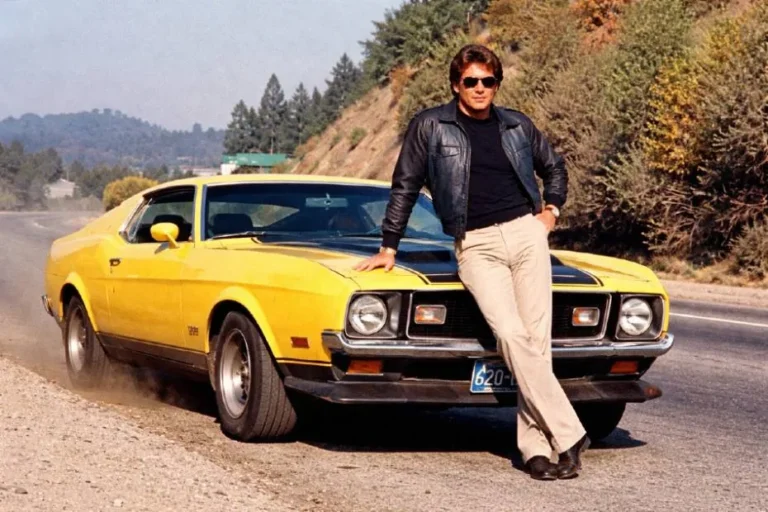
The original Eleanor was not the grey Shelby GT500 that most people picture when they hear the name. Despite what many people think, the first Eleanor wasn’t actually the modified Shelby Mustang GT500 driven by Nicolas Cage in the 2000 remake. It was actually a yellow 1973 Ford Mustang that appeared in the original 1974 film. More specifically, it was a 1971 Ford Mustang Sportsroof that Halicki bought in 1971, modified with 1973 grilles to update its appearance, and painted a distinctive school-bus yellow color. Eleanor is the only Ford Mustang to receive a starring title credit in a film.
Halicki’s original Eleanor took a genuine beating. The stunt car required 250 hours of modification including a roll cage, chained transmission, and a camera rig for point-of-view footage. The climactic crash into a light pole at freeway speed was, famously, an accident that made the final cut because the cameras were rolling.
H.B. Halicki was killed in 1989 during pre-production on a sequel, when a wire snapped during a stunt involving a water tower, causing the structure to collapse on him. He never saw his film become a cult phenomenon. His widow, Denice Shakarian Halicki, became the guardian of the Eleanor name, the original film’s rights, and ultimately the licensing rights that made the 2000 remake possible.
Jerry Bruckheimer, Nicolas Cage, And The Eleanor That Changed Everything
In 1995, H.B. Halicki’s widow Denice Shakarian Halicki licensed the rights to the film to Disney and Jerry Bruckheimer. Denice served as executive producer on the remake, ensuring that her late husband’s creation received the appropriate level of respect in its Hollywood transformation.
The 2000 Gone in 60 Seconds is a loose remake of the 1974 original — sharing the core premise and the Eleanor name but otherwise operating as an entirely new film with new characters, a new setting, and a new story. It was directed by Dominic Sena, written by Scott Rosenberg, and produced by Jerry Bruckheimer, released on June 9, 2000, by Buena Vista Pictures through its Touchstone Pictures label.
The film grossed $237 million against an estimated production budget of $90 million — a genuinely significant commercial success, particularly given the mixed critical reception. Critics were largely unkind. The film boasts a much stronger RT user rating of 77% from over 250,000 ratings compared to its critical score — a film that audiences embraced enthusiastically while professional critics were largely dismissive.
The film’s legacy rests on three pillars: Nicolas Cage’s Memphis Raines, the ensemble cast that surrounded him, and the 1967 Shelby GT500 named Eleanor. All three deserve their own examination.
The most convincing car characters in film history are almost always played by actors who have a genuine relationship with automobiles off screen — which is why our deep dive into the Robert Downey Jr. car collection reveals so much about why Tony Stark’s vehicles felt authentic across a decade of Marvel films.
Memphis Raines And The Ensemble
Nicolas Cage brought a specific quality to Memphis Raines that no other actor working in 2000 could have replicated — a kind of weary dignity that made the retired-thief-dragged-back-for-one-last-job premise feel genuinely earned rather than formulaic. Memphis is not an action hero. He’s a craftsman who happens to steal cars, a man who walked away from the life and finds himself pulled back not by greed or ego but by love for his brother.
The full cast — documented on the IMDb Gone in 60 Seconds 2000 page — includes Nicolas Cage, Angelina Jolie, Giovanni Ribisi, Christopher Eccleston, Robert Duvall, Vinnie Jones, Delroy Lindo, Chi McBride, and Will Patton. For a $90 million production, that is an extraordinary collection of talent.
Robert Duvall as Otto Halliwell — Memphis’s mentor, the old man who teaches him the craft — is one of the film’s most quietly affecting performances. Vinnie Jones as Sphinx, the mute enforcer who speaks exactly once in the entire film and reduces the assembled crew to stunned silence when he does, is a performance that became genuinely iconic. Delroy Lindo as the detective Castlebeck brings more moral weight to a stock character than the script probably deserved.
Angelina Jolie as Sara “Sway” Wayland is simultaneously the film’s most famous supporting role and its most under-served one. It is worth acknowledging honestly that the film gave Jolie very little to do relative to her presence and ability. Sway is skilled, she is cool, she is Angelina Jolie — and the script uses approximately 12 percent of what she offers. A sequel that correctly addressed this would be a better film almost by default.
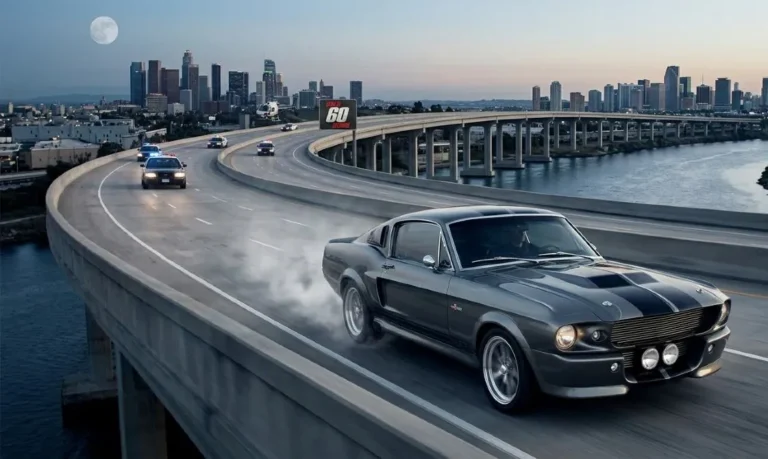
The New Eleanor: Chip Foose’s 1967 Shelby GT500
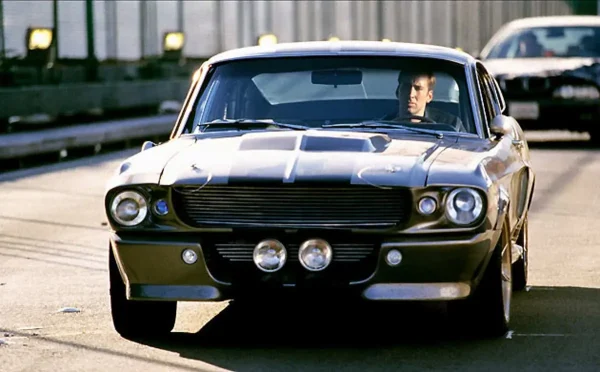
The Eleanor of the 2000 film is not the original Eleanor. She is something new — arguably something greater, in terms of pure automotive iconography, than anything H.B. Halicki’s school-bus-yellow Mustang achieved.
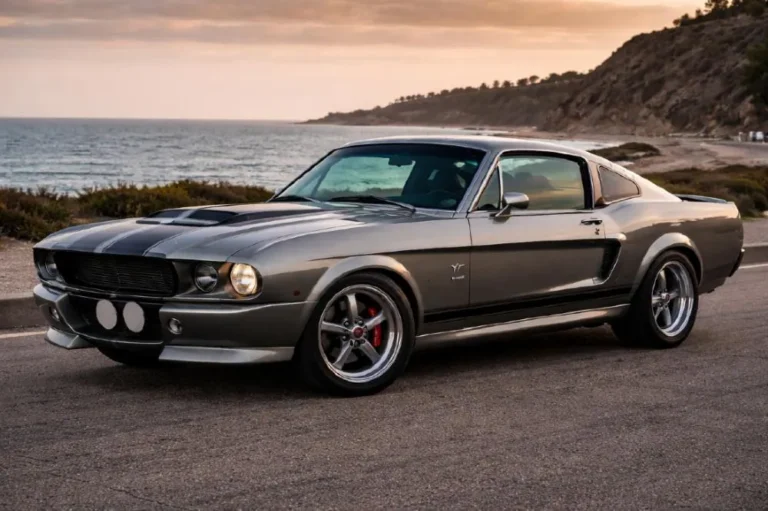
Eleanor is depicted as a Dupont Pepper Grey 1967 Ford Mustang fastback, portrayed as a Shelby GT500, with a customized body kit designed by Steve Stanford and created by Chip Foose. Foose — one of the most respected custom car designers in American history — created a body treatment for the 1967 Mustang fastback that has become the definitive reference for custom Mustang design in the decades since. The widened fenders, the hood treatment, the Pepper Grey with black lower body accents — this is the Eleanor that lives in popular consciousness.
Twelve cars were built by Cinema Vehicle Services for the film, not including an additional Eleanor clone created for producer Bruckheimer. Nine were shells, and three were built as fully functional vehicles. Five were destroyed during production. Nicolas Cage and Jerry Bruckheimer each kept one of the survivors. Cage reportedly takes his out regularly. Bruckheimer, by all accounts, is afraid to drive his.
Over a number of years, Denice Halicki has claimed to own the copyrights to “Eleanor” as a character, including its various body styles and likenesses, sparking legal uncertainty among many in the car community. These legal actions have affected aftermarket builders, YouTube creators, and even auction houses. The Eleanor intellectual property situation is one of the more complex ongoing disputes in the automotive enthusiast world — and it is directly relevant to any sequel conversation, because any new film featuring Eleanor would need to navigate Denice Halicki’s rights carefully.
The 50 Cars — A Love Letter To Automotive Culture
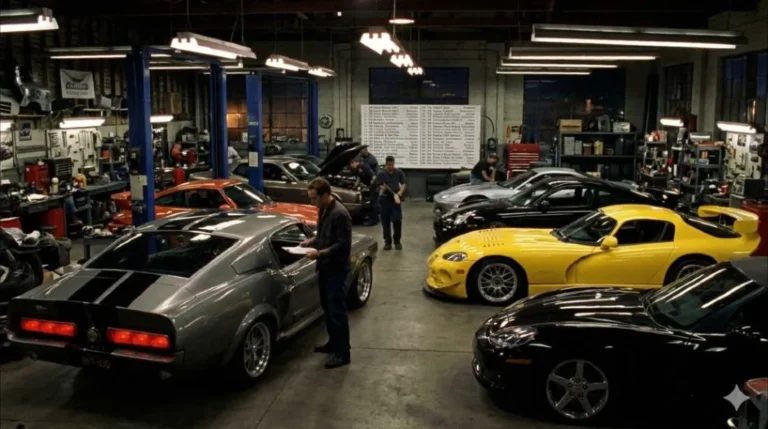
Beyond Eleanor, the 2000 Gone in 60 Seconds worked as an automotive film because it used cars as characters. The list of 50 vehicles Memphis and his crew must steal in one night — each given a woman’s name as code — functions as a curated celebration of automotive excellence across five decades of production.
The list included a 1962 Ferrari 250 GTO, a 1999 Bentley Arnage, a Lamborghini Diablo, a Range Rover, multiple Mercedeses and BMWs, a Dodge Viper, and dozens of other vehicles that covered the full spectrum from working-class muscle to European exotica. For automotive enthusiasts watching in 2000, the list was a game within a game — spotting the cars, knowing their histories, understanding what each one represented.
The list included a Dodge Viper — one of the most recognizable American performance cars of the era and a vehicle whose full story we tell in our Dodge Viper complete guide, covering all five generations of the car that appeared on lists like this precisely because it represented the extreme edge of American automotive ambition.
A sequel, to be worthy of the original, would need to take that same love of automobiles. The cars available to a Memphis Raines operating today are entirely different from those available in 2000. Electric hypercars. Modern supercars with digital security that makes the film’s transponder key subplot look quaint. The challenge for a sequel’s writers is creating a car list that generates the same sense of automotive wonder audience that the original list created in 2000.
Gone In 60 Nanoseconds: How A Fake Poster Fooled The Internet
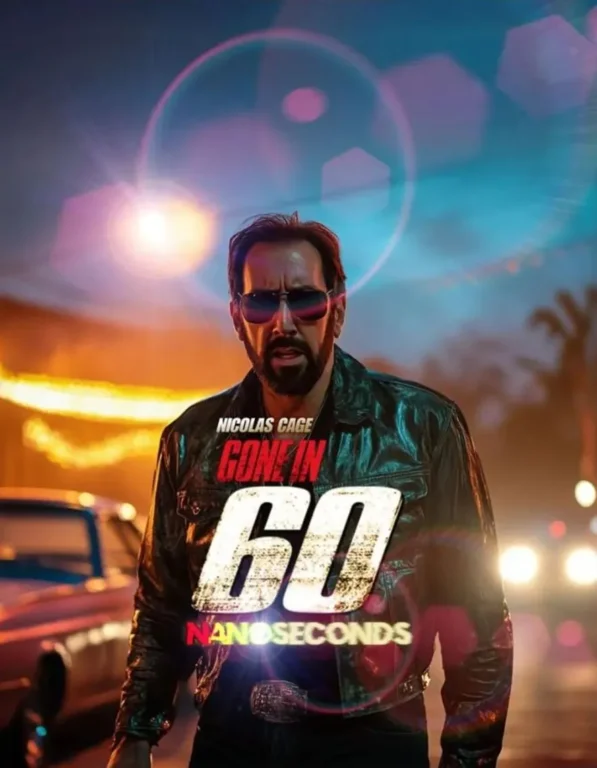
In October 2024, the Facebook page YODA BBY ABY published what appeared to be an official promotional poster for a sequel titled “Gone in 60 Nanoseconds.” The poster showed Nicolas Cage in a pose consistent with his Memphis Raines character, with a design language that successfully mimicked the visual style of a real Hollywood announcement.
The fake poster claimed Cage would reprise his role as car thief Memphis Raines and the film would come to theatres in May 2025. The post went viral, accumulating tens of thousands of reactions.
The plot description accompanying the fake poster read: “In Gone in 60 Nanoseconds, retired master car thief Memphis Raines (Nicolas Cage) is drawn back into the underworld when a tech mogul steals priceless vintage cars for his illegal empire. With a new generation of thieves by his side, Memphis must outsmart cutting-edge security systems and rival gangs in a race against time to reclaim the stolen cars. As the clock ticks down, Memphis discovers that confronting his past is the only way to secure his future.”
Read that description carefully. Because here is the genuinely interesting thing about it: it’s actually a pretty good movie premise. The tech mogul stealing priceless vintage cars angle is contemporary and relevant — the story of ultra-wealthy collectors using technology to acquire vehicles through questionable means is not a stretch of imagination. The “new generation of thieves” structure would allow for new cast alongside returning characters. The “confronting the past” emotional arc is Memphis Raines to his bones.
The person who wrote that fake poster synopsis understood the character and understood what a sequel needed to do. That is partly why it worked so well — it didn’t feel like random nonsense, it felt like a genuine pitch meeting had happened somewhere.
Snopes confirmed in their investigation that the poster was created by a page that explicitly labels all its content as satire. The same page had previously created fake posters for a Zac Efron Knight Rider reboot and a live-action Cars remake — both confirmed fakes that generated similar waves of temporary excitement before being debunked.
Neither Nicolas Cage nor Angelina Jolie confirmed anything related to a potential sequel. Currently, there are no news or concrete plans for a sequel to Gone in 60 Seconds anywhere in the film industry.
The speed with which the fake poster spread, and the emotional intensity of the reactions it generated, matters for the sequel conversation — because it proved something the film industry needed to see demonstrated. There is an enormous, passionate audience for a Gone in 60 Seconds sequel. That audience is not a niche nostalgia crowd. It is tens of thousands of people who reacted immediately, emotionally, and genuinely to the idea of Memphis Raines returning to the screen.
Studios pay attention to viral moments. The fake poster, counterintuitively, may have done more to advance the real sequel conversation than any industry trade report could have.
Nicolas Cage: Where Memphis Raines’ Actor Stands Right Now
To understand whether a sequel is realistic, you need to understand where Nicolas Cage is professionally and personally.
Nicolas Cage is in the middle of one of the more remarkable career second acts in Hollywood history. After a period in the mid-2010s when he was widely and unfairly reduced to a punchline — the result of a combination of financial difficulties and a string of films that were beneath his ability — Cage has reasserted himself as one of the most interesting and committed actors working in American film.
The 2022 film The Unbearable Weight of Massive Talent — in which Cage played a version of himself — was both a critical success and a genuine statement of intent about where the actor was in his relationship with his own legacy. The performance in Pig (2021) reminded audiences that Cage at his best is a genuinely great actor rather than a reliable meme source.
In his current project slate, Cage is working on The Carpenter’s Son with Noah Jupe and FKA Twigs, and may also appear in the live-action Amazon Prime Spider-Man Noir series. These are projects that span the range from independent drama to major streaming franchise — a portfolio that reflects the breadth of Cage’s current ambitions.
None of his current projects conflict structurally with a Gone in 60 Seconds sequel if one were announced. At 61 years old, Cage is the same age that Harrison Ford was when he made Indiana Jones and the Kingdom of the Crystal Skull — a comparison that both supports and cautions about the sequel premise simultaneously.
The age question is real and worth discussing honestly. Memphis Raines worked as a character in 2000 partly because of his specific physical quality — lean, intense, capable of the athletic demands of car theft. A Memphis would need to be positioned differently. The “new generation of thieves” element of the fake poster’s premise was not accidental — it is the correct structural solution to the age problem. Memphis mentors a new crew while demonstrating that his specific expertise and judgment cannot be replicated by youth alone.
This is the Indiana Jones model, the John Wick model, the Top Gun: Maverick model. The older protagonist who has been away and must return — but whose return is complicated by the gap between what he was and what the world has become. Top Gun: Maverick turned exactly this premise into $1.49 billion at the global box office and one of the most acclaimed action films of the decade. The blueprint for how to make a sequel work with a returning lead in his early 60s is not theoretical. It exists and it has been proven.
Why Eleanor And The IP Make A Sequel Complicated
Any serious discussion of a Gone in 60 Seconds sequel must address the intellectual property landscape, because it is genuinely complex and directly affects what a sequel could look like.
The 2000 film was produced by Disney/Touchstone Pictures and Jerry Bruckheimer. Disney retains distribution rights. Bruckheimer produced it. These are the parties who would need to be involved in any sequel conversation at the studio level.
The Eleanor question is where it gets complicated. Denice Halicki — H.B. Halicki’s widow — has claimed to own the copyrights to “Eleanor” as a character, including its various body styles and likenesses. These claims have generated legal disputes spanning nearly two decades, affecting specialty car builders, YouTube creators, and auction houses.
For a sequel to feature Eleanor — and without Eleanor, a Gone in 60 Seconds sequel loses a significant portion of what made the original iconic — the production would need a licensing agreement with Denice Halicki’s company. Given the litigation history, that negotiation would not be simple.
This is not an insurmountable obstacle. Rights negotiations for nostalgia sequels happen constantly in Hollywood, and where there is sufficient commercial motivation on all sides, agreements are reached. But it is a real structural complexity that helps explain why, despite obvious market demand, no sequel has been announced in the 26 years since the original’s release.
What A Real Gone In 60 Seconds 2 Would Need To Work
Every major action franchise from the 1990s and 2000s has been revived, rebooted, or sequelized in the past decade. Mission: Impossible continues. Top Gun came back stronger than it left. The Fast and Furious franchise ran for eleven mainline entries and counting. Bad Boys got a third film. Even Beverly Hills Cop returned after 30 years. The era of the nostalgia sequel is not ending — if anything, it is the defining commercial mode of the 2020s film industry.
Against this backdrop, Gone in 60 Seconds occupies an unusually strong position. It made $237 million in 2000 on a $90 million budget. It has a legitimate and ongoing fan base demonstrated by the viral fake poster reaction. It has a beloved central character whose arc is unfinished — Memphis drove off into the sunset, but life doesn’t tend to leave people who are that good at something that specific permanently retired. And it has Eleanor, who may be the single most recognizable movie car in American popular culture.
Here is what a real sequel would need to succeed.
The Right Structure: Legacy, Not Repetition
The most successful nostalgia sequels of the past decade do not try to recreate what the original did. They use the original as a foundation and tell a new story that the original made possible. Top Gun: Maverick is not a remake of Top Gun. It is a film that only works because Top Gun happened first. Gone in 60 Seconds 2 should follow this model precisely — not 50 cars in one night again, but a new mission that requires Memphis’s specific genius in a world where car security has gone digital, the vehicles themselves have gone electric, and everything he learned in 2000 is simultaneously valuable and obsolete.
The tension between analog expertise and digital reality is genuinely rich territory. A thief who learned his craft on mechanical systems in the pre-computer era, operating world where the most valuable cars are protected by biometrics, encrypted immobilizers, and GPS tracking that reports to satellite systems — that is a story with genuine dramatic potential.
The Right Cars: Updating The List
The car list sequel would look dramatically different from the 2000 version. The most valuable and most coveted automobiles include electric hypercars like the Rimac Nevera and the Pininfarina Battista, modern supercars like the Ferrari SF90 Stradale and Lamborghini Huracán EVO, restored and documented classic muscle cars whose values have climbed to the six and seven figures, and one-of-a-kind customs and concept vehicles whose value derives from their absolute uniqueness.
Target list would need to balance the new world of electric hypercars with the collector classics that have appreciated dramatically in the past decade — vehicles like a documented 1969 Chevrolet Camaro SS, whose value and rarity make it exactly the kind of impossible target that Memphis Raines was built to acquire.
Memphis Raines would need a team that included not just drivers and mechanics but a technology expert capable of defeating modern vehicle security — the film’s equivalent of the transponder key subplot, updated for an era where your car can recognize your face and call law enforcement autonomously. That character addition alone opens significant narrative possibilities.
And Eleanor would need to come back. Not the original, necessarily — but Memphis’s relationship with that specific car, or a new car that occupies the same emotional role in his life, is non-negotiable. The Eleanor storyline in the 2000 film works because it is not really about the car. It is about Memphis proving to himself that he can do something he has always failed at. A sequel needs its own version of that emotional architecture.
The Right Cast: Returning Veterans And New Blood
Nicolas Cage as Memphis Raines is the non-negotiable element. Without Cage, the film is not a sequel — it is a reboot, and a significantly less interesting one.
Robert Duvall’s Otto is gone — Duvall is 94 and while he remains active, the character’s arc is complete. Giovanni Ribisi’s Kip Raines, however, is an obvious and underused asset for a sequel. Kip ended the 2000 film with a dilapidated Eleanor and a debt to his brother. What became of him? A sequel that properly develops the Kip character into an adult would address one of the original film’s most significant underutilized opportunities.
Angelina Jolie’s Sway, as noted earlier, was underserved by the original script. A sequel that gave the Jolie character real agency and real purpose — not just romantic interest but active skill and plot-driving capability — would correct a 26-year-old wrong and give a major star something genuinely worth coming back for.
The “new generation” element the fake poster described is correct. You need younger characters to carry the physical demands of the action sequences, to represent the technical expertise that car theft would require, and to give the film a forward momentum that a cast of characters in their 50s and 60s cannot provide on their own. This is not ageism — it’s storytelling. Memphis mentoring the next generation is the most emotionally complete arc available to a sequel.
What We Know, What We Don’t, And What Comes Next
There is no confirmed Gone in 60 Seconds sequel in development. No studio announcement. No confirmed script. No casting. No director attached. No official release date.
The 2024 viral fake poster generated enormous fan response but no industry follow-up in the form of confirmed production. Nicolas Cage has not confirmed involvement in any sequel. Angelina Jolie has not confirmed involvement. Disney/Touchstone has not announced a sequel. Jerry Bruckheimer, who has continued producing major franchise films including Pirates of the Caribbean and Top Gun: Maverick, has not confirmed any Gone in 60 Seconds sequel.
What has been demonstrated is a market signal that the film industry cannot indefinitely ignore. The combination of the $237 million original gross adjusted for inflation, the viral fake poster’s reach, and the established template for successful nostalgia sequels makes Gone in 60 Seconds one of the more commercially logical properties for eventual sequel development that hasn’t already happened.
The comparison to Top Gun: Maverick is instructive and intentional. That film was in development for years before it was produced, faced numerous obstacles, and ultimately became the highest-grossing film of 2022. The gap between a viable idea and a completed film is real, substantial, and filled with complications that are invisible from the outside.
The Gone in 60 Seconds sequel may happen. The ingredients — audience demand, a beloved property, a living lead actor, a commercial blueprint for how to do it correctly — are all present. The obstacles — rights complexity around Eleanor, the challenge of the original cast’s ages, the need for a script that genuinely honors what made the original work while being something new — are real but not insurmountable.
If and when Touchstone Pictures, Jerry Bruckheimer Films, or any other production entity officially announces a sequel, it will be legitimate news that every automotive and film outlet will report simultaneously. Until that announcement arrives from a verified source, everything else — no matter how convincingly formatted or how widely shared — is speculation.
FAQ
Q: Is a Gone in 60 Seconds sequel confirmed?
A: No. Gone in 60 Seconds sequel has been officially confirmed by any studio, producer, or cast member. The viral “Gone in 60 Nanoseconds” poster that circulated in October 2024 was confirmed as fan-made satire by Snopes and multiple media outlets. Neither Nicolas Cage nor Angelina Jolie has confirmed any sequel involvement.
Q: What was the “Gone in 60 Nanoseconds” poster?
A: The “Gone in 60 Nanoseconds” poster was a fake movie poster created by a Facebook satire page called YODA BBY ABY in October 2024. The page labels all its content as satire. The poster went viral, generating tens of thousands of reactions from fans who believed it was a real sequel announcement. It was confirmed as fake by Snopes, Sportskeeda, The Sun, and multiple other fact-checking and entertainment outlets. No such film exists or has been officially announced.
Q: How much did the original Gone in 60 Seconds make?
A: The 1974 original Gone in 60 Seconds, made for $150,000 by H.B. Halicki, grossed $40 million at the box office — one of the most extraordinary returns on investment in film history. The 2000 remake starring Nicolas Cage, produced by Jerry Bruckheimer with a $90 million budget, grossed $237 million worldwide. Both films were significant commercial successes relative to their budgets, though critical reception was mixed for the 2000 remake.
Q: What happened to Eleanor after filming the 2000 movie?
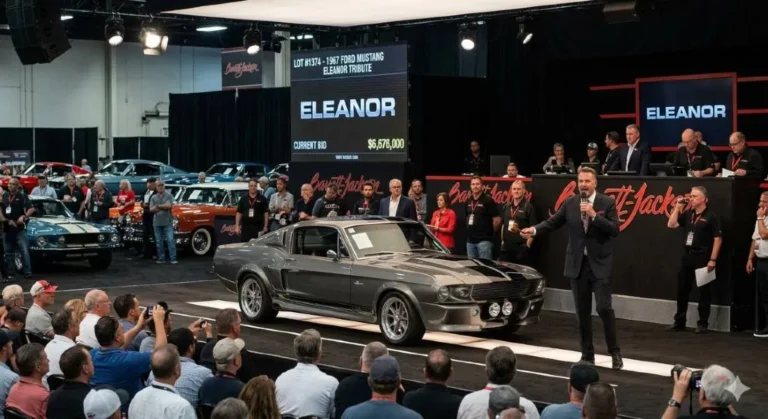
A: Twelve Eleanor Mustangs were built for the 2000 film by Cinema Vehicle Services. Five were destroyed during production. Of the remaining cars, Nicolas Cage and Jerry Bruckheimer each kept one. Cage reportedly drives his regularly. Several shell cars and non-hero vehicles from the production have appeared at auction over the years. The Eleanor intellectual property — the name and the character — is controlled by Denice Halicki, widow of the 1974 film’s director, and has been the subject of extensive litigation against unlicensed reproductions.
Q: Who owns the rights to Eleanor?
A: Eleanor as a character is claimed by Denice Shakarian Halicki, the widow of H.B. Halicki who directed the 1974 original. She licensed the rights to the 2000 remake to Disney and Jerry Bruckheimer. Since then, Halicki has pursued numerous legal actions against companies and individuals creating unlicensed Eleanor replicas or reproductions. Any future film featuring Eleanor would require a licensing agreement with Halicki’s company. The rights situation is one of the primary complexities affecting any sequel development.
Q: What cars were in the 2000 Gone in 60 Seconds?
A: The 2000 film featured 50 target cars given women’s names as code words. Notable vehicles included the 1967 Shelby GT500 nicknamed Eleanor, a 1962 Ferrari 250 GTO, a 1999 Bentley Arnage, a Lamborghini Diablo, a Range Rover, a Dodge Viper, a Cadillac Escalade, and dozens of other vehicles spanning American muscle, European luxury, and exotic sports cars. The list served as a curated celebration of automotive culture across multiple decades and national traditions.
Q: Could Nicolas Cage still play Memphis Raines in a sequel?
A: Nicolas Cage is 61, and while age would require adjusting how the character is presented physically, the creative and commercial template exists for exactly this kind of return. Top Gun: Maverick successfully returned Tom Cruise to Maverick at 59, delivering the highest-grossing film of 2022. A Gone in 60 Seconds sequel with Cage as a mentor figure leading a new generation of thieves — similar to the structural approach of Maverick — would address the age question while preserving the character’s emotional core.
Q: What was the 1974 Gone in 60 Seconds about?
A: The 1974 Gone in 60 Seconds was written, directed, produced by and starring H.B. Halicki, a California junkyard and car business owner. It follows insurance investigator and car theft ring leader Maindrian Pace as his crew attempts to steal 48 cars for a South American drug lord. The film is most famous for its 40-minute car chase sequence — the longest in film history — during which 93 cars were destroyed across five Southern California cities. All crashes were real with no special effects. Eleanor in this film was a yellow 1971 Ford Mustang restyled with 1973 grilles. The film cost $150,000 to make and grossed $40 million.
Conclusion
Gone in 60 Seconds does not have a sequel. What it has is something rarer and in some ways more interesting than a sequel — it has 26 years of cultural staying power, a car that became the definitive American movie icon, a fake poster that generated the kind of genuine emotional response that most real Hollywood announcements cannot produce, and a cast of characters whose story feels unfinished in a way that invites return.
The film works because it understood something that most car movies get wrong. The cars are not the point. The cars are the language. Memphis Raines speaks in cars the way musicians speak in notes — not because cars are interesting objects but because they are the specific medium through which he expresses everything he is. The 40 cars he steals in one night are not possessions. They are sentences. Eleanor is the sentence he has been trying to finish for twenty years.
A sequel, done correctly, would not be about stealing cars. It would be about what happens to a man who was defined by a skill he walked away from, in a world that has changed so completely around him that the skill itself is no longer what it was. It would be about Memphis Raines — and the version of Eleanor that exists for him now.
Whether that film ever gets made is genuinely uncertain. What is certain is that the audience for it exists, has always existed, and demonstrated that fact unmistakably in the autumn of 2024 when a fake poster with the right idea behind it stopped the internet for three days.
Eleanor is still out there. Memphis knows where she is.
Editorial Note
All box office figures, production facts, and cast information are sourced from Wikipedia, IMDb, and verified industry publications. The “Gone in 60 Nanoseconds” fake poster was confirmed as satirical content by Snopes in October 2024. As of the publication date, no official Gone in 60 Seconds sequel has been announced by any studio, production company, or cast member. Any content claiming otherwise should be verified against official studio announcements before being treated as factual. This article will be updated when and if an official announcement is made.

0 Comments